

当代外语研究 ›› 2026, Vol. 26 ›› Issue (3): 51-61.doi: 10.3969/j.issn.1674-8921.2026.03.005
文旭( ), 邓蕴羿
出版日期:2026-06-28
发布日期:2026-07-28
作者简介:文旭,西南大学外国语学院教授、博士生导师。主要研究方向为认知语言学、语用学、语义学。电子邮箱:xuwen@swu.edu.cn;基金资助:
WEN Xu(), DENG Yunyi
Online:2026-06-28
Published:2026-07-28
摘要:
认知语用学是融合认知语言学心理认知机制与语用学语境、言语行为等核心要素的新兴交叉学科,为近40年来语言学研究发展的热点领域。本文通过对比和考察对相关文献进行了描述性统计分析,旨在系统化厘清国外认知语用学研究的发展脉络、核心议题与研究前沿。研究发现:该领域发展历经三个阶段——1985~1999年理论奠基阶段、2000~2010年理论深化与创新阶段和2011年至今实证拓展与跨学科融合阶段。核心议题涵盖语用推理机制、语境意义的心理建构与动态整合、模块化之争、社会文化转向、认知语用能力评估与干预五个维度。当前研究面临的主要问题包括:概念界定存在认知与语用双路径的分歧、双重维度难以实现“稳定均衡”、意义建构机制缺乏系统性解释框架、应用研究领域广泛但深度不足、新兴实证方法面临标准化挑战。最后,本文指出认知语用学正呈现理论综合化、跨学科融合深化、研究对象多模态化、理论与实践互动强化四大趋势。因此,本研究认为,认知语用学须在保持理论深度的同时拥抱跨学科协作,通过方法论创新与理论整合,实现其作为认知与语用交互桥梁的学科使命。
中图分类号:
文旭, 邓蕴羿. 国外认知语用学研究四十年:发展阶段、核心议题与未来展望[J]. 当代外语研究, 2026, 26(3): 51-61.
WEN Xu, DENG Yunyi. Four Decades of Cognitive Pragmatics Research Abroad: Its Phases, Core Issues and Prospects[J]. Contemporary Foreign Languages Studies, 2026, 26(3): 51-61.
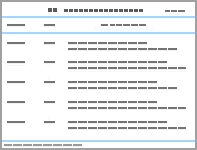
表1
认知语用学发展脉络简表
| 阶段 | 时间 | 核心特征 | 代表理论/方法 | 代表人物 |
|---|---|---|---|---|
| 理论奠基阶段 | 1985~1999 | 关联理论创立,认知—功能路径形成 | 关联理论、信息结构 | Sperber & Wilson, Nuyts, Panther |
| 理论深化与创新阶段 | 2000~2010 | 情境话语、概念构建、多模态初探 | 情境制约话语、在线概念构建 | Kecskes, Carston, Velasco-Sacristán |
| 实证拓展与跨学科融合阶段 | 2011~至今 | 神经机制、临床应用、社会认知整合 | fMRI、CPT、SCA、 EC-Model | Bambini, Gabbatore, Schmid |
| [1] | Apperly I. 2011. Mindreaders: The Cognitive Basis of “Theory of Mind”[M]. London: Psychology Press. |
| [2] |
Bambini V., E. Tonini, I. Ceccato, et al. 2020. How to improve social communication in aging: Pragmatic and cognitive interventions[J]. Brain and Language 211:104864.
doi: 10.1016/j.bandl.2020.104864 URL |
| [3] | Bara B. G. 2011. Cognitive pragmatics: The mental processes of communication[J]. Intercultural Pragmatics 8(3):443-485. |
| [4] | Carston R. 2002. Thoughts and Utterances: The Pragmatics of Explicit Communication[M]. Oxford: Blackwell. |
| [5] |
Dᶏbrowska E. 2016. Cognitive linguistics’ seven deadly sins[J]. Cognitive Linguistics 27(4):479-491.
doi: 10.1515/cog-2016-0059 URL |
| [6] |
Engel A. K., A. Maye, M. Kurthen, et al. 2013. Where’s the action? The pragmatic turn in cognitive science[J]. Trends in Cognitive Sciences 17(5):202-209.
doi: 10.1016/j.tics.2013.03.006 URL |
| [7] | Gabbatore I., F. M. Bosco, E. Geda, et al. 2017. Cognitive pragmatic rehabilitation program in schizophrenia: A single case fMRI study[J]. Neural Plasticity 2017(1):1-9. |
| [8] | Green G. M. 1989. Pragmatics and Natural Language Understanding[M]. Hillsdale, NJ: Lawrence Erlbaum. |
| [9] | Kasher, A.(ed.). 1989. Cognitive Aspect of Language Use[M]. Amsterdam: Elsevier Science Publishers B. V. |
| [10] |
Kecskes I. 2000. A cognitive-pragmatic approach to situation-bound utterances[J]. Journal of Pragmatics 32(5):605-625.
doi: 10.1016/S0378-2166(99)00063-6 URL |
| [11] |
Kleinke S. 2010. Speaker activity and Grice’s maxims of conversation at the interface of pragmatics and cognitive linguistics[J]. Journal of pragmatics 42(12): 3345-3366.
doi: 10.1016/j.pragma.2010.05.008 URL |
| [12] | Lee M. S. & H. Kim. Kim. 2016. Development and application of cognitive-pragmatic language ability assessment protocol for traumatic brain injury[J]. Applied Neuropsychology: Adult 23(6):436-448. |
| [13] | Nuyts J. 1992. Aspects of a Cognitive-Pragmatic Theory of Language: On Cognition, Functionalism, and Grammar[M]. Amsterdam & Philadelphia: John Benjamins. |
| [14] | Nuyts J. 2004. The cognitive-pragmatic approach[J]. Intercultural Pragmatics 1(1):135-149. |
| [15] | Panther K.-U. 2022. Introduction to Cognitive Pragmatics[M]. Amsterdam & Philadelphia: John Benjamins. |
| [16] | Panther , K.-U . L. L. Thornburg & A. Barcelona. 2009. Metonymy and Metaphor in Grammar[C]. Amsterdam & Philadelphia: John Benjamins. |
| [17] |
Parola A., F. M. Bosco, I. Gabbatore, et al. 2019. The impact of the Cognitive Pragmatic Treatment on the pragmatic and informative skills of individuals with traumatic brain injury (TBI)[J]. Journal of Neurolinguistics 51(3):53-62.
doi: 10.1016/j.jneuroling.2018.12.003 URL |
| [18] | Schmid H.-J. (ed.). 2012. Cognitive Pragmatics[C]. Berlin: De Gruyter Mouton. |
| [19] |
Schmid H.-J. 2016. Why Cognitive Linguistics must embrace the social and pragmatic dimensions of language and how it could do so more seriously[J]. Cognitive Linguistics 27(4):543-557.
doi: 10.1515/cog-2016-0048 URL |
| [20] |
Traugott E. C. 2019. Whither historical pragmatics? A cognitively-oriented perspective[J]. Journal of Pragmatics 145:25-30.
doi: 10.1016/j.pragma.2019.01.006 |
| [21] |
Velasco-Sacristán M. & P. A. Fuertes-Olivera. 2006. Towards a critical cognitive-pragmatic approach to gender metaphors in Advertising English[J]. Journal of Pragmatics 38(11):1982-2002.
doi: 10.1016/j.pragma.2005.07.002 URL |
| [22] |
Zhang Y. & S. Zhang. 2020. A cognitive-pragmatic study of non-scalar implicatures[J]. Pragmatics and Society 11(1):149-163.
doi: 10.1075/ps URL |
| [23] | 文旭. 2014. 语用学事业:哲学、文化与认知视野[J]. 当代外语研究(6):54-58,125. |
| [24] | 文旭. 2018. 语用学研究:认知语用学[J]. 浙江外国语学院学报(2):33. |
| [1] | 周红辉, 冯素格. 译者主体性的社会-认知语用阐释[J]. 当代外语研究, 2025, 25(2): 101-111. |
| [2] | 范振强. 新认知语用学视域下同语的语境效果和生成动因[J]. 当代外语研究, 2015, 15(07): 12-16. |
| [3] | 文旭. 语用学事业:哲学、文化与认知视野[J]. 当代外语研究, 2014, 14(06): 54-58. |
| [4] | 杨小虎;. 中国大学生英语/i/-/ι/感知模式研究[J]. 当代外语研究, 2011, 11(02): 39-44+62. |
| 阅读次数 | ||||||
|
全文 |
|
|||||
|
摘要 |
|
|||||
