

当代外语研究 ›› 2026, Vol. 26 ›› Issue (3): 106-117.doi: 10.3969/j.issn.1674-8921.2026.03.010
白雅( ), 郭英丽
出版日期:2026-06-28
发布日期:2026-07-28
作者简介:白雅,河南财经政法大学副教授。主要研究方向为人工智能与外语教学、二语习得、英语教学法。电子邮箱:carfieldbai@163.com;基金资助:
BAI Ya(), GUO Yingli
Online:2026-06-28
Published:2026-07-28
摘要:
在线英语学习中,学生的信心(学业自我效能)与开口意愿(交流意愿)是影响学习成效的重要心理因素,但二者在个体内部的组合模式及其对学业抗逆力的作用机制尚有待进一步揭示。基于学业抗逆力的风险-保护框架,本研究采用潜在剖面分析,对579名高二学生进行调查,旨在识别其在学业自我效能与交流意愿上的异质性类型,并比较不同类型学生在学业抗逆力上的差异。结果表明:(1)四类别模型拟合最佳,共识别出四种类型:低效能-回避型(15.4%)、中效能-低交流型(24.7%)、均衡发展型(32.0%)和高效能-沟通型(28.0%);(2)不同剖面学生的学业抗逆力存在显著的梯度差异,且效应量达到大效应,其中“高效能-沟通型”得分最高,“低效能-回避型”得分最低。研究表明,学业自我效能作为内部保护因素、交流意愿作为社会性保护因素,在提升抗逆力过程中具有协同作用。研究揭示了在线学习情境下学习者心理特征的异质性,并为基于学习者类型的分层干预提供了实证依据。
中图分类号:
白雅, 郭英丽. 在线英语学习“信心”与“开口”——抗逆力视角剖面研究[J]. 当代外语研究, 2026, 26(3): 106-117.
BAI Ya, GUO Yingli. Confidence and Willingness to Speak in Online English Learning: A Profile Analysis from the Perspective of Resilience[J]. Contemporary Foreign Languages Studies, 2026, 26(3): 106-117.
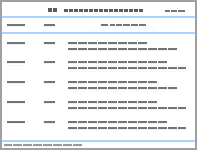
表1
在线英语学习中学业自我效能、交流意愿和学业抗逆力之间的相关关系与描述性统计结果
| Cronbach’s а | λ2 | df | CFI | TLI | RMSEA | SRMR | 均值 | 标准差 | 1 | 2 | |
|---|---|---|---|---|---|---|---|---|---|---|---|
| 1.学业自我 效能 | 0.75 | 84.42 | 27 | 0.95 | 0.95 | 0.05 | 0.03 | 3.57 | 0.67 | — | |
| 2.交流意愿 | 0.87 | 76.09 | 19 | 0.96 | 0.94 | 0.04 | 0.03 | 3.27 | 0.92 | 0.34*** | — |
| 3.学业抗 逆力 | 0.89 | 54.40 | 14 | 0.93 | 0.91 | 0.06 | 0.04 | 4.91 | 1.16 | 0.51*** | 0.34*** |
表2
潜在类别分析的模型拟合指数结果
| 类别 | AIC | BIC | aBIC | LMR-LRT(p) | BLRT(p) | Entropy | 分类 |
|---|---|---|---|---|---|---|---|
| 2 | 29331.02 | 29557.80 | 29392.72 | 0.003 | <0.001 | 0.82 | 272/306 |
| 3 | 28777.17 | 29082.46 | 28860.24 | 0.007 | <0.001 | 0.87 | 309/106/164 |
| 4 | 28241.69 | 28625.49 | 28346.12 | 0.015 | <0.001 | 0.88 | 89/143/185/162 |
| 5 | 28101.83 | 28564.13 | 28227.62 | 0.233 | <0.001 | 0.86 | 218/89/54/131/87 |
| 6 | 28007.98 | 28478.78 | 28125.13 | 0.681 | <0.001 | 0.83 | 31/78/89/204/49/130 |
表3
最终确定模型中各类别中指标的均值
| 类别一 | 类别二 | 类别三 | 类别四 | |
|---|---|---|---|---|
| 学业自我效能题目1 | 3.83 | 4.34 | 3.88 | 4.45 |
| 学业自我效能题目2 | 2.86 | 3.95 | 3.01 | 4.06 |
| 学业自我效能题目3 | 4.07 | 4.56 | 4.18 | 4.71 |
| 学业自我效能题目4 | 2.09 | 3.65 | 2.68 | 3.77 |
| 学业自我效能题目5 | 2.41 | 3.48 | 2.95 | 3.92 |
| 学业自我效能题目6 | 2.94 | 3.75 | 3.27 | 4.06 |
| 学业自我效能题目7 | 1.89 | 3.55 | 2.45 | 3.68 |
| 学业自我效能题目8 | 1.89 | 3.12 | 2.35 | 3.14 |
| 学业自我效能题目9 | 2.30 | 3.83 | 2.87 | 4.05 |
| 交流意愿题目1 | 2.00 | 2.97 | 3.11 | 4.18 |
| 交流意愿题目2 | 1.88 | 2.46 | 3.84 | 4.26 |
| 交流意愿题目3 | 1.72 | 2.31 | 3.71 | 4.42 |
| 交流意愿题目4 | 1.72 | 2.59 | 2.87 | 4.23 |
| 交流意愿题目5 | 2.68 | 3.28 | 3.59 | 4.27 |
| 交流意愿题目6 | 2.12 | 3.02 | 3.12 | 4.21 |
| 交流意愿题目7 | 1.85 | 2.72 | 4.00 | 4.44 |
| 交流意愿题目8 | 1.87 | 2.86 | 3.00 | 4.21 |
表4
不同剖面间学业抗逆力得分差异
| 剖面 | 均值 | 标准差 | 剖面 | 均值 | 标准差 | Cohen’s d |
|---|---|---|---|---|---|---|
| 高效能沟通型 | 5.61 | 0.93 | 平衡发展型 | 5.10 | 1.07 | 0.51 |
| 高效能沟通型 | 5.61 | 0.93 | 中效能低交流型 | 4.53 | 1.02 | 1.10 |
| 高效能沟通型 | 5.61 | 0.93 | 低效能回避型 | 4.13 | 1.19 | 1.44 |
| 平衡发展型 | 5.10 | 1.07 | 中效能低交流型 | 4.53 | 1.02 | 0.55 |
| 平衡发展型 | 5.10 | 1.07 | 低效能回避型 | 4.13 | 1.19 | 0.97 |
| 中效能低交流型 | 4.53 | 1.02 | 低效能回避型 | 4.13 | 1.19 | 0.37 |
| [1] | Artino A. R. 2008. Motivational beliefs and perceptions of instructional quality: Predicting satisfaction with online training[J]. Journal of Computer-assisted Learning 24(3): 260-270. |
| [2] | Bandura A. 1977. Self-efficacy: Toward a unifying theory of behavioral change[J]. Psychological Review 8(2): 191-275. |
| [3] |
Cohen J. 1992. Statistical power analysis[J]. Current Directions in Psychological Science 1(3): 98-101.
doi: 10.1111/1467-8721.ep10768783 URL |
| [4] | Collins L. M. & S. T. Lanza. 2013. Latent Class and Latent Transition Analysis: With Applications in the Social, Behavioral, and Health Sciences[M]. New Jersey: John Wiley & Sons. |
| [5] | Cui T., C. Wang & J. Xu. 2023. Validation of academic resilience scales adapted in a collective culture[J]. Frontiers in Psychology 14(1): 11-14. |
| [6] |
Lee J. C., H. Yin & Z. Zhang. 2010. Adaptation and analysis of motivated strategies for learning questionnaire in the Chinese setting[J]. International Journal of Testing 10(2): 149-165.
doi: 10.1080/15305050903534670 URL |
| [7] |
Luthar S. S., D. Cicchetti & B. Becker. 2000. The construct of resilience: A critical evaluation and guidelines for future work[J]. Child Development 71(3): 543-562.
doi: 10.1111/1467-8624.00164 pmid: 10953923 |
| [8] |
Martin A. J. & H. W. Marsh. 2006. Academic resilience and its psychological and educational correlates: A construct validity approach[J]. Psychology in the Schools 43(3): 267-281.
doi: 10.1002/pits.v43:3 URL |
| [9] | Victor-Aigboidion V., C. N. Onyishi & D. U. Ngwoke. 2020. Predictive power of academic self-efficacy on academic resilience among secondary school students[J]. Journal of the Nigerian Council of Educational Psychologists 12(1): 601-622. |
| [10] | Suzani S. M. 2022. Online communication versus face-to-face interaction: The effect of chatting communication on Iranian EFL learners’ oral performance[J]. Vision: Journal for Language and Foreign Language Learning 10(2): 99-114. |
| [11] | Zhang C. & K. Dai. 2024. Enhancing Chinese students’ willingness to communicate (WTC) in EMI classrooms: Do learning motivation and academic self-efficacy matter?[J]. Learning and Motivation 87: 101997. |
| [12] | 李军征. 2024. 在线英语学习中师生关系、交流意愿和学业抗逆的关系[J]. 中国电化教育(10): 99-104. |
| [13] | 李禹希. 2024. 高中生学业自我效能感、学业情绪与英语学习投入的关系研究[D]. 延吉: 延边大学. |
| [1] | 易明, 张琳, 赵良平. 从“技能补缺”到“知行共生”:外语教师数字素养共同体的螺旋模型[J]. 当代外语研究, 2026, 26(3): 118-125. |
| [2] | 芦晓莉. 国家意识视域下地方涉农高校大学英语课程改革探索——以信阳农林学院校本特色教材建设为例[J]. 当代外语研究, 2026, 26(3): 126-136. |
| [3] | 余素青, 刘细容. 涉外法治外语教育生态系统的数智化转型[J]. 当代外语研究, 2026, 26(3): 75-83. |
| [4] | 孙鑫, 任威寰, 程慧莉. 合作对比续写对中国英语学习者写作过程与结果的影响[J]. 当代外语研究, 2026, 26(3): 84-94. |
| [5] | 俞希, 王守仁. 核心素养导向的高中英语课标词汇修订与教学路径探析[J]. 当代外语研究, 2026, 26(3): 95-105. |
| [6] | 李成陈. 积极语言教育视角下的二语习得研究范式重构——构建“个体—环境优势共振区”[J]. 当代外语研究, 2026, 26(1): 1-23. |
| [7] | 周敏. 习近平文化思想与外语学科的价值重构——区域国别学视域下的知识转型路径[J]. 当代外语研究, 2026, 26(1): 49-58. |
| [8] | 王靖潭. 国家意识融入大学英语教材编写的路径与特征[J]. 当代外语研究, 2025, 25(6): 83-93. |
| [9] | 孙艳. 文化间性视域下外语教育的认同建构:跨文化认知与国家认同的辩证整合[J]. 当代外语研究, 2025, 25(6): 94-102. |
| [10] | 车思琪, 王张旭. 多模态话语协同建构国家形象的大学生他塑实践研究[J]. 当代外语研究, 2025, 25(6): 51-63. |
| [11] | 裴正薇, 汪鑫鑫. 我国外语教育政策研究:现状、主题与前沿[J]. 当代外语研究, 2025, 25(6): 20-29. |
| [12] | 朱可书. 坚守文化认同与拓展全球视野:外语教育中双重意识的构建何以可能[J]. 当代外语研究, 2025, 25(6): 103-110. |
| [13] | 姜亚军, 石琳霏. 美国高校英语专业的“衰落”及其对我国英语专业转型发展的启示[J]. 当代外语研究, 2025, 25(6): 10-19. |
| [14] | 李春兰, 刘海鸥, 孔令翠. 《共产党宣言》作为英语专业课程与思政教材培养国家意识[J]. 当代外语研究, 2025, 25(6): 111-116. |
| [15] | 李鑫, 辛红娟. 国家意识与国际视野:《“传播中国”大学英语进阶教程》编写理念及教学设计[J]. 当代外语研究, 2025, 25(6): 40-50. |
| 阅读次数 | ||||||
|
全文 |
|
|||||
|
摘要 |
|
|||||
