

Journal of Diagnostics Concepts & Practice ›› 2026, Vol. 25 ›› Issue (04): 500-505.doi: 10.16150/j.1671-2870.2026.04.014
• Case reports • Previous Articles Next Articles
WU Mingming1, WANG Gang2, WEN Yaqi3, CHEN Xiaoying4( )
Received:2025-03-03
Revised:2025-05-21
Accepted:2025-06-09
Online:2026-08-25
Published:2026-08-31
Contact:
CHEN Xiaoying
E-mail:endophasia@163.com
CLC Number:
WU Mingming, WANG Gang, WEN Yaqi, CHEN Xiaoying. Multidisciplinary diagnosis and treatment analysis of a case of tuberous sclerosis complex caused by a TSC2 gene variant[J]. Journal of Diagnostics Concepts & Practice, 2026, 25(04): 500-505.

Figure 1
The skin lesions on the face, neck, occipital region, chest, abdomen, and feet in a patient with tuberous sclerosis


Figure 2
Imaging findings in the patient with tuberous sclerosis


Figure 3
Histopathological image of abdominal skin lesions in the patient with tuberous sclerosis (HE staining, ×20)


Figure 4
MLPA analysis of TSC2 gene in the patient with tuberous sclerosis


Figure 5
Post-laser and plastic surgery status of head and neck skin lesions in the patient with tuberous sclerosis

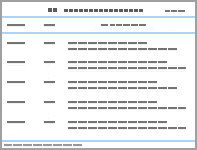
Table1
Disease characteristics of patients with tuberous sclerosis in multidisciplinary diagnosis and treatment
| 文献 | 例数 | 国家 | 年龄 | 性别 | 受累器官 | 变异基因 | |||||
|---|---|---|---|---|---|---|---|---|---|---|---|
| 皮肤 | 头颅 | 肾脏 | 肺 | 心脏 | 其他 | ||||||
| Gipson等[ | 1 | 美国 | 3.5 | 男 | √ | √ | - | ||||
| Ali等[ | 1 | Syria | 19 | 女 | √ | √ | √ | - | |||
| Yacubian等[ | 15 | Portugal | 23/19 | 男/女=8/7 | 13 | 13 | 4 | 3 | 1 | - | |
| 邓等[ | 1 | 中国 | 22 | 女 | √ | √ | √ | √ | - | ||
| 郑等[ | 1 | 中国 | 45 | 女 | √ | √ | √ | √ | √ | √ | TSC2 |
| 本文 | 1 | 中国 | 26 | 男 | √ | √ | √ | √ | TSC2 | ||
| [1] | Jean B, Julie V S, Lorenzo C. Dermatology[M]. 北京: 北京大学医学出版社, 2019:1099-1107. |
| Jean B, Julie V S, Lorenzo C. Dermatology[M]. Beijing: Peking University Medical Press, 2019:1099-1107. | |
| [2] | 张抒扬. 罕见病诊疗指南(2019年版)[M]. 北京: 人民卫生出版社, 2019. |
| Zhang Shuyang. Guidelines for Diagnosis and Treatment of Rare Diseases(2019 Edition)[M]. Beijing: People's Medical Publishing House, 2019. | |
| [3] |
northrup h krueger D A. International tuberous sclerosis complex consensus group. Tuberous sclerosis complex diagnostic criteria update: recommendations of the 2012 international tuberous sclerosis complex consensus conference[J]. Pediatr Neurol, 2013, 49(4):243-254.
doi: 10.1016/j.pediatrneurol.2013.08.001 URL |
| [4] | 中国抗癌协会泌尿男生殖系肿瘤专业委员会结节性硬化协作组. 结节性硬化症相关肾血管平滑肌脂肪瘤诊疗与管理专家共识[J]. 中国癌症杂志, 2020, 30(1):70-78. |
| China Anti-Cancer Association Committee on Urogenital and Male Reproductive System Tumors, Tuberous Sclerosis Complex Working Group. Expert consensus on diagnosis, treatment and management of tuberous sclerosis complex-associated renal angiomyolipoma[J]. China Oncol, 2020, 30(1):70-78. | |
| [5] | Gipson T T, Poretti A. Implementing a multidisciplinary approach to treating tuberous sclerosis complex: a case report[J]. Child Neurol Open. 2017, 22(4):2329048X17725609. |
| [6] |
Ali S, Khan ST, Usman H, et al. Incidental case finding of a 19-year-old woman with tuberous sclerosis complex:a step-wise multidisciplinary approach[J]. Clin Case Rep, 2021, 9(10):e04933.
doi: 10.1002/ccr3.v9.10 URL |
| [7] |
Yacubian E M, Assumpcao J F B, Duarte J C, et al. Tuberous sclerosis:a multidisciplinary study of 15 cases[J]. Arq Neuropsiquiatr, 1983, 41(2):163-170.
doi: 10.1590/S0004-282X1983000200006 URL |
| [8] | 邓思涵, 施为, 蔡燚, 等. 1例以皮肤损害为首发症状的结节性硬化症并多学科讨论[J]. 中南大学学报(医学版), 2022, 47(7):973-980. |
| Deng Sihan, Shi Wei, Cai Yan, et al. A case of tuberous sclerosis complex with cutaneous manifestations as initial symptoms and multidisciplinary discussion[J]. J Central South Univ (Med Sci), 2022, 47(7):973-980. | |
| [9] | 郑华, 智云飞, 应露静, 等. 一例结节性硬化症多器官受累患者的多学科诊疗[J]. 罕见病研究, 2024, 3(1):79-86. |
| Zheng Hua, Zhi Yunfei, Ying Lujing, et al. Multidisciplinary diagnosis and treatment of a patient with tuberous sclerosis complex involving multiple organs[J]. J Rare Dis Res, 2024, 3(1):79-86. | |
| [10] | 刘林莉, 严高武, 邓玲俐, 等. 典型结节性硬化症1例临床表型及基因变异分析[J]. 中华皮肤科杂志, 2022, 55(8):713-716. |
| Liu Linli, Yan Gaowu, Deng Lingli, et al. Clinical phenotype and genetic variant analysis of a classic tuberous sclerosis complex case[J]. Chin J Dermatol, 2022, 55(8):713-716. | |
| [11] |
Au K S, Williams A T, Roach E S, et al. Genotype/phenotype correlation in 325 individuals referred for a diagnosis of tuberous sclerosis complex in the United States[J]. Genet Med, 2007, 9(2):88-100.
doi: 10.1097/gim.0b013e31803068c7 pmid: 17304050 |
| [12] |
Dabora S L, Jozwiak S, Franz D N, et al. Mutational analysis in a cohort of 224 tuberous sclerosis patients indicates increased severity of TSC2,compared with TSC1, disease in multiple organs[J]. Am J Hum Genet, 2001, 68(1):64-80.
doi: 10.1086/316951 pmid: 11112665 |
| [13] | 曹晓佳, 李楠, 韩建文. 结节性硬化症三例及基因突变分析[J]. 中国麻风皮肤病杂志, 2024, 40(06):387-390. |
| Cao Xiaojia, Li Nan, Han Jianwen. Tuberous sclerosis complex in three cases with gene mutation analysis[J]. Chin J Lepr Skin Dis, 2024, 40(6):387-390. | |
| [14] | 王旭, 王文达, 赵扬, 等. 结节性硬化症家系的临床特点和基因突变分析[J]. 中华泌尿外科杂志, 2021, 42(4):252-256. |
| Wang Xu, Wang Wenda, Zhao Yang, et al. Clinical cha-racteristics and genetic mutation analysis of tuberous sclerosis complex pedigrees[J]. Chin J Urol, 2021, 42(4):252-256. | |
| [15] |
Clara C F, Maria A M G, Ana C C L, et al. Topical rapamycin in the treatment of facial angiofibromas in tuberous sclerosis: a systematic review based on evidence[J]. J Dermatolog Treat, 2022, 33(4):1804-1810.
doi: 10.1080/09546634.2021.1905768 URL |
| [16] |
Elizabeth K M, Ashley R C, Alan B F JR. Successful treatment of angiofibromata of tuberous sclerosis complexwith rapamycin[J]. J Dermatolog Treat, 2012, 23:46-48.
doi: 10.3109/09546634.2010.489598 pmid: 20673154 |
| [17] |
Vasani R J. Facial angiofibromas of tuberoussclerosis treated with topical sirolimus in an Indian patient[J]. Indian J Dermatol, 2015; 60:165-169.
doi: 10.4103/0019-5154.152516 URL |
| [18] | 段永飞, 武国军, 倪建鑫, 等. 基于肿瘤成分评估依维莫司对结节性硬化症相关肾血管平滑肌脂肪瘤的治疗作用[J]. 解放军医学杂志, 2023, 48(8):929-935. |
| Duan Yongfei, Wu Guojun, Ni Jianxin, et al. Therapeutic efficacy of everolimus for tuberous sclerosis complex-associated renal angiomyolipoma based on tumor composition assessment[J]. Med J Chin People's Liberation Army, 2023, 48(8):929-935. | |
| [19] | 周涵, 齐晓涟. 依维莫司联合小剂量地尔硫卓用于1例结节性硬化症合并癫痫病例分析[J]. 中国药师, 2022, 25(4):667-671. |
| Zhou Han, Qi Xiaolian. Analysis of everolimus combined with low-dose diltiazem in a case of tuberous sclerosis complex with epilepsy[J]. China Pharm, 2022, 25(4):667-671. | |
| [20] |
Ebrahimi-Fakhari D, Meyer S, Vogt T, et al. Dermatological manifestations of tuberous sclerosis complex(TSC)[J]. J Dtsch Dermatol Ges, 2017, 15(7):695-700.
doi: 10.1111/ddg.13264 pmid: 28598544 |
| [21] |
冯洁惠, 殷钰, 吴一女, 等. 专科护士主导的跨学科协作照护模式的构建与实践研究[J]. 中华护理杂志, 2025, 60(23): 2821-2827.
doi: 10.3761/j.issn.0254-1769.2025.23.001 |
|
Feng Jiehui, Yin Yu, Wu Yinü et al. Development and implementation of an interdisciplinary collaborative care model led by specialty nurses[J]. Chin J Nurs, 2025, 60(23): 2821-2827.
doi: 10.3761/j.issn.0254-1769.2025.23.001 |
| [1] | ZHU Zhaoqin, WU Wenjuan. Interpretation of 2025 Expert Consensus on Clinical Testing Pathway For Infectious Fever [J]. Journal of Diagnostics Concepts & Practice, 2026, 25(03): 268-277. |
| [2] | LI Siwen, DU Hongyu, CHEN Huaqin. A case report of pseudohypoparathyroidism type 1b caused by noval mutation of STX16 [J]. Journal of Diagnostics Concepts & Practice, 2026, 25(03): 370-376. |
| [3] | LIU Jing, LI Yong, XIANg Enfei, FANG Xuqian. Clinicopathological characteristics and distribution and significance of targetable molecular subtypes in patients with pulmonary large cell neuroendocrine carcinoma [J]. Journal of Diagnostics Concepts & Practice, 2026, 25(01): 53-62. |
| [4] | LIN Liya, WU Xi, MAO Yinqi, CHEN Guangming, WU Wenman, DAI Jing, WANG Xuefeng, DING Qiulan. Three gene mutations in disintegrin-like domain encoded by ADAMTS13 causing functional defects in protein products and inducing thrombosis [J]. Journal of Diagnostics Concepts & Practice, 2025, 24(04): 431-440. |
| [5] | ZHOU Lihua, SHEN Ru, QU Kexuan, WANG Aihua, CHEN Youhui, YUAN Zhimin. Study on the Bw11 subtype caused by the 695 T>C mutation in exon 7 of the ABO blood group gene [J]. Journal of Diagnostics Concepts & Practice, 2024, 23(04): 392-397. |
| [6] | ZHU Weiwei, LI Qian, WU Fan, ZHAI Zhimin. Gene mutations and their relationship with clinical features in 100 patients with myelodysplastic syndrome [J]. Journal of Diagnostics Concepts & Practice, 2024, 23(03): 305-312. |
| [7] | HAO Xu, WANG Weiming. Fabry disease presenting with renal disease as the main manifestation diagnosed by renal biopsy: a case report [J]. Journal of Diagnostics Concepts & Practice, 2022, 21(04): 527-529. |
| [8] | LEI Hang, FAN Liangfeng, CAI Xiaohong, WANG Yuqing, LIU Xi, JIN Sha, SHEN Wei, LU Qiong, XIANG Dong, WANG Xuefeng, ZOU Wei. The study on molecular basis of ABO blood subgroups in the Chinese population [J]. Journal of Diagnostics Concepts & Practice, 2020, 19(04): 364-369. |
| [9] | PENG Zhenping, XIANG Xixi, ZHANG Sujiang, LI Jiaming. Chronic neutrophilic leukemia with leukemia-like reaction as the first-onset manifestation: a report of 2 cases and literature review [J]. Journal of Diagnostics Concepts & Practice, 2020, 19(02): 122-128. |
| [10] | CAI Rong, MIN Xuewen, CHEN Meirong, SHEN Yating, SHI Qunli, ZHOU Xiaodie. Expression of BRAF V600E (VE1) in thyroid papillary carcinoma and its clinical significance [J]. Journal of Diagnostics Concepts & Practice, 2018, 17(05): 552-556. |
| [11] | WANG Dengfeng, CUI Wenyan, ZOU Wei, LI Fang, WANG Xuefeng, CAI Xiaohong. Molecular mechanism of Ax subtype caused by p.M142I mutation in alpha 1-3-N-acetylgalactosaminyltransferase [J]. Journal of Diagnostics Concepts & Practice, 2018, 17(03): 260-265. |
| [12] | LU Jing, XU Yufei, QING Yanrong, HAN Cong, LI Niu, YU Tingting, YAO Ruen, WANG Jian. Concurrent gene mutation analysis of a developmental delayed child with Rett syndrome and Noonan syndrome [J]. Journal of Diagnostics Concepts & Practice, 2018, 17(02): 147-150. |
| [13] | JIN Peipei, LIANG Qian, DAI Jing, DING Qiulan, SUN Shunchang, WANG Xuefeng. Phenotype and genotype analysis of a Chinese pedigree with 2N type von Willebrand disease [J]. Journal of Diagnostics Concepts & Practice, 2018, 17(02): 151-154. |
| [14] | WANG Shu, ZHANG Yunxiang, SUI Jingni, LU Jing, FAN Huiyong, WANG Chao, CHEN Bing.. Analysis of additional mutation pattern accompanied with CEBPA mutations in patients with the cytogenetically normal acute myeloid leukemia [J]. Journal of Diagnostics Concepts & Practice, 2017, 16(05): 498-503. |
| [15] | . [J]. Journal of Diagnostics Concepts & Practice, 2015, 14(03): 235-238. |
| Viewed | ||||||
|
Full text |
|
|||||
|
Abstract |
|
|||||
