

内科理论与实践 ›› 2026, Vol. 21 ›› Issue (01): 21-27.doi: 10.16138/j.1673-6087.2026.01.03
王延丽( ), 侯明杰, 原海珍, 辛宁波, 张玉伟, 韩磊, 张一帆, 马玉青, 赵清霞*()
收稿日期:2026-01-16
修回日期:2026-01-31
接受日期:2026-02-12
出版日期:2026-02-25
发布日期:2026-04-08
通讯作者:
赵清霞 E-mail:Zhqx666@163.com
基金资助:
WANG Yanli(), HOU Mingjie, YUAN Haizhen, XIN Ningbo, ZHANG Yuwei, HAN Lei, ZHANG Yifan, MA Yuqing, ZHAO Qingxia*()
Received:2026-01-16
Revised:2026-01-31
Accepted:2026-02-12
Online:2026-02-25
Published:2026-04-08
摘要:
目的:探讨人类免疫缺陷病毒(human immunodeficiency virus, HIV)/获得性免疫缺陷综合征(acquired immunodeficiency syndrome,AIDS)患者(统称people living with HIV, PLWH)合并肺部感染的病原学特征,评估宏基因组二代测序(metagenomic next-generation sequencing, mNGS)技术在诊断中的价值。方法:回顾性纳入322例PLWH合并肺部感染患者,收集其临床资料与支气管肺泡灌洗液,分别进行传统病原学检测[涂片、培养、聚合酶链反应(polymerase chain reaction, PCR)]和mNGS检测,比较不同方法的病原体检出率、报告周期及检出病原学特征,并分析不同CD4+T淋巴细胞水平下的病原学变化。结果:322例患者中,男性占80.1%(258/322),中位年龄为35岁,CD4+T淋巴细胞中位数61(22,205)个/μL, HIV RNA 载量中位数1 343(0,159 423)拷贝/mL。mNGS成功检测294例,共检出病原体93种/786例次。病原体以病毒(34.4%,32种)为主,最常见为巨细胞病毒(cytomegalovirus, CMV)(44.7%)、耶氏肺孢子菌(40.4%)、EB病毒(14.6%)、结核分枝杆菌复合群(11.2%)、新型冠状病毒(9.0%)、黄曲霉/米曲霉(8.7%)。传统方法综合灵敏度为64.0%,mNGS为91.0%,差异具有统计学意义(P<0.001)。mNGS报告周期显著短于传统方法。CD4+T淋巴细胞<200个/μL的AIDS期患者病原体检出数量最多(648例次)。结论:PLWH合并肺部感染以CMV、耶氏肺孢子菌、结核分枝杆菌、新型冠状病毒及曲霉菌为主,不同免疫状态下感染的病原学种类不同,低CD4患者易受耶氏肺孢子菌、 CMV 等机会性病原体感染,随着CD4计数增加,病毒和真菌仍是主要的病原体类型,但细菌检出比例相对增加。mNGS可显著提高PLWH合并肺部感染患者的病原体检出率。
中图分类号:
王延丽, 侯明杰, 原海珍, 辛宁波, 张玉伟, 韩磊, 张一帆, 马玉青, 赵清霞. 322例河南省人类免疫缺陷病毒感染/获得性免疫缺陷综合征合并肺部感染患者的病原学特征分析[J]. 内科理论与实践, 2026, 21(01): 21-27.
WANG Yanli, HOU Mingjie, YUAN Haizhen, XIN Ningbo, ZHANG Yuwei, HAN Lei, ZHANG Yifan, MA Yuqing, ZHAO Qingxia. Analysis on etiological characteristics of 322 patients with human immunodeficiency virus infection / acquired immunodeficiency syndrome complicated with pulmonary infection in Henan province[J]. Journal of Internal Medicine Concepts & Practice, 2026, 21(01): 21-27.
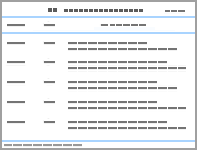
表1
322例PLWH合并肺部感染患者的临床特征[n(%)/M(Q1,Q3)]
| 特征 | 数值 |
| 性别 | |
| 男性 | 258(80.12) |
| 女性 | 64(19.88) |
| 年龄(岁) | 35(28,48) |
| 白细胞计数(×109/L) | 5.55(3.37,7.77) |
| C反应蛋白(mg/L) | 23.39(7.21,64.12) |
| 降钙素原(ng/mL) | 0.089(0.057,0.161) |
| 是否ART | |
| 是 | 194(60.25) |
| 否 | 128(39.75) |
| CD4(个/μL) | 61(22,205) |
| CD4/CD8 | 0.06(0.02,0.15) |
| lg HIV RNA | 4.9(3.3,5.6) |
| HIV RNA(拷贝/mL) | 1 343(0,159 423) |
表2
mNGS与CMT检测病原学种类及例次比较(例次)
| 病原分类 | 涂片 | PCR | 培养 | mNGS |
| 病毒 | 0 | 107 | 0 | 354 |
| 真菌(真菌孢子) | 43 | 35 | 24 | 230 |
| 细菌(革兰染色) | 25 | 1 | 27 | 120 |
| 结核分枝杆菌(抗酸杆菌) | 34 | 31 | 36 | 36 |
| NTM | 0 | 8 | 0 | 16 |
| 支原体 | 0 | 0 | 0 | 28 |
| 衣原体 | 0 | 0 | 0 | 1 |
| 立克次体 | 0 | 0 | 0 | 1 |
| 总例次 | 102 | 182 | 87 | 786 |

图1
mNGS检出的病原学分布情况

表3
不同免疫状态下病原学检出种类及例次比较[n(%)]
| 项目 | CD4分层(个/μL) | ||
| ≤200 | 201~349 | ≥350 | |
| 患者数量[n(%)] | 240(74.53) | 37(11.49) | 45(13.98) |
| 病毒(例次) | 297 | 28 | 29 |
| 真菌(例次) | 197 | 21 | 12 |
| 细菌(例次) | 81 | 23 | 16 |
| 结核分枝杆菌(例次) | 30 | 2 | 4 |
| NTM(例次) | 15 | 1 | 0 |
| 支原体(例次) | 26 | 1 | 1 |
| 衣原体(例次) | 1 | 0 | 0 |
| 立克次体(例次) | 1 | 0 | 0 |
| 合计[n(%)] | 648(82.44) | 76(9.67) | 62(7.89) |

图2
不同免疫状态下病原体分布情况

表4
5种病原体在不同免疫状态下分布情况(例次)
| 项目 | CD4分层(个/μL) | χ2 | P | ||
| ≤200 | 201~349 | ≥350 | |||
| CMV | 127 | 4 | 13 | 28.294 | <0.001 |
| 耶氏肺孢子菌 | 118 | 8 | 4 | 31.643 | <0.001 |
| 结核分枝杆菌 | 30 | 2 | 4 | 1.901 | 0.386 |
| 肺炎链球菌 | 18 | 3 | 3 | 0.064 | 0.968 |
| 黄曲/米曲霉 | 20 | 6 | 2 | 3.700 | 0.157 |
| [1] | GBD 2019 HIV Collaborators. Global, regional, and national sex-specific burden and control of the HIV epidemic, 1990-2019, for 204 countries and territories[J]. Lancet HIV, 2021, 8(10):e633-e651. |
| [2] |
Li X, Liang S, Zhang D, et al. The clinical application of metagenomic next-generation sequencing in sepsis of immunocompromised patients[J]. Front Cell Infect Microbiol, 2023, 13:1170687.
doi: 10.3389/fcimb.2023.1170687 |
| [3] |
Guo C, Chen Q, Fan G, et al. gcPathogen: a comprehensive genomic resource of human pathogens for public health[J]. Nucleic Acids Res, 2024, 52(D1):D714-D723.
doi: 10.1093/nar/gkad875 |
| [4] |
刘颖, 赵红心. 中国艾滋病相关机会性感染研究进展[J]. 中国艾滋病性病, 2022, 28(5):512-518.
doi: 10.13419/j.cnki.aids.2022.05.03 |
|
Liu Y, Zhao HX. Research progress in AIDS-related opportunistic infections in China[J]. Chin J AIDS STD, 2022, 28(5):512-518.
doi: 10.13419/j.cnki.aids.2022.05.03 |
|
| [5] | 莫平征, 张忠威, 陈小平, 等. 宏基因组学二代测序在艾滋病合并肺部感染患者中的临床应用[J]. 中华传染病杂志, 2023, 41(8):507-513. |
| Mo PZ, Zhang ZW, Chen XP, et al. Clinical application of metagenomic next-generation sequencing in acquired immunodeficiency syndrome patients with pulmonary infections[J]. Chin J Infect Dis, 2023, 41(8):507-513. | |
| [6] | World Health Organization. Global tuberculosis report 2025 [EB/OL]. 2025. https://www.who.int/teams/global-programme-on-tuberculosis-and-lung-health/tb-reports/global-tuberculosis-report-2025. |
| [7] | 曾妍茗, 李瑶, 刘敏, 等. 巨细胞病毒血症对艾滋病合并中重度肺孢子菌肺炎患者临床预后影响的回顾性研究[J]. 中国感染与化疗杂志, 2023, 23(2):137-142. |
| Zeng YM, Li Y, Liu M, et al. Retrospective analysis of the effect of cytomegalovirus viremia on clinical prognosis of AIDS patients complicated with moderate to severe Pneumocystis pneumonia[J]. Chin J Infect Chemother, 2023, 23(2):137-142. | |
| [8] |
郭晶晶, 王雅杰, 方伟, 等. 艾滋病合并巨细胞病毒感染的病毒学和血清学特点探讨[J]. 标记免疫分析与临床, 2022, 29(12):1986-1989.
doi: 10.11748/bjmy.issn.1006-1703.2022.12.002 |
|
Guo JJ, Wang YJ, Fang W, et al. The virology and serologic characteristics of HIV infection with cytomegalovirus[J]. Labeled Immunoassays & Clin Med, 2022, 29(12):1986-1989.
doi: 10.11748/bjmy.issn.1006-1703.2022.12.002 |
|
| [9] |
Zhao M, Zhuo C, Li Q, et al. Cytomegalovirus (CMV) infection in HIV/AIDS patients and diagnostic values of CMV-DNA detection across different sample types[J]. Ann Palliat Med, 2020, 9(5):2710-2715.
doi: 10.21037/apm-20-1352 |
| [10] |
Kovacs JA, Gill VJ, Meshnick S, et al. New insights into transmission, diagnosis, and drug treatment of Pneumocystis carinii pneumonia[J]. JAMA, 2001, 286(19):2450-2460.
doi: 10.1097/00006454-200204000-00027 |
| [11] |
Gérard L, Leport C, Flandre P, et al. Cytomegalovirus (CMV) viremia and the CD4+ lymphocyte count as predictors of CMV disease in patients infected with human immunodeficiency virus[J]. Clin Infect Dis, 1997, 24(5):836-840.
doi: 10.1093/clinids/24.5.836 |
| [12] | 中华医学会感染病学分会艾滋病丙型肝炎学组. 艾滋病合并巨细胞病毒病诊疗专家共识(2024年版)[J]. 中华传染病杂志, 2024, 42(3):129-140. |
| AIDS and Hepatitis C Professional Group of Society of Infectious Diseases of Chinese Medical Association. Expert consensus on diagnosis and treatment of cytomegalovirus disease in acquired immunodeficiency syndrome patients in China (2024 edition)[J]. Chin J Infect Dis, 2024, 42(3):129-140. | |
| [13] | 陈娜, 邓美菊, 刘颖, 等. 152例艾滋病合并肺部感染疾病谱分析[J]. 国际病毒学杂志, 2024, 31(3):211-214. |
| Chen N, Deng MJ, Liu Y, et al. Spectrum of complicated pulmonary infections in 152 AIDS patients[J]. International Journal of Virology, 2024, 31(3):211-214. | |
| [14] |
Patel EU, Gianella S, Newell K, et al. Elevated cytomegalovirus IgG antibody levels are associated with HIV-1 disease progression and immune activation[J]. AIDS, 2017, 31(6):807-813.
doi: 10.1097/QAD.0000000000001412 |
| [15] |
Perello R, Vergara A, Monclus E, et al. Cytomegalovirus infection in HIV-infected patients in the era of combination antiretroviral therapy[J]. BMC Infect Dis, 2019, 19(1):1030.
doi: 10.1186/s12879-019-4643-6 |
| [16] | 任立敏, 李妍, 张春芳, 等. 系统性风湿病合并巨细胞病毒感染的临床特点及其相关危险因素分析[J]. 中华医学杂志, 2016, 96(35):2772-2776. |
| Ren LM, Li Y, Zhang CF, et al. Clinical characteristics and associated risk factors of cytomegalovirus infection in patients with underlying systemic rheumatic diseases[J]. Natl Med J China, 2016, 96(35):2772-2776. | |
| [17] | 宋聪, 余小舒, 周昌静, 等. 艾滋病合并耶氏肺孢子菌肺炎患者巨细胞病毒活动情况的影响因素[J]. 名医, 2025(9):51-53. |
| Song C, Yu XS, Zhou CJ, et al. Factors influencing cytomegalovirus activity in AIDS patients with Pneumocystis jirovecii pneumonia[J]. Renowned Doctor, 2025(9):51-53. | |
| [18] |
Grabar S, Le Moing V, Goujard C, et al. Clinical outcome of patients with HIV-1 infection according to immunologic and virologic response after 6 months of highly active antiretroviral therapy[J]. Ann Intern Med, 2000, 133(6):401-410.
doi: 10.7326/0003-4819-133-6-200009190-00007 |
| [19] |
Affandi JS, Montgomery J, Brunt SJ, et al. The immunological footprint of CMV in HIV-1 patients stable on long-term ART[J]. Immun Ageing, 2015, 12:14.
doi: 10.1186/s12979-015-0041-0 |
| [20] |
Tan Y, Chen Z, Zeng Z, et al. Microbiomes detected by bronchoalveolar lavage fluid metagenomic next-generation sequencing among HIV-infected and uninfected patients with pulmonary infection[J]. Microbiol Spectr, 2023, 11(4):e0000523.
doi: 10.1128/spectrum.00005-23 |
| [21] |
Fan Q, Tang G, Jiang M, et al. Clinical prognostic value of TTV and HCMV but not EBV for outcomes in hospitalized HIV-positive patients[J]. Biosaf Health, 2025, 7(3):173-182.
doi: 10.1016/j.bsheal.2025.05.006 |
| [22] |
中华医学会热带病与寄生虫学分会艾滋病学组. 人类免疫缺陷病毒/艾滋病患者合并非结核分枝杆菌感染诊治专家共识[J]. 中华传染病杂志, 2019, 37(3):129-138.
doi: 10.3760/cma.j.issn.1000-6680.2019.03.001 |
|
AIDS Professional Group of Society of Tropical Disease and Parasitology of Chinese Medical Association. Expert consensus on diagnosis and treatment of HIV/AIDS complicated with non-tuberculous mycobacteria infection[J]. Chin J Infect Dis, 2019, 37(3):129-138.
doi: 10.3760/cma.j.issn.1000-6680.2019.03.001 |
|
| [23] | 张沛, 赵阿会, 高敏, 等. 2016-2021年河南省MTB/HIV双重感染流行特征分析[J]. 中国防痨杂志, 2023, 45(4): 377-382. |
| Zhang P, Zhao AH, Gao M, et al. Epidemiological characteristics of MTB/HIV co-infection in Henan from 2016 to 2021[J]. Chin J Antitubercul, 2023, 45(4):377-382. | |
| [24] |
Geldmacher C, Ngwenyama N, Schuetz A, et al. Preferential infection and depletion of Mycobacterium tuberculosis-specific CD4+ T cells after HIV-1 infection[J]. J Exp Med, 2010, 207(13):2869-2881.
doi: 10.1084/jem.20100090 |
| [25] |
Bertagnolio S, Thwin SS, Silva R, et al. Clinical features of, and risk factors for, severe or fatal COVID-19 among people living with HIV admitted to hospital: analysis of data from the WHO Global Clinical Platform of COVID-19[J]. Lancet HIV, 2022, 9(7):e486-e495.
doi: 10.1016/S2352-3018(22)00097-2 |
| [26] |
Parize P, Muth E, Richaud C, et al. Untargeted next-generation sequencing-based first-line diagnosis of infection in immunocompromised adults: a multicentre, blinded, prospective study[J]. Clin Microbiol Infect, 2017, 23(8):574..
doi: 10.1016/j.cmi.2017.02.006 |
| [1] | 张亚萍, 王力, 何沅鸿, 尹科, 杨彤彤. 获得性免疫缺陷综合征相关卡波西肉瘤多器官受累特征与诊疗策略[J]. 内科理论与实践, 2026, 21(01): 68-73. |
| [2] | 王耀, 魏兰兰, 初明, 王福祥. 共感染视角下人类免疫缺陷病毒与巨细胞病毒致神经系统损伤的机制及研究进展[J]. 内科理论与实践, 2026, 21(01): 62-67. |
| [3] | 陈丽娟, 罗灿伟, 刘琳珊, 李佳佳, 黄少兰, 李凌华, 刘聪. 育龄期女性人类免疫缺陷病毒感染者乐观水平现状及影响因素分析[J]. 内科理论与实践, 2026, 21(01): 39-45. |
| [4] | 齐青松, 田美娜, 于瑶. 获得性免疫缺陷综合征患者免疫重建不良研究进展[J]. 内科理论与实践, 2026, 21(01): 3-11. |
| [5] | 何沅鸿, 刘琳, 刘欢霞, 杨彤彤. 快速启动抗病毒治疗对四川地区HIV-1感染初治患者病毒抑制和免疫恢复的影响[J]. 内科理论与实践, 2026, 21(01): 12-20. |
| [6] | 蔡晖, 李幼生, 黄雨桦, 许菁菁, 刘庆芬, 顾芬. 克罗恩病合并机会性感染的现状及影响因素分析[J]. 内科理论与实践, 2025, 20(06): 440-448. |
| [7] | 吴文娟, 田文杰, 苟雪静. 病原体宏基因组测序临床报告阈值的再讨论[J]. 诊断学理论与实践, 2025, 24(06): 576-582. |
| [8] | 陈李, 汪少卫, 汪云旗. 心率变异性在高血压脑出血患者气管切开后并发肺部感染中的作用[J]. 内科理论与实践, 2024, 19(04): 249-253. |
| [9] | 郑晓燕, 易华华, 周敏. 糖尿病合并肺部感染临床诊治中需要关注的问题[J]. 内科理论与实践, 2024, 19(01): 13-18. |
| [10] | 胡静静, 沈银忠, 刘莉, 卢洪洲. 艾滋病合并播散性非结核分枝杆菌病诊治现状及研究进展[J]. 诊断学理论与实践, 2023, 22(04): 402-406. |
| [11] | 陈宏, 沈银忠. 人类免疫缺陷病毒感染/艾滋病合并结核病的诊治进展[J]. 诊断学理论与实践, 2022, 21(04): 530-534. |
| [12] | 胡静静, 吕海伟, 荀静娜, 沈银忠, 刘莉, 卢洪洲. 2012年至2021年上海市艾滋病合并分枝杆菌感染患者的菌种分布特征[J]. 诊断学理论与实践, 2022, 21(04): 450-455. |
| [13] | 陈志敏, 刘波, 何浩岚, 何耀祖, 冯理智, 刘新华, 张坚生, 蔡卫平, 李凌华. 133例艾滋病合并马尔尼菲篮状菌病死亡病例分析[J]. 诊断学理论与实践, 2022, 21(04): 444-449. |
| [14] | 陈志敏, 何浩岚. 艾滋病合并马尔尼菲篮状菌病的诊治现状[J]. 诊断学理论与实践, 2022, 21(04): 425-430. |
| [15] | 赵含丹, 许利军. 人类免疫缺陷病毒相关隐球菌脑膜炎的诊治现状和挑战[J]. 诊断学理论与实践, 2022, 21(04): 419-424. |
| 阅读次数 | ||||||
|
全文 |
|
|||||
|
摘要 |
|
|||||
