

内科理论与实践 ›› 2026, Vol. 21 ›› Issue (03): 211-216.doi: 10.16138/j.1673-6087.2026.03.02
卫越( ), 包阳扬, 罗庆志, 谢运, 林长坚, 张凝, 金奇, 凌天佑(), 吴立群()
收稿日期:2026-03-16
修回日期:2026-04-07
接受日期:2026-06-08
出版日期:2026-06-25
发布日期:2026-08-19
通讯作者:
凌天佑 E-mail:lingtianyouyou@163.com;吴立群 E-mail:wuliqun89@hotmail.com
作者简介:作者贡献/Authors’ Contributions卫越负责收集数据、撰写论文;包阳扬、罗庆志、谢运、林长坚负责分析审核数据;张凝、金奇负责论文撰写指导及修改;凌天佑、吴立群负责论文审核。
基金资助:
WEI Yue(), BAO Yangyang, LUO Qingzhi, XIE Yun, LIN Changjian, ZHANG Ning, JIN Qi, LING Tianyou(), WU Liqun()
Received:2026-03-16
Revised:2026-04-07
Accepted:2026-06-08
Online:2026-06-25
Published:2026-08-19
摘要:
目的:比较冷冻球囊消融与电复律治疗初发、未经治疗的持续性心房颤动(房颤)患者的疗效与安全性。方法:纳入我院冷冻球囊消融及电复律治疗的初发持续性房颤患者,并应用倾向评分匹配平衡基线特征,最终纳入房颤持续时间<1年的患者70例,其中冷冻组35例,电复律组35例。主要有效性终点为操作后1年无房颤复发率,安全性终点为严重并发症发生率。结果:冷冻组的1年无复发率显著高于电复律组(76.6%比45.0%,P<0.05),而2组治疗后卒中、心包填塞等严重并发症发生率差异无统计学意义。左心房内径增大为冷冻球囊消融操作后复发的独立危险因素(风险比=1.319,P=0.046),而房颤病程是电复律后复发的独立危险因素(风险比=1.131,P=0.037)。结论:对于初发持续性房颤患者,冷冻球囊消融在维持窦性心律方面优于电复律,且安全性良好。左心房内径与房颤病程分别是预测两种治疗方式后复发的重要因素,有助于指导个体化临床决策。
中图分类号:
卫越, 包阳扬, 罗庆志, 谢运, 林长坚, 张凝, 金奇, 凌天佑, 吴立群. 冷冻球囊消融与电复律治疗初发持续性心房颤动疗效及安全性比较[J]. 内科理论与实践, 2026, 21(03): 211-216.
WEI Yue, BAO Yangyang, LUO Qingzhi, XIE Yun, LIN Changjian, ZHANG Ning, JIN Qi, LING Tianyou, WU Liqun. Comparison of efficacy and safety between cryoballoon ablation and electrical cardioversion for treatment of first-episode persistent atrial fibrillation[J]. Journal of Internal Medicine Concepts & Practice, 2026, 21(03): 211-216.
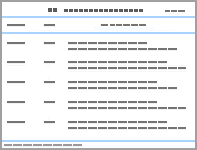
表1
患者基线资料比较[n=35,n(%)/$\bar{x}±s$]
| 指标 | 冷冻组(n=35) | 电复律组(n=35) | t /χ2 | P |
| 年龄(岁) | 63.4±8.6 | 63.1±9.1 | 0.14 | 0.89 |
| 男性 | 23(65.7%) | 23(65.7%) | 0 | 0.73 |
| BMI (kg/m2) | 24.4±3.0 | 24.3±3.4 | 0.12 | 0.91 |
| 房颤病程(月) | 7.1±4.2 | 6.7±4.4 | 0.42 | 0.68 |
| 高血压[n(%)] | 20(57.1) | 17(48.6) | 0.52 | 0.47 |
| 糖尿病[n(%)] | 4(11.4) | 3(8.6) | 0.16 | 0.69 |
| 冠心病[n(%)] | 4(11.4) | 3(8.6) | 0.16 | 0.69 |
| 心功能不全[n(%)] | 2(5.7) | 1(2.9) | 0.35 | 0.56 |
| 脑卒中[n(%)] | 0(0) | 1(2.9) | 1.01 | 0.31 |
| 左心房内径(mm) | 40.1±2.7 | 40.7±2.7 | 0.91 | 0.37 |
| 左心室舒张末期内径(mm) | 48.4±3.9 | 48.0±4.1 | 0.85 | 0.40 |
| 左心室射血分数(%) | 65.9±5.4 | 65.8±4.4 | 1.61 | 0.93 |

图1
冷冻组与电复律组操作后无房颤复发率比较

表2
2组治疗后复发影响因素的单因素回归分析
| 变量 | 冷冻组 | 电复律组 | |||||
| HR | 95%CI | P | HR | 95%CI | P | ||
| 年龄 | 0.974 | 0.892~1.065 | 0.568 | 1.017 | 0.949~1.09 | 0.630 | |
| 性别(男性) | 0.791 | 0.189~3.316 | 0.748 | 1.238 | 0.436~3.518 | 0.688 | |
| BMI (kg/m2) | 1.050 | 0.774~1.425 | 0.754 | 1.079 | 0.91~1.278 | 0.383 | |
| 病程(月) | 1.093 | 0.914~1.306 | 0.331 | 1.131 | 1.007~1.269 | 0.037 | |
| 高血压 | 1.064 | 0.266~4.261 | 0.930 | 2.172 | 0.798~5.913 | 0.129 | |
| 糖尿病 | 1.077 | 0.132~8.757 | 0.945 | 1.751 | 0.398~7.711 | 0.459 | |
| 冠心病 | 1.213 | 0.149~9.868 | 0.857 | 0.726 | 0.096~5.49 | 0.756 | |
| 心功能不全 | 3.143 | 0.383~25.781 | 0.286 | 1.354 | 0.179~10.25 | 0.769 | |
| 左心房内径 | 1.414 | 1.052~1.899 | 0.022 | 1.191 | 1.001~1.417 | 0.048 | |
表3
2组治疗后复发影响因素的多因素回归分析
| 变量 | 冷冻组 | 电复律组 | |||||
| HR | 95%CI | P | HR | 95%CI | P | ||
| 年龄 | 0.969 | 0.876~1.073 | 0.548 | 0.981 | 0.908~1.060 | 0.629 | |
| 房颤病程 (月) | 0.939 | 0.771~1.143 | 0.528 | 1.131 | 1.007~1.269 | 0.037 | |
| 左心房内径 (mm) | 1.319 | 1.005~1.732 | 0.046 | 1.220 | 0.989~1.503 | 0.063 | |
| [1] | Cheng S, He J, Han Y, et al. Global burden of atrial fibrillation/atrial flutter and its attributable risk factors from 1990 to 2021[J]. Europace, 2024, 26(7): euae195. |
| [2] | Martens P, Augusto SN, Erzeel J, et al. Effects of atrial fibrillation ablation for heart failure with preserved ejection fraction insights from CABANA[J]. JACC Heart Fail, 2025, 13(5): 785-794. |
| [3] |
Guo J, Zhang Z, Meng X, et al. Atrial fibrillation catheter ablation, brain glymphatic function, and cognitive performance[J]. Eur Heart J, 2025, 46(18): 1733-1743.
doi: 10.1093/eurheartj/ehaf036 |
| [4] |
Kuck KH, Brugada J, Fürnkranz A, et al. Cryoballoon or radiofrequency ablation for paroxysmal atrial fibrillation[J]. N Engl J Med, 2016, 374(23): 2235-2245.
doi: 10.1056/NEJMoa1602014 |
| [5] |
Wei Y, Chen L, Cao J, et al. Long-term outcomes of a time to isolation-based strategy for cryoballoon ablation compared to radiofrequency ablation in patients with symptomatic paroxysmal atrial fibrillation[J]. Pacing Clin Electrophysiol, 2022, 45(9): 1015-1023.
doi: 10.1111/pace.14556 |
| [6] |
Wazni OM, Dandamudi G, Sood N, et al. Cryoballoon ablation as initial therapy for atrial fibrillation[J]. N Engl J Med, 2021, 384(4): 316-324.
doi: 10.1056/NEJMoa2029554 |
| [7] |
Lee SH, Moon S, Cha MJ, et al. Clinical outcome of cryoballoon ablation for long-standing persistent atrial fibrillation: from the Korean cryballoon ablation registry[J]. J Cardiovasc Electrophysiol, 2025, 36(1): 246-255.
doi: 10.1111/jce.16508 |
| [8] |
Moustafa A, Liu X, Elzanaty A, et al. Role of adjunctive cryoballoon left atrial posterior wall isolation in non-paroxysmal atrial fibrillation: a meta-analysis[J]. Curr Probl Cardiol, 2022, 47(12): 101383.
doi: 10.1016/j.cpcardiol.2022.101383 |
| [9] |
Cho MS, Lee JH, Oh IY, et al. Comparison of extended cryoballoon, standard cryoballoon, and radiofrequency catheter ablation in patients with persistent AF[J]. JACC Clin Electrophysiol, 2025, 11(12): 2701-2711.
doi: 10.1016/j.jacep.2025.08.003 |
| [10] |
Kirchhof P, Camm AJ, Goette A, et al. Early rhythm-control therapy in patients with atrial fibrillation[J]. N Engl J Med, 2020, 383(14): 1305-1316.
doi: 10.1056/NEJMoa2019422 |
| [11] |
Karatela MF, Calkins H. Catheter ablation as first line therapy for atrial fibrillation[J]. Prog Cardiovasc Dis, 2025, 91: 33-37.
doi: 10.1016/j.pcad.2025.07.009 |
| [12] |
Kanagaratnam P, McCready J, Tayebjee M, et al. Ablation versus anti-arrhythmic therapy for reducing all hospital episodes from recurrent atrial fibrillation: a prospective, randomized, multi-centre, open label trial[J]. Europace, 2023, 25(3): 863-872.
doi: 10.1093/europace/euac253 |
| [13] |
Khan HR, Yakupoglu HY, Kralj-Hans I, et al. Left atrial function predicts atrial arrhythmia recurrence following ablation of long-standing persistent atrial fibrillation[J]. Circ Cardiovasc Imaging, 2023, 16(6): e015352.
doi: 10.1161/circimaging.123.015352 |
| [14] |
Chew DS, Jones KA, Loring Z, et al. Diagnosis-to-ablation time predicts recurrent atrial fibrillation and rehospitalization following catheter ablation[J]. Heart Rhythm O2, 2022, 3(1): 23-31.
doi: 10.1016/j.hroo.2021.11.012 |
| [15] | Masuda M, Matsuda Y, Uematsu H, et al. Efficacy of low-voltage-area ablation is enhanced in patients with advanced left atrial enlargement: a subanalysis of the SUPPRESS-AF trial[J]. Circ Arrhythm Electrophysiol, 2025, 18(10): e014210. |
| [16] |
Sang C, Liu Q, Lai Y, et al. Pulmonary vein isolation with optimized linear ablation vs pulmonary vein isolation alone for persistent AF: the PROMPT-AF randomized clinical trial[J]. JAMA, 2025, 333(5): 381-389.
doi: 10.1001/jama.2024.24438 |
| [1] | 柴宇燕, 康启帆, 白雪莲, 李志梅, 魏玮, 凌天佑. 心房颤动合并冠状动脉慢血流的机制研究进展[J]. 内科理论与实践, 2026, 21(03): 270-276. |
| [2] | 陈昱竹, 陈柯萍. Bachmann束起搏研究进展[J]. 内科理论与实践, 2026, 21(03): 265-269. |
| [3] | 夏盼盼, 曹宾, 孙育民. 《中国心房颤动管理指南(2025)》解读[J]. 内科理论与实践, 2026, 21(03): 205-210. |
| [4] | 陈梁国, 邓可武, 刘越, 钟鹏, 白英. 甘油三酯-葡萄糖指数与心房颤动患者发生急性心肌梗死风险的关系[J]. 内科理论与实践, 2025, 20(06): 435-439. |
| [5] | 靳正逸, 刘齐龙, 胡佳琪, 徐霞, 高洁. 高尿酸血症与心血管疾病关系的研究进展[J]. 内科理论与实践, 2025, 20(04): 334-339. |
| [6] | 罗晓颖, 章安迪, 许燕, 吴立群, 戚文航. 缺血性心力衰竭患者N端脑钠肽前体与新发房颤的相关性研究[J]. 诊断学理论与实践, 2024, 23(03): 313-317. |
| [7] | 孙以亚, 罗庆志, 金奇, 吴立群. 导管消融治疗心房颤动合并射血分数保留型心力衰竭患者的临床进展[J]. 内科理论与实践, 2024, 19(03): 188-192. |
| [8] | 李晴, 郑朝霞, 罗静慧, 李莉, 牛福英. 残粒胆固醇、同型半胱氨酸预测老年急性心肌梗死患者新发心房颤动的价值[J]. 内科理论与实践, 2024, 19(01): 68-71. |
| [9] | 张芝, 汤学超, 黄新苗, 秦永文. 脉冲电场消融在心房颤动中的应用[J]. 内科理论与实践, 2022, 17(05): 400-404. |
| [10] | 费镇涛, 陈牧, 李毅刚. 心房颤动导管消融后复发机制的研究进展[J]. 内科理论与实践, 2022, 17(05): 396-399. |
| [11] | 尹翔, 郑良荣. 经皮左心耳封堵预防心房颤动卒中的研究进展[J]. 内科理论与实践, 2022, 17(05): 392-395. |
| [12] | 陆林, 代杨, 王晓群, 吴立群, 张瑞岩, 沈卫峰. 心血管转化研究的若干进展[J]. 内科理论与实践, 2022, 17(05): 369-372. |
| [13] | 吴立群. 大道至简——肺静脉隔离新技术[J]. 内科理论与实践, 2022, 17(05): 357-359. |
| [14] | 徐敏, 张京岚. 非心脏手术后新发心房颤动患者的相关临床分析[J]. 内科理论与实践, 2022, 17(04): 334-336. |
| [15] | 白英, 刘心遥, 张溪林, 高兆芳, 史旭波, 邓可武. 规范抗凝对心房颤动住院患者预后的影响[J]. 内科理论与实践, 2021, 16(06): 409-412. |
| 阅读次数 | ||||||
|
全文 |
|
|||||
|
摘要 |
|
|||||
