

内科理论与实践 ›› 2026, Vol. 21 ›› Issue (03): 284-288.doi: 10.16138/j.1673-6087.2026.03.16
达明莲( ), 牛彦霞, 李晓玲()
收稿日期:2025-11-24
修回日期:2026-04-08
接受日期:2025-12-26
出版日期:2026-06-25
发布日期:2026-08-19
通讯作者:
李晓玲 E-mail:lxl_915@126.com
E-mail:daml10@163.com;lxl_915@126.com
作者简介:第一联系人:达明莲负责文献整理及初稿撰写;牛彦霞负责综述思路及设计;李晓玲负责综述修改及内容审核。
基金资助:
DA Minglian(), NIU Yanxia, LI Xiaoling()
Received:2025-11-24
Revised:2026-04-08
Accepted:2025-12-26
Online:2026-06-25
Published:2026-08-19
摘要:
认知运动分离(cognitive motor dissociation,CMD)是脑损伤后意识障碍患者出现的特殊临床现象,指患者在床旁行为学评估中对指令无明确反应,但通过神经功能检测可观察到与指令相关的隐匿性意识活动,表现为意图性脑活动与外显运动行为之间的分离。与未检出CMD的无反应障碍患者相比,CMD患者在部分研究中显示出较高的意识恢复可能性和功能预后趋势,因此早期识别及评估具有重要意义。本文围绕CMD的概念、机制及主要评估技术进展进行综述,以期为意识障碍患者隐匿性意识的早期识别提供参考。
中图分类号:
达明莲, 牛彦霞, 李晓玲. 认知运动分离在意识障碍中的研究现状及评估进展[J]. 内科理论与实践, 2026, 21(03): 284-288.
DA Minglian, NIU Yanxia, LI Xiaoling. Current status and assessment progress of cognitive motor dissociation in disorders of consciousness[J]. Journal of Internal Medicine Concepts & Practice, 2026, 21(03): 284-288.

图1
意识的三维分类[8]


图2
CMD患者病变模式图

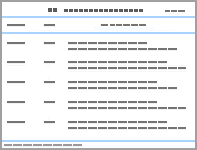
表1
CMD多模态评估方法汇总
| 评估手段 | 关键优势 | 临床应用价值 | 局限性 |
| fMRI | 分辨率高,可结合语言、音乐、运动想象等多种刺激范式 | 单独或联合EEG识别 CMD,辅助预后判断,为多模态评估重要工具 | 设备昂贵、操作复杂,不适用于不稳定患者 |
| EEG | 时间分辨率高,可床旁实施,有功率谱密度、任务相关电位等可量化指标 | 单独或联合fMRI,可耦合认知范式/BCI,为CMD评估的重要工具 | 空间定位精度有限,易受环境干扰 |
| PET | 可鉴别UWS与MCS,监测意识恢复过程中脑代谢动态变化 | 联合fMRI/EEG 提高CMD 检出敏感性,可独立预测预后 | 设备普及度低,不适用于急性期频繁检测 |
| fNIRS | 便携、无创,可床旁监测,适用于生命体征不稳定患者 | 动态捕捉大脑皮质血流动力学变化,识别急慢性DoC 患者隐匿性意识 | 空间分辨率低于 fMRI,探测深度有限 |
| 睡眠纺锤波 | N2睡眠阶段的纺锤波类型,无需额外设备 | WFSS阳性提示较好预后,可作为CMD早期预测信号 | 需专业EEG 分析,普适性待验证 |
| 自动瞳孔检测 | 可监测瞳孔扩张反应,低成本、便携、即时、无创 | 可作为新型生物标志物,与早期行为学评估互补 | 易受光线、药物、镇静影响 |
| [1] |
Edlow BL, Claassen J, Schiff ND, et al. Recovery from disorders of consciousness: mechanisms, prognosis and emerging therapies[J]. Nat Rev Neurol, 2021, 17(3): 135-156.
doi: 10.1038/s41582-020-00428-x |
| [2] |
Kondziella D, Amiri M, Othman MH, et al. Incidence and prevalence of coma in the UK and the USA[J]. Brain Commun, 2022, 4(5): fcac188.
doi: 10.1093/braincomms/fcac188 |
| [3] |
Laureys S, Owen AM, Schiff ND. Brain function in coma, vegetative state, and related disorders[J]. Lancet Neurol, 2004, 3(9): 537-546.
doi: 10.1016/S1474-4422(04)00852-X |
| [4] | Kalmar K, Giacino JT. The JFK coma recovery scale - revised[J]. Neuropsychol Rehabil, 2005, 15(3-4): 454-460. |
| [5] |
Owen AM, Coleman MR, Boly M, et al. Detecting awareness in the vegetative state[J]. Science, 2006, 313(5792): 1402.
doi: 10.1126/science.1130197 |
| [6] |
Schiff ND. Cognitive motor dissociation following severe brain injuries[J]. JAMA Neurol, 2015, 72(12): 1413-1415.
doi: 10.1001/jamaneurol.2015.2899 |
| [7] |
Schnakers C, Hirsch M, Noé E, et al. Covert cognition in disorders of consciousness: a meta-analysis[J]. Brain Sci, 2020, 10(12): 930.
doi: 10.3390/brainsci10120930 |
| [8] |
Egawa S, Ader J, Claassen J. Recovery of consciousness after acute brain injury: a narrative review[J]. J Intensive Care, 2024, 12(1): 37.
doi: 10.1186/s40560-024-00749-9 |
| [9] |
Claassen J, Doyle K, Matory A, et al. Detection of brain activation in unresponsive patients with acute brain injury[J]. N Engl J Med, 2019, 380(26): 2497-2505.
doi: 10.1056/NEJMoa1812757 |
| [10] |
Stender J, Gosseries O, Bruno MA, et al. Diagnostic precision of PET imaging and functional MRI in disorders of consciousness: a clinical validation study[J]. Lancet, 2014, 384(9942): 514-522.
doi: 10.1016/S0140-6736(14)60042-8 |
| [11] |
Fernández-Espejo D, Rossit S, Owen AM. A thalamocortical mechanism for the absence of overt motor behavior in covertly aware patients[J]. JAMA Neurol, 2015, 72(12): 1442-1450.
doi: 10.1001/jamaneurol.2015.2614 |
| [12] |
Luppi AI, Craig MM, Coppola P, et al. Preserved fractal character of structural brain networks is associated with covert consciousness after severe brain injury[J]. Neuroimage Clin, 2021, 30: 102682.
doi: 10.1016/j.nicl.2021.102682 |
| [13] |
Franzova E, Shen Q, Doyle K, et al. Injury patterns associated with cognitive motor dissociation[J]. Brain, 2023, 146(11): 4645-4658.
doi: 10.1093/brain/awad197 |
| [14] |
Egbebike J, Shen Q, Doyle K, et al. Cognitive-motor dissociation and time to functional recovery in patients with acute brain injury in the USA: a prospective observational cohort study[J]. Lancet Neurol, 2022, 21(8): 704-713.
doi: 10.1016/S1474-4422(22)00212-5 |
| [15] |
Edlow BL, Chatelle C, Spencer CA, et al. Early detection of consciousness in patients with acute severe traumatic brain injury[J]. Brain, 2017, 140(9): 2399-2414.
doi: 10.1093/brain/awx176 |
| [16] |
Sokoliuk R, Degano G, Banellis L, et al. Covert speech comprehension predicts recovery from acute unresponsive states[J]. Ann Neurol, 2021, 89(4): 646-656.
doi: 10.1002/ana.25995 |
| [17] |
Kazazian K, Norton L, Gofton TE, et al. Cortical function in acute severe traumatic brain injury and at recovery: a longitudinal fMRI case study[J]. Brain Sci, 2020, 10(9): 604.
doi: 10.3390/brainsci10090604 |
| [18] |
Vijiala S, Epiney JB, Jöhr J, et al. Case report: behavioral unresponsiveness in acute COVID-19 patients: the utility of the motor behavior tool-revised and 18F-FDG PET/CT[J]. Front Neurol, 2021, 12: 644848.
doi: 10.3389/fneur.2021.644848 |
| [19] |
Lin A, Liu KKL, Bartsch RP, et al. Dynamic network interactions among distinct brain rhythms as a hallmark of physiologic state and function[J]. Commun Biol, 2020, 3(1): 197.
doi: 10.1038/s42003-020-0878-4 |
| [20] |
Amiri M, Fisher PM, Raimondo F, et al. Multimodal prediction of residual consciousness in the intensive care unit: the CONNECT-ME study[J]. Brain, 2023, 146(1): 50-64.
doi: 10.1093/brain/awac335 |
| [21] |
Comanducci A, Boly M, Claassen J, et al. Clinical and advanced neurophysiology in the prognostic and diagnostic evaluation of disorders of consciousness: review of an IFCN-endorsed expert group[J]. Clin Neurophysiol, 2020, 131(11): 2736-2765.
doi: 10.1016/j.clinph.2020.07.015 |
| [22] |
Wu H, Xie Q, Pan J, et al. Identifying patients with cognitive motor dissociation using resting-state temporal stability[J]. Neuroimage, 2023, 272: 120050.
doi: 10.1016/j.neuroimage.2023.120050 |
| [23] |
Bodien YG, Allanson J, Cardone P, et al. Cognitive motor dissociation in disorders of consciousness[J]. N Engl J Med, 2024, 391(7): 598-608.
doi: 10.1056/NEJMoa2400645 |
| [24] |
Farg H, Elnakib A, Gebreil A, et al. Diagnostic value of PET imaging in clinically unresponsive patients[J]. Br J Radiol, 2024, 97(1154): 283-291.
doi: 10.1093/bjr/tqad040 |
| [25] |
He Z, Lu R, Ge J, et al. Disorder of consciousness related pattern could distinguish minimally conscious state from unresponsive wakefulness syndrome: a F-18-FDG-PET study[J]. Brain Res Bull, 2024, 215: 111023.
doi: 10.1016/j.brainresbull.2024.111023 |
| [26] |
Stender J, Kupers R, Rodell A, et al. Quantitative rates of brain glucose metabolism distinguish minimally conscious from vegetative state patients[J]. J Cereb Blood Flow Metab, 2015, 35(1): 58-65.
doi: 10.1038/jcbfm.2014.169 |
| [27] |
Liu D, Wang N, Song M, et al. Global glucose metabolism rate as diagnostic marker for disorder of consciousness of patients: quantitative FDG-PET study[J]. Front Neurol, 2024, 15: 1425271.
doi: 10.3389/fneur.2024.1425271 |
| [28] |
Hermann B, Stender J, Habert MO, et al. Multimodal FDG-PET and EEG assessment improves diagnosis and prognostication of disorders of consciousness[J]. Neuroimage Clin, 2021, 30: 102601.
doi: 10.1016/j.nicl.2021.102601 |
| [29] |
Soddu A, Gómez F, Heine L, et al. Correlation between resting state fMRI total neuronal activity and PET metabolism in healthy controls and patients with disorders of consciousness[J]. Brain Behav, 2016, 6(1): e00424.
doi: 10.1002/brb3.424 |
| [30] |
李节惠, 李冬霞, 周静, 等. 功能性近红外光谱成像技术在意识障碍评估中的应用研究进展[J]. 中华神经医学杂志, 2023, 22(6): 618-622.
doi: 10.3760/cma.j.cn115354-20221010-00702 |
|
Li JH, Li DX, Zhou J, et al. Recent advance in functional near infrared spectroscopy in evaluating disorder of consciousness[J]. Chin J Neuromed, 2023, 22(6): 618-622.
doi: 10.3760/cma.j.cn115354-20221010-00702 |
|
| [31] |
Kazazian K, Norton L, Laforge G, et al. Improving diagnosis and prognosis in acute severe brain injury: a multimodal imaging protocol[J]. Front Neurol, 2021, 12: 757219.
doi: 10.3389/fneur.2021.757219 |
| [32] |
Abdalmalak A, Milej D, Diop M, et al. Can time-resolved NIRS provide the sensitivity to detect brain activity during motor imagery consistently?[J]. Biomed Opt Express, 2017, 8(4): 2162-2172.
doi: 10.1364/BOE.8.002162 |
| [33] |
Wang N, He Y, Zhu S, et al. Functional near-infrared spectroscopy for the assessment and treatment of patients with disorders of consciousness[J]. Front Neurol, 2025, 16: 1524806.
doi: 10.3389/fneur.2025.1524806 |
| [34] |
Kempny AM, James L, Yelden K, et al. Functional near infrared spectroscopy as a probe of brain function in people with prolonged disorders of consciousness[J]. Neuroimage Clin, 2016, 12: 312-319.
doi: 10.1016/j.nicl.2016.07.013 |
| [35] |
Kazazian K, Abdalmalak A, Novi SL, et al. Functional near-infrared spectroscopy: a novel tool for detecting consciousness after acute severe brain injury[J]. Proc Natl Acad Sci U S A, 2024, 121(36): e2402723121.
doi: 10.1073/pnas.2402723121 |
| [36] |
Abdalmalak A, Milej D, Norton L, et al. The potential role of fNIRS in evaluating levels of consciousness[J]. Front Hum Neurosci, 2021, 15: 703405.
doi: 10.3389/fnhum.2021.703405 |
| [37] |
Gottshall JL, Rossi Sebastiano D. Sleep in disorders of consciousness: diagnostic, prognostic, and therapeutic considerations[J]. Curr Opin Neurol, 2020, 33(6): 684-690.
doi: 10.1097/WCO.0000000000000870 |
| [38] |
Duclos C, Dumont M, Arbour C, et al. Parallel recovery of consciousness and sleep in acute traumatic brain injury[J]. Neurology, 2017, 88(3): 268-275.
doi: 10.1212/WNL.0000000000003508 |
| [39] |
Carroll EE, Shen Q, Kansara V, et al. Sleep spindles as a predictor of cognitive motor dissociation and recovery of consciousness after acute brain injury[J]. Nat Med, 2025, 31(5): 1578-1585.
doi: 10.1038/s41591-025-03578-x |
| [40] |
Othman MH, Olsen MH, Hansen KIT, et al. Covert consciousness in acute brain injury revealed by automated pupillometry and cognitive paradigms[J]. Neurocrit Care, 2024, 41(1): 218-227.
doi: 10.1007/s12028-024-01983-7 |
| [41] |
Claassen J, Kondziella D, Alkhachroum A, et al. Cognitive motor dissociation: gap analysis and future directions[J]. Neurocrit Care, 2024, 40(1): 81-98.
doi: 10.1007/s12028-023-01769-3 |
| [1] | 吕卓蓓, 朱琳, 荣岚, 吕晓琼, 储佳妮, 成志英. 基于生物钟规律的五感促醒护理模式对脑性昏迷住院患者意识状态的干预效果[J]. 内科理论与实践, 2025, 20(04): 306-311. |
| [2] | 练艺丹1,蔡俊1,张仲伟2,刘佳航1,王韬2. 大脑皮层对飞机飞越噪声的认知机制[J]. 上海交通大学学报, 2018, 52(8): 976-981. |
| [3] | 王湘彬, 许晓雯, 王培军. 轻度认知功能障碍的多模态脑功能成像[J]. 诊断学理论与实践, 2017, 16(02): 131-136. |
| [4] | 詹松华, 孔营楠, 谭文莉. 功能磁共振成像在针灸脑效应机制研究中的应用[J]. 诊断学理论与实践, 2017, 16(02): 137-140. |
| [5] | 李渊, 范青, 王继军,. 强迫症静息态功能磁共振成像的研究进展[J]. 内科理论与实践, 2012, 7(03): 234-236. |
| [6] | 朱旭莹, 方正龙, 顾国柱, 李超生,. 醒脑静注射液治疗急性脑梗死伴意识障碍的疗效观察[J]. 内科理论与实践, 2009, 4(03): 209-211. |
| [7] | 张仲伟,缪飞,陈克敏. 直肠刺激的脑功能磁共振成像研究[J]. 诊断学理论与实践, 2004, 3(05): 54-57+61. |
| 阅读次数 | ||||||
|
全文 |
|
|||||
|
摘要 |
|
|||||
