

Journal of Surgery Concepts & Practice ›› 2026, Vol. 31 ›› Issue (03): 234-242.doi: 10.16139/j.1007-9610.2026.03.09
• Original article • Previous Articles Next Articles
WU Chunxiao, PANG Yi, GU Kai, CHEN Lei, WU Mengyin, YANG Qundi, SHI Yan( )
Received:2026-04-23
Online:2026-06-25
Published:2026-08-11
Contact:
SHI Yan
E-mail:shiyan@scdc.sh.cn
CLC Number:
WU Chunxiao, PANG Yi, GU Kai, CHEN Lei, WU Mengyin, YANG Qundi, SHI Yan. Incidence and mortality analysis of female breast cancer in Shanghai: population-based study from 2002 to 2021[J]. Journal of Surgery Concepts & Practice, 2026, 31(03): 234-242.

Fig 1
Trends of numbers and age-standardized rates of incidence and mortality of female breast cancer in Shanghai, 2002—2021


Fig 2
Age-specific numbers and rates of incidence and mortality of female breast cancer in Shanghai, 2021

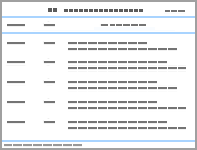
Tab 1
Trends of age-specific rates of incidence and mortality of female breast cancer in Shanghai, 2002—2021
| Category | Age group/year | 2002 Rates(1/105) | Joinpoint | 2021 Rates(1/105) | Trend 1 | Trend 2 | ||||||||
|---|---|---|---|---|---|---|---|---|---|---|---|---|---|---|
| Year | Rates(1/105) | Years | APC | t value | P value | Years | APC | t value | P value | |||||
| Incidence | 20- | 1.38 | 0.42 | 2002-2021 | -0.56 | -0.24 | 0.811 | |||||||
| 25- | 4.35 | 8.75 | 2002-2021 | 1.53 | 1.42 | 0.174 | ||||||||
| 30- | 12.84 | - | - | 24.61 | 2002-2021 | 4.25 | 8.03 | <0.001 | ||||||
| 35- | 26.18 | - | - | 58.21 | 2002-2021 | 4.43 | 15.61 | <0.001 | ||||||
| 40- | 65.19 | - | - | 88.90 | 2002-2021 | 2.22 | 6.89 | <0.001 | ||||||
| 45- | 98.00 | - | - | 109.07 | 2002-2021 | 0.77 | 2.76 | 0.013 | ||||||
| 50- | 101.29 | 126.40 | 2002-2021 | 0.47 | 1.21 | 0.241 | ||||||||
| 55- | 95.03 | 142.69 | 2002-2021 | 1.69 | 4.49 | <0.001 | ||||||||
| 60- | 81.93 | 160.63 | 2002-2021 | 3.17 | 7.21 | <0.001 | ||||||||
| 65- | 77.78 | 2015 | 125.13 | 157.57 | 2002-2015 | 3.20 | 4.16 | 0.001 | 2015-2021 | 5.39 | 3.37 | 0.004 | ||
| 70- | 94.35 | 2010 | 98.01 | 159.86 | 2002-2010 | 1.41 | 0.61 | 0.550 | 2010-2021 | 5.61 | 4.90 | <0.001 | ||
| 75- | 91.19 | - | - | 146.19 | 2002-2021 | 3.08 | 10.09 | <0.001 | ||||||
| 80- | 108.16 | - | - | 124.05 | 2002-2021 | 1.27 | 3.30 | 0.004 | ||||||
| ≥85 | 91.93 | 2011 | 67.90 | 97.62 | 2002-2011 | -1.99 | -1.09 | 0.291 | 2011-2021 | 4.91 | 4.66 | <0.001 | ||
| Mortality | 25- | 0.54 | - | - | 0.63 | 2002-2021 | 1.29 | 0.67 | 0.513 | |||||
| 30- | 1.94 | - | - | 1.60 | 2002-2021 | -0.26 | -0.25 | 0.802 | ||||||
| 35- | 3.42 | - | - | 2.23 | 2002-2021 | 0.31 | 0.27 | 0.791 | ||||||
| 40- | 7.06 | - | - | 5.09 | 2002-2021 | -1.62 | -2.79 | 0.012 | ||||||
| 45- | 14.90 | - | - | 8.34 | 2002-2021 | -2.63 | -4.88 | <0.001 | ||||||
| 50- | 23.76 | 2011 | 23.46 | 13.64 | 2002-2011 | 0.34 | 0.28 | 0.785 | 2011-2021 | -5.77 | -4.48 | <0.001 | ||
| 55- | 27.47 | 2014 | 27.00 | 16.52 | 2002-2014 | 0.08 | 0.09 | 0.933 | 2011-2021 | -6.01 | -3.09 | 0.007 | ||
| 60- | 22.70 | - | - | 20.27 | 2002-2021 | -0.74 | -1.37 | 0.189 | ||||||
| 65- | 29.49 | - | - | 27.08 | 2002-2021 | -1.49 | -2.94 | 0.009 | ||||||
| 70- | 30.40 | 2012 | 42.39 | 32.05 | 2002-2012 | 2.88 | 2.69 | 0.017 | 2012-2021 | -2.11 | -1.96 | 0.069 | ||
| 75- | 40.80 | 2013 | 57.92 | 41.92 | 2002-2013 | 3.56 | 3.09 | 0.008 | 2013-2021 | -4.51 | -2.61 | 0.020 | ||
| 80- | 64.89 | 2014 | 93.92 | 73.84 | 2002-2014 | 1.92 | 1.34 | 0.200 | 2014-2021 | -6.79 | -2.50 | 0.025 | ||
| ≥85 | 101.39 | 2013 | 162.50 | 99.35 | 2002-2013 | 3.91 | 2.79 | 0.014 | 2013-2021 | -5.44 | -3.64 | 0.002 | ||

Fig 3
Trends of age-specific incidence rates of female breast cancer in Shanghai, 2002—2021


Fig 4
Trends of age-specific mortality rates of female breast cancer in Shanghai, 2002—2021

Tab 2
Trends of proportions of female breast cancer in Shanghai, stratified by selected diagnostic characters, 2002—2021
| Category | 2002 Percentage/% | Joinpoint | 2021 Percentage/% | Trend 1 | Trend 2 | ||||||||
|---|---|---|---|---|---|---|---|---|---|---|---|---|---|
| Year | Percentage/% | Years | APC | t value | P value | Years | APC | t value | P value | ||||
| Morphological verification | 87.58 | 2011 | 94.55 | 90.73 | 2002-2011 | 0.81 | 6.90 | <0.001 | 2011-2021 | -0.36 | -3.61 | 0.003 | |
| Histological type | |||||||||||||
| Invasive ductal carcinoma | 67.29 | 64.00 | 2002-2021 | -1.16 | -3.54 | 0.002 | |||||||
| Others | 14.10 | 2009 | 8.56 | 10.30 | 2002-2009 | -6.45 | -5.81 | <0.001 | 2009-2021 | 1.84 | 3.59 | 0.003 | |
| Unspecified | 18.62 | 25.70 | 2002-2021 | 4.08 | 4.49 | <0.001 | |||||||
| Stage | |||||||||||||
| Ⅰ | 21.73 | 2013 | 29.16 | 22.31 | 2002-2013 | 3.96 | 5.67 | <0.001 | 2013-2021 | -1.97 | -1.80 | 0.092 | |
| Ⅱ | 30.65 | 27.11 | 2002-2021 | -1.00 | -3.10 | 0.006 | |||||||
| Ⅲ | 9.07 | 2012 | 8.75 | 6.80 | 2002-2012 | <0.01 | <0.01 | 0.999 | 2012-2021 | -2.96 | -5.41 | <0.001 | |
| Ⅳ | 7.06 | 2011 | 6.65 | 3.09 | 2002-2011 | -0.32 | -0.31 | 0.761 | 2011-2021 | -7.23 | -8.55 | <0.001 | |
| Unknown | 31.49 | 2011 | 24.14 | 40.69 | 2002-2011 | -2.99 | -2.74 | 0.015 | 2011-2021 | 3.88 | 4.04 | 0.001 | |
| [1] | Bray F, Laversanne M, Sung H, et al. Global cancer statistics 2022: GLOBOCAN estimates of incidence and mortality worldwide for 36 cancers in 185 countries[J]. CA Cancer J Clin, 2024, 74(3):229-263. |
| [2] | Han B, Zheng R, Zeng H, et al. Cancer incidence and mortality in China, 2022[J]. J Natl Cancer Cent, 2024, 4(1):47-53. |
| [3] | 顾凯, 庞怡, 吴春晓, 等. 2017年上海市恶性肿瘤发病和死亡情况与2002—2017年的变化趋势分析[J]. 肿瘤, 2023, 43(4):241-256. |
| Gu Kai, Pang Yi, Wu Chunxiao, et al. Analysis of the current status of cancer incidence and mortality in Shanghai, 2017 and trends of 2002-2017[J]. Tumor, 2023, 43(4):241-256. | |
| [4] | 国家癌症中心. 中国肿瘤登记工作指导手册(2016)[M]. 北京: 人民卫生出版社,2016:59-75. |
| National Cancer Center. Chinese Guideline for Cancer Registration(2016)[M]. Beijing: People's Medical Publishing House,2016:59-75. | |
| [5] | Parkin D M, Chen V W, Ferlay J, et al. Comparability and quality control in cancer registration.19[M]. Lyon: IARC Press, 1994. |
| [6] | 上海市疾病预防控制中心. 上海市恶性肿瘤发病率、死亡率和生存率(2001—2012)[M]. 上海: 上海科学普及出版社,2017:1-6. |
| Shanghai Municipal Center for Disease Control and Prevention. Cancer incidence, mortality and survival rates in Shanghai (2001—2012)[M]. Shanghai: Shanghai General Science Press,2017:1-6. | |
| [7] | Tavassoli F A, Devilee P. World Health Organization Classification of Tumours: pathology and genetics of tumours of the breast and female genital organs[M]. Lyon: IARC Press, 2003. |
| [8] | 卢伟, 郑莹. 肿瘤命名与编码[M]. 上海: 第二军医大学出版社, 2011. |
| Lu Wei, Zheng Ying. Tumor nomenclature and coding[M]. Shanghai: Second Military Medical University Press, 2011. | |
| [9] | Segi M. Cancer mortality for selected sites in 24 countries 1950—1957)[M]. Sendai, Japan: Tohoku University School of Medicine, 1960. |
| [10] | Statistical Research and Applications Branch, National Cancer Institute.Joinpoint Regression Program, Version 4.8.0.1[CP]. 2020. |
| [11] |
Kim H J, Fay M P, Feuer E J, et al. Permutation tests for joinpoint regression with applications to cancer rates[J]. Stat Med, 2000, 19(3):335-351.
doi: 10.1002/(sici)1097-0258(20000215)19:3<335::aid-sim336>3.0.co;2-z pmid: 10649300 |
| [12] | 吴春晓, 郑莹, 鲍萍萍, 等. 2003—2012年上海市户籍女性乳腺癌发病特征分析[J]. 中华预防医学杂志, 2017, 51(8):692-697. |
|
Wu Chunxiao, Zheng Ying, Bao Pingping, et al. Analysis of the patterns of female breast cancer incidence in Shanghai, 2003-2012[J]. Chin J Prev Med, 2017, 51(8):692-697.
doi: 10.3760/cma.j.issn.0253-9624.2017.08.007 pmid: 28763917 |
|
| [13] | 吴春晓, 顾凯, 王春芳, 等. 上海市女性乳腺癌流行现况、回顾与比较分析[J]. 外科理论与实践, 2019, 24(5):421-427. |
| Wu Chunxiao, Gu Kai, Wang Chunfang, et al. Incidence of female breast cancer in Shanghai: current evidence and a comparative retrospective study[J]. J Surg Concepts Pract, 2019, 24(5):421-427. | |
| [14] | 颜佳颖, 吴梦吟, 顾凯, 等. 1973—2017年上海市女性乳腺癌发病及死亡长期趋势变化分析[J]. 肿瘤, 2023, 43(4):316-324. |
| Yan Jiaying, Wu Mengyin, Gu Kai, et al. Analysis of long-term trend changes in breast cancer incidence and death among females in Shanghai, 1973—2017[J]. Tumor, 2023, 43(4):241-256. | |
| [15] | 国家癌症中心. 2022中国肿瘤登记年报[M]. 北京: 人民卫生出版社,2025:148-151. |
| National Cancer Center. 2022 Chinese cancer registry annual report[M]. Beijing: People′s Medical Publishing House,2025:148-151. | |
| [16] | 韩仁强, 缪伟刚, 俞浩, 等. 2009—2021年江苏省肿瘤登记地区恶性肿瘤发病趋势及年龄变化分析[J]. 预防医学, 2025, 37(10):979-984,990. |
| Han Renqiang, Miao Weigang, Yu Hao, et al. Trend in incidence and change in age at onset of malignant tumor in cancer registration areas of Jiangsu Province from 2009 to 2021[J]. Prev Med, 2025, 37(10):979-984,990. | |
| [17] | 韩颖颖, 蔡波, 林玲, 等. 2009—2019年江苏省肿瘤登记地区女性乳腺癌发病趋势及年龄变化分析[J]. 中国肿瘤, 2024, 33(12):970-976. |
| Han Yingying, Cai Bo, Lin Ling, et al. Trends of incidence and age at onset of female breast cancer in Jiangsu cancer registration areas from 2009 to 2019[J]. China Cancer, 2024, 33(12):970-976. | |
| [18] | 李妍, 黄泓睿, 马旭, 等. 2021年浙江省肿瘤登记地区女性乳腺癌发病与死亡特征及2000—2021年变化趋势分析[J]. 中国肿瘤, 2025, 34(10):764-774. |
| Li Yan, Huang Hongrui, Ma Xu, et al. Incidence and mortality of female breast cancer in Zhejiang cancer registration areas in 2021 and trends from 2000 to 2021[J]. China Cancer, 2025, 34(10):764-774. | |
| [19] |
吴春晓, 庞怡, 顾凯, 等. 2002—2017年上海市女性乳腺癌生存分析[J]. 中国癌症杂志, 2025, 35(3):291-297.
doi: 10.19401/j.cnki.1007-3639.2025.03.005 |
| Wu Chunxiao, Pang Yi, Gu Kai, et al. Survival analysis of female breast cancer in Shanghai: a population-based study from 2002 to 2017[J]. China Oncol, 2025, 35(3):291-297. | |
| [20] |
Parkin D M. Global cancer statistics in the year 2000[J]. Lancet Oncol, 2001, 2(9):533-543.
doi: 10.1016/S1470-2045(01)00486-7 pmid: 11905707 |
| [21] |
郑莹, 吴春晓, 张敏璐. 乳腺癌在中国的流行状况和疾病特征[J]. 中国癌症杂志, 2013, 23(8):561-569.
doi: 10.3969/j.issn.1007-3969.2013.08.001 |
| Zheng Ying, Wu Chunxiao, Zhang Minlu. The epidemic and characteristics of female breast cancer in China[J]. China Oncol, 2013, 23(8):561-569. | |
| [22] |
Vineis P, Wild C P. Global cancer patterns: causes and prevention[J]. Lancet, 2014, 383(9916):549-557.
doi: 10.1016/S0140-6736(13)62224-2 pmid: 24351322 |
| [23] |
Levi F, Randimbison L, Te V C, et al. Incidence of breast cancer in women with fibroadenoma[J]. Int J Cancer, 1994, 57(5):681-683.
pmid: 8194875 |
| [24] |
London S L, Connolly J L, Schnitt S J, et al. A prospective study of benign breast disease and the risk of breast cancer[J]. JAMA, 1992, 267(7):941-944.
doi: 10.1001/jama.1992.03480070057030 URL |
| [25] |
Desantis C E, Bray F, Ferlay J, et al. International variation in female breast cancer incidence and mortality rates[J]. Cancer Epidemiol Biomarkers Prev, 2015, 24(10):1495-1506.
doi: 10.1158/1055-9965.EPI-15-0535 URL |
| [26] | 吴春晓, 顾凯, 施燕. 肿瘤命名与编码[M]. 上海: 上海科学普及出版社, 2022. |
| Wu Chunxiao, Gu Kai, Shi Yan. Tumor nomenclature and coding[M]. Shanghai: Shanghai Popular Science Press, 2022. | |
| [27] | Miller K D, Nogueira L, Mariotto A B, et al. Cancer treatment and survivorship statistics, 2019[J]. CA Cancer J Clin, 2019, 69(5):363-385. |
| [28] |
Allemani C, Matsuda T, Di Carlo V, et al. Global surveillance of trends in cancer survival 2000-14 (CONCORD-3): analysis of individual records for 37 513 025 patients diagnosed with one of 18 cancers from 322 population-based registries in 71 countries[J]. Lancet,2018, 391(10125):1023-1075.
doi: 10.1016/S0140-6736(17)33326-3 URL |
| [29] | 郑杨, 王春芳, 吴春晓, 等. 《“健康上海2030”规划纲要》三项主要指标解读[J]. 上海预防医学, 2018, 30(1):11-14,20. |
| Zheng Yang, Wang Chunfang, Wu Chunxiao, et al. Interpretation of three main indicators of the “2030 Plan for Healthy Shanghai”[J]. Shanghai J Prev Med, 2018, 30(1):11-14,20. |
| [1] | DOU Jianming, WU Chunxiao, CHEN Lei, PANG Yi, SHI Yan, GU Kai. Incidence and mortality analysis of lung cancer in Shanghai from 2002 to 2019 [J]. Journal of Diagnostics Concepts & Practice, 2026, 25(03): 327-336. |
| [2] | RUAN Miao, FEI Xiaochun, DA Qian. Digital pathology and artificial intelligence-assisted diagnosis in breast cancer [J]. Journal of Surgery Concepts & Practice, 2026, 31(03): 204-211. |
| [3] | WANG Haoyu, ZHU Siji, LI Anqi, CHEN Xiaosong. Application and prospects of circulating tumor DNA in the precision diagnosis and treatment of breast cancer [J]. Journal of Surgery Concepts & Practice, 2026, 31(03): 212-217. |
| [4] | XU Jiayan, ZHU Siji. Topical topics of CDK4/6 inhibitors in adjuvant treatment of early breast cancer [J]. Journal of Surgery Concepts & Practice, 2026, 31(03): 227-233. |
| [5] | CHEN Yuanyuan, WANG Jie, CHEN Fang. Clinicopathological characteristics and prognosis of synchronous bilateral breast cancer [J]. Journal of Surgery Concepts & Practice, 2026, 31(03): 243-249. |
| [6] | YUAN Shuai, XU Guoping, YANG Li, SHI Youyang, WEI Min. Single-port breast endoscopy-assisted prepectoral implant placement versus open subpectoral implant placement in stage Ⅰ breast reconstruction: a retrospective study [J]. Journal of Surgery Concepts & Practice, 2026, 31(03): 250-256. |
| [7] | ZHU Nengjun, CAO Jian, CHEN Xiaosong, ZHU Siji. Large language models empower precision decision-making in breast surgery and whole-cycle patient management [J]. Journal of Surgery Concepts & Practice, 2026, 31(03): 185-190. |
| [8] | SHANG Qingyao, DONG Xubin, YUE Jiaxian, WANG Xin. De-escalation trends in axillary management for breast cancer: evidence-based progress and future directions [J]. Journal of Surgery Concepts & Practice, 2026, 31(03): 191-195. |
| [9] | WANG Han, WANG Zheng, CHEN Xiaosong. Intratumoral microbiota and breast cancer: from mechanistic exploration to novel targets for clinical intervention [J]. Journal of Surgery Concepts & Practice, 2026, 31(03): 196-203. |
| [10] | QI Qingsong, TIAN Meina, YU Yao. Research progress on immunological non-response in acquired immunodeficiency syndrome patients [J]. Journal of Internal Medicine Concepts & Practice, 2026, 21(01): 3-11. |
| [11] | LIU Dan, CHEN Ying, XIE Fengfeng, et al. Clinical practice and exploration of intercostal perforator flap for immediate nipple reconstruction in patients with prosthetic breast reconstruction [J]. Journal of Tissue Engineering and Reconstructive Surgery, 2025, 21(6): 575-. |
| [12] |
GAO Minzhe, YU Ziyou, WANG Li, et al.
Study on the mechanism of CDT in the treatment of breast cancer-related stage Ⅲ lymphedema (ICG) lymphography
[J]. Journal of Tissue Engineering and Reconstructive Surgery, 2025, 21(4): 362-.
|
| [13] | CAO Weigang, YANG Zhenlin. Clinical experience of autologous flap reconstruction of chest wall defects after breast cancer surgery [J]. Journal of Tissue Engineering and Reconstructive Surgery, 2025, 21(3): 225-. |
| [14] | LAI Bohan, WEI Boxuan, JIN Jiamin, et al. The survey research of epidemiology and risk factors of large to giant congenital melanocytic nevi in China [J]. Journal of Tissue Engineering and Reconstructive Surgery, 2025, 21(3): 250-. |
| [15] | YANG Qingyu, ZENG Yuanyuan, WANG Qiuzhou, et al. Influence of mutual support intervention on the level of family care and social support in patients with prosthesis reconstruction after modified radical breast surgery [J]. Journal of Tissue Engineering and Reconstructive Surgery, 2025, 21(3): 283-. |
| Viewed | ||||||
|
Full text |
|
|||||
|
Abstract |
|
|||||
