Recently, Scopus—one of the world’s most renowned academic abstract and citation databases—released its latest list of indexed journals. New Techno-Humanities, an international journal sponsored by Shanghai Jiao Tong University and published by Elsevier, has successfully passed the rigorous review of the Scopus Content Selection & Advisory Board (CSAB) and has been officially accepted for inclusion. This achievement marks a new stage in the journal’s international visibility and academic influence.
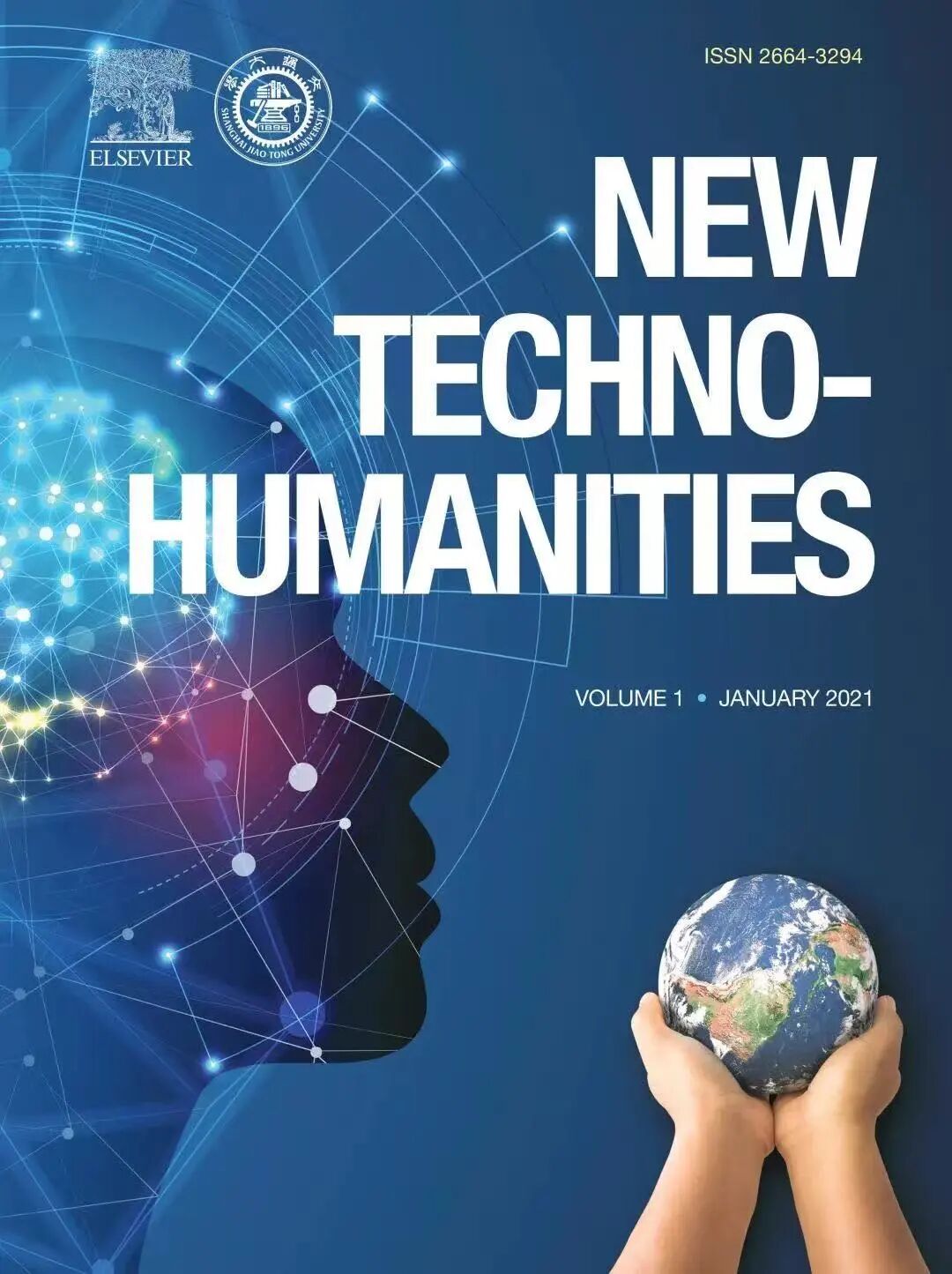
New Techno-Humanities, the English edition of the Journal of Shanghai Jiao Tong University (Philosophy and Social Sciences), is an interdisciplinary, double-blind peer-reviewed international journal founded and led by Professor Qinglong Peng. The journal is committed to bridging the divide between science, technology, and the humanities, breaking through conventional disciplinary boundaries and establishing an academic platform where technology and the humanities can mutually enrich one another and where traditional and emerging disciplines intersect. Its primary areas of focus include theoretical research, namely the ontological and conceptual exploration of techno-humanities, as well as applied research, which employs emerging technological tools, methods, and modes of thinking to address issues in the humanities.
As one of the largest and most authoritative academic databases globally, Scopus is widely recognized in the international scholarly community for its rigorous selection criteria, extensive disciplinary coverage, and respected citation metrics. Being indexed in Scopus signifies a high level of scholarly quality, international visibility, and academic impact, and represents an important platform for researchers around the world to disseminate their work.
The inclusion of New Techno-Humanities in Scopus constitutes a major breakthrough in the University’s interdisciplinary development and in the advancement of its flagship humanities and social sciences journals. It also represents a landmark achievement in the field of techno-humanities research. Taking this milestone as a new point of departure, the journal will continue to enhance its academic quality, deepen the dialogue between technology and the humanities, and inject new impetus into the internationalization of the humanities at Shanghai Jiao Tong University and the broader development of techno-humanities studies.