

诊断学理论与实践 ›› 2025, Vol. 24 ›› Issue (06): 664-667.doi: 10.16150/j.1671-2870.2025.06.014
戴豫宛1, 燕备战1, 孔晓阳1, 郭秀明2, 孔存权1( )
)
收稿日期:2024-12-19
修回日期:2025-02-21
出版日期:2025-12-25
发布日期:2025-12-25
通讯作者:
孔存权 E-mail:kaquan@126.com基金资助:
DAI Yuwan1, YAN Beizhan1, KONG Xiaoyang1, GUO Xiuming2, KONG Cunquan1()
Received:2024-12-19
Revised:2025-02-21
Published:2025-12-25
Online:2025-12-25
摘要:
RhD阴性血存在多种表型,每种表型下还有众多亚型,且各自对应特定的分子机制。本文报道了1例RhD基因第5外显子的第767位点(c.767C>A,p.Ser256Ter)发生核苷酸变异,导致第256位终止密码子取代丝氨酸,引起RhD抗原蛋白结构发生变化,从而使血清学表现为RhD阴性的患者。该等位基因的序列数据为首次报道,已提交GenBank,登记号为PQ740962。对于RhD阴性血的患者,应进一步运用血清学结合分子生物学的手段明确其亚型和分子遗传背景,不同的RhD血型在孕妇、受血者和献血者中需要区别对待,因此,有必要了解更多信息以便进行孕期监测和输血管理。本次报道的RhD新等位基因突变的发现,丰富了RhD阴性血形成的分子生物学机制,有助于RhD血型的准确判断,也有助于制定指导临床的“精准”输血,降低稀有血型人群的输血危害,保障输血安全。
中图分类号:
戴豫宛, 燕备战, 孔晓阳, 郭秀明, 孔存权. RhD新等位基因c.767C>A突变血型鉴定及分子机制分析[J]. 诊断学理论与实践, 2025, 24(06): 664-667.
DAI Yuwan, YAN Beizhan, KONG Xiaoyang, GUO Xiuming, KONG Cunquan. Blood type identification and molecular mechanism analysis of a novel RhD allele caused by c.767C>A mutation[J]. Journal of Diagnostics Concepts & Practice, 2025, 24(06): 664-667.

图1
RhD外显子1-10的PCR核酸凝胶电泳图结果

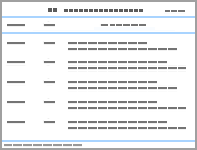
表1
RhD基因1-10外显子扩增引物序列
| 引物名称 | 引物序列(5'→3') | 产物长度(bp) |
|---|---|---|
| RhD1-F | TCAACTGTGTAACTATGAGGAGTCAG | 767 |
| RhD1-R | GCTATTTGCTCCTGTGACCACTT | |
| RhD2-F | TGACGAGTGAAACTCTATCTCGAT | 1606 |
| RhD2-R | GGCATGTCTATTTCTCTCTGTCTAAT | |
| RhD3-F | GTCGTCCTGGCTCTCCCTCTCT | 219 |
| RhD3-R | CTTTTCTCCCAGGTCCCTCCT | |
| RhD4-F | GCCGACACTCACTGCTCTTA | 378 |
| RhD4-R | TGAACCTGCTCTGTGAAGTGC | |
| RhD5-F | TACCTTTGAATTAAGCACTTCACAG | 1458 |
| RhD5-R | TTATTGGCTACTTGGTGCC | |
| RhD6-F | CAGGGTTGCCTTGTTCCCA | 274 |
| RhD6R | CTTCAGCCAAAGCAGAGGAGG | |
| RhD7-F | CATCCCCCTTTGGTGGCC | 405 |
| RhD7-R | AAGGTAGGGGCTGGACAG | |
| RhD8-F | GGTCAGGAGTTCGAGATCAC | 709 |
| RhD8-R | TGGCAATGGTGGAAGAAAGG | |
| RhD9-F | TGCAGTGAGCCGAGGTCAC | 695 |
| RhD9-R | CACCCGCATGTCAGACTATTTGGC | |
| RhD10-F | CAAGAGATCAAGCCAAAATCAGT | 382 |
| RhD10-R | AGCTTACTGGATGACCACCA | |
| ACTB-F | GGGAAATCGTGCGTGACATT | 150 |
| ACTB-R | GGGAAATCGTGCGTGACATT |

图2
RhD基因测序结果 注:UB代表RhD基因的上游盒子,DA代表下游盒子,HY代表杂交盒子。

表2
RhD血型血清学及基因检测结果
| RhD确认实验 | 直接抗人球 蛋白实验红细胞+ anti-lgG | 吸收放 散实验 | RhCE表型 (Anti-C/c/E/e) | 基因型 | 氨基酸 变化 | GenBank登记号 | ||
|---|---|---|---|---|---|---|---|---|
| Anti-D(anti-lgG 北京金豪) | Anti-D(anti-lgG 上海生物医药) | Anti-D(anti-lgG+lgM NOVACLONETM) | ||||||
| 阴性 | 阴性 | 阴性 | 阴性 | 阴性 | C-c-E-e- | c.767C>A | p.Ser256Ter | PQ740962 |

图3
RhD蛋白的3D分子模型 A:野生型RhD蛋白模型,B:突变后RhD蛋白模型。

表3
国际输血协会(ISBT)检索RhD等位基因相似突变
| 表型 | 等位基因名称 | 核苷酸变化 | 外显子/内含子 | 氨基酸改变 | PMID No. | 接收编号 | rs No. | 注释 |
|---|---|---|---|---|---|---|---|---|
| D- | RHD*01N.39 | C.767C>G | 5 | P.Ser256Ter | 23634715 | HE814563 | rs780356470 | 提前终止密码子 |
| [1] |
WESTHOFF C M. Blood group genotyping[J]. Blood, 2019, 133(17):1814-1820.
doi: 10.1182/blood-2018-11-833954 URL |
| [2] | 周欢, 成申. 一例部分D血型表型及基因型鉴定分析[J]. 海南医学, 2024, 35(19):2837-2842. |
| ZHOU H, CHENG S. Phenotype and genotype identification of a case of partial D blood group[J]. Hainan Med J, 2024, 35(19):2837-2842. | |
| [3] | 杨贺才, 曾群娟, 马晓莉, 等. 郑州地区RhD变异型献血者分子生物学分析[J]. 中国输血杂志, 2024, 37(8):866-871. |
| YANG H C, ZENG Q J, MA X L, et al. Molecular biological analysis of RhD variant blood donors in Zhengzhou[J]. Chin J Blood Transfusion, 2024, 37(8):866-871. | |
| [4] |
吴凡, 梁爽, 彭龙, 等. 38例血清学弱D表型献血者RhCcEe表型与RhD基因型检测情况分析[J]. 临床输血与检验, 2021, 23(5):632-639.
doi: 10.3969/j.issn.1671-2587.2021.05.018 |
| WU F, LIANG S, PENG L, et al. RhCE phenotyping and RhD genotyping for 38 blood donors with weak D phenotype[J]. J Clin Transfus Lab Med, 2021, 23(5):632-639. | |
| [5] | LYU H, WANG K, FENG Z, et al. A novel RHD allele caused by c.767 C>T mutation was identified in a Chinese individual[J]. Transfusion, 2024, 64(5):E18-E20. |
| [6] |
乔芳, 田亚娟, 王远花, 等. 石家庄地区RhD变异型的分子背景研究[J]. 临床输血与检验, 2020, 22(4):400-405.
doi: 10.3969/j.issn.1671-2587.2020.04.016 |
| QIAO F, TIAN Y J, WANG Y H, et al. Molecular background study of RhD variants in Shijiazhuang area[J]. Clin Transfus Lab Med, 2020, 22(4):400-405. | |
| [7] |
SIPPERT E, VOLKOVA E, RIPPEE-BROOKS M, et al. DNA reference reagents for genotyping Rh variants[J]. J Mol Diagn, 2024, 26(6):456-466.
doi: 10.1016/j.jmoldx.2024.02.005 pmid: 38494079 |
| [8] |
FLEGEL W A. Molecular genetics of Rh and its clinical application[J]. Transfus Clin Biol, 2006, 13(1-2):4-12.
doi: 10.1016/j.tracli.2006.02.011 pmid: 16563832 |
| [9] | 吴大洲, 张薇薇, 左琴琴, 等. 1252T>G致新的弱D型血清学和分子生物学研究[J]. 中国输血杂志, 2017, 30(10):1129-1131. |
| WU D Z, ZHANG W W, ZUO Q Q, et al. Serology and molecular biology study of a new weak D phenotype caused by 1252T>G[J]. Chin J Blood Transfusion, 2017, 30(10):1129-1131. | |
| [10] |
SINGLETON B K, GREEN C A, AVENT N D, et al. The presence of an RhD pseudogene containing a 37 base pair duplication and a nonsense mutation in africans with the Rh D-negative blood group phenotype[J]. Blood, 2000, 95(1):12-18.
pmid: 10607679 |
| [11] | 申泉, 柴宝峰. 无义密码子介导的mRNA降解机制与疾病[J]. 实用医技杂志, 2008, 15(35):120-122. |
| SHEN Q, CHAI B F. Mechanism of mRNA degradation mediated by nonsense codons and diseases[J]. J Pract Med Tech, 2008, 15(35):120-122. |
| [1] | 杨迟晖, 张晶, 孟磊俊, 宫丽平, 常庆, 张泓, 曾乃燕. 对乳头状甲状腺癌临床分子靶标的筛选[J]. 诊断学理论与实践, 2019, 18(04): 402-411. |
| [2] | 刘厚昌, 番云华, 张凯, 王水花. 云南省德宏州人民医院276例丙型肝炎病毒患者基因型分布[J]. 诊断学理论与实践, 2018, 17(03): 322-327. |
| 阅读次数 | ||||||
|
全文 |
|
|||||
|
摘要 |
|
|||||
