

Journal of Surgery Concepts & Practice ›› 2025, Vol. 30 ›› Issue (04): 345-350.doi: 10.16139/j.1007-9610.2025.04.09
• Original article • Previous Articles Next Articles
HUANG Li1, ZHAO Yanna2,*, GU Jianhua3, XU Wenjuan3( ), LIU Jun4a(), FEI Jian4b
Received:2024-12-05
Online:2025-07-25
Published:2025-10-23
Contact:
XU Wenjuan, LIU Jun
E-mail:1072659336@qq.com;liujun8103@126.com
CLC Number:
HUANG Li, ZHAO Yanna, GU Jianhua, XU Wenjuan, LIU Jun, FEI Jian. Observation on safety and effectiveness of modified hydrodissection fluid in microwave ablation of benign thyroid nodules[J]. Journal of Surgery Concepts & Practice, 2025, 30(04): 345-350.
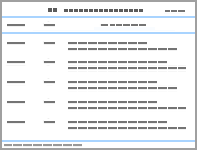
Tab 1
Comparison of baseline characteristics between two groups [$\bar{x} \pm s$/n(%)]
| Item | Modified group (n=103) | Control group (n=93) | t value | P value |
|---|---|---|---|---|
| Age(year) | 46.3±13.9 | 49.0±15.0 | 0.953 | 0.200 |
| Male∶Female | 26(25.2)∶77(74.8) | 18(19.4)∶75(80.6) | / | 0.392 |
| Nodule preoperative volume(mL) | 20.3±10.4 | 20.0±11.5 | 1.069 | 0.240 |
Tab 2
Comparison of complications occurrence between the two groups [n(%)]
| Complications | Modified group(n=103) | Control group(n=93) | χ2 value | P value |
|---|---|---|---|---|
| Neck discomfort, dysphagia | 0 | 0 | ||
| Hoarseness, loss of voice | 0 | 9(9.7) | ||
| Horner syndrome | 0 | 1(1.1) | ||
| Scald | 0 | 2(2.2) | ||
| Nodular rupture | 2(2.2) | 1(1.1) | ||
| Total incidence | 2(1.9) | 13(14.0) | 10.022 | 0.002 |
Tab 3
Comparison of absorption time between hydrodissection fluid of two groups ($\bar{x} \pm s$)
| Item | Modified group | Control group | t value | P value |
|---|---|---|---|---|
| Number of nodules | 131 | 114 | ||
| Absorption time (min) | 15.2±1.6 | 11.0±2.3 | 17.992 | 0.000 |
Tab 4
Comparison of clinical efficacy between the two groups at 12 months after surgery[n(%)]
| VRR | Modified group (n=131) | Control group (n=114) | χ2 value | P value |
|---|---|---|---|---|
| <50% | 6(4.6) | 4(4.5) | ||
| 50%~90% | 38(29.0) | 32(28.1) | ||
| >90% | 87(66.4) | 78(68.4) | ||
| ≥50% | 125(95.4) | 110(96.5) | 0.179 | 0.672 |
| [1] | 林庭伃, 赵艳娜, 费健. 热消融技术治疗甲状腺微小乳头状癌的现况[J]. 外科理论与实践, 2023, 28(5):477-482. |
| LIN T Y, ZHAO Y N, FEI J. The current status of thermal ablation in the treatment of papillary thyroid microcarcinoma[J]. J Surg Concepts Pract, 2023, 28(5):477-482. | |
| [2] | 曹昆昆, 章建全. 透明质酸钠预防术后粘连的研究进展[J]. 中国介入影像与治疗学, 2017, 14(2):118-121. |
| CAO K K, ZHANG J Q, et al. Research progresses of sodium hyaluronate in prevention of postoperative adhesion[J]. Chin J Interv Imaging Ther, 2017, 14(2):118-121. | |
| [3] | KIM J H, BAEK J H, LIM H K, et al. 2017 thyroid radiofrequency ablation guideline: Korean society of thyroid radiology[J]. Korean J Radio,2018, 19(4):632-655. |
| [4] | 卢峰, 徐辉雄, 郭乐杭, 等. 液体隔离带在超声引导穿刺颈部高风险病灶中的应用[J]. 中华医学超声杂志(电子版), 2014, 11(12):53-56. |
| LU F, XU H X, GUO L H, et al. Application of hydrodissection in percutaneous puncture of neck lesions with high risk under ultrasound guidance[J]. Chin J Med Ultrasound(electronic edition), 2014, 11(12):53-56. | |
| [5] | 赵艳娜, 柳俊, 黄莉, 等. 生理盐水隔离带在激光、射频和微波甲状腺热消融术中安全性的实验研究[J]. 外科理论与实践, 2020, 25(5):432-436. |
| ZHAO Y N, LIU J, HUANG L, et al. Safety of normal saline isolation zone: an experimental study on laser, radiofrequency and microwave thyroid thermal ablation[J]. J Surg Concepts Pract, 2020, 25(5):432-436. | |
| [6] | 齐奥, 付宜鸣, 倪少滨. 生物生物多糖冲洗胶液减轻膀胱根治性切除术后腹部症状的研究[J]. 临床医药文献电子杂志, 2020, 7(5):77-78. |
| QI A, FU Y M, NI S B. Study on the effect of biological polysaccharide irrigation gel on abdominal symptoms after radical cystectomy[J]. Electron J Clin Med Lit, 2020, 7(5):77-78. | |
| [7] | 中国医师协会甲状腺肿瘤消融治疗技术专家组, 中国抗癌协会甲状腺癌专业委员会, 中国医师协会介入医师分会超声介入专业委员会, 等. 甲状腺良性结节、微小癌及颈部转移性淋巴结热消融治疗专家共识(2018版)[J]. 中国肿瘤, 2018, 27(10):768-773. |
| Thyroid Tumor Ablation Expert Group of China Medical Doctors' Association, Thyroid Cancer Committee of China Anti-Cancer Association, Ultrasound Intervention Committee of Interventionalists Branch of China Medical Doctors' Association, et al. Expert consensus on thermal ablation for thyroid benign nodes,microcarcinoma and metastatic cervical lymph nodes(2018 edition)[J]. China Cancer, 2018, 27(10):768-773. | |
| [8] | BO X W, LU F, YU S Y, et al. Comparison of efficacy, safety, and patient satisfaction between thermal ablation, conventional/open thyroidectomy, and endoscopic thyroidectomy for symptomatic benign thyroid nodules[J]. Int J Hyperthermia, 2022, 39(1):379-389. |
| [9] | 陈子元, 鲍军. 超声引导下甲状腺良性结节微波消融术治疗的临床效果[J]. 浙江创伤外科, 2020, 25(6):1134-1135. |
| CHEN Z Y, BAO J. To evaluate the clinical effect of ultrasound-guided microwave ablation for benign thyroid nodules[J]. Zhejiang J Trauma Surg, 2020, 25(6):1134-1135. | |
| [10] | BERNARDI S, DOBRINJA C, FABRIS B, et al. Radiofrequency ablation compared to surgery for the treatment of benign thyroid nodules[J]. Int J Endocrinol, 2014,2014:934595. |
| [11] | AGYEKUM E A, FU J, XU F J, et al. Ultrasound-guided thermal ablation of thyroid nodules:technicalities progress and clinical applications,especially in malignant thyroid nodules[J]. Front oncol, 2021,11:761005. |
| [12] | 曹伟田, 王燕, 王献华, 等. 超声引导下甲状腺结节微波消融术并发症影响因素分析[J]. 中国超声医学杂志, 2024, 40(9):964-967. |
| CAO W T, WANG Y, WANG X H, et al. Analysis of influencing factors for complications of ultrasound-guided microwave ablation for thyroid nodules[J]. Chin J Med Ultrasound, 2024, 40(9):964-967. | |
| [13] | ZHENG B, ZHANG P, LV Q, et al. Development and preclinical evaluation of multifunctional hydrogel for precise thermal protection during thermal ablation[J]. Bioact Mater, 2023,12;31:119-135. |
| [14] | NA D G, LEE J H, JUNG S L, et al. Radiofrequency ablation of benign thyroid nodules and recurrent thyroid cancers: consensus state thyroid nodules and recurrent thyroid cancers: consensus statement and recommendations[J]. Korean J Radiol, 2012, 13(2):117-125. |
| [15] |
JEONG W K, BAEK J H, RHIM H, et al. Radiofrequency ablation of benign thyroid nodules: safety and imaging follow-up in 236 patients[J]. Eur Radiol, 2008, 18(6):1244-1250.
doi: 10.1007/s00330-008-0880-6 pmid: 18286289 |
| [16] |
HAHA E J, BAEK J H, LEE J H, et al. Clinical significance of vagus nerve variation in radiofrequency ablation of thyroid nodules[J]. Eur Radiol, 2011, 21(10):2151-2157.
doi: 10.1007/s00330-011-2167-6 pmid: 21633824 |
| [17] | 孙凤坤, 邢泽炳. 微波技术原理及其发展与应用[J]. 科技创新与应用, 2014(6):3-4. |
| SUN F K, XING Z B. Principle of microwave technology and its development and application[J]. Technol Innov Appl, 2014(6):3-4. | |
| [18] | 邓佳琳, 王小平. 超声引导下微波消融治疗甲状腺良性结节的临床效果及安全性评估[J]. 现代肿瘤医学, 2022, 30(21):3882-3886. |
| DENG J L, WANG X P. Clinical effect and safety evaluation of ultrasound-guided microwave ablation in the treatment of benign thyroid nodules[J]. Mod Oncol, 2022, 30(21):3882-3886. | |
| [19] | DING M, WU G S, GU J H, et al. Pathology confirmation of the efficacy and safety of microwave ablation in papillary thyroid carcinoma[J]. Front Endocrinol, 2022,13:929651. |
| [20] | 张海波, 张慧杰. 甲状腺良性结节低位小切口手术治疗临床效果观察[J]. 中华养生保健, 2025, 43(4):80-82,86. |
| ZHANG H B, ZHANG H J. Observation on the clinical effect of small incision surgery for benign thyroid nodules[J]. Chin Health Care, 2025, 43(4):80-82,86. | |
| [21] | 田俊, 杨亚芳, 娄斌, 等. 全泪道MR成像——透明质酸钠的应用[J]. 中国医学影像技术, 2014, 30(7):1011-1014. |
| TIAN J, YANG Y F, LOU B, et al. MR technology to entire lacrimal system: application of sodium hyaluronate[J]. Chin J Med Imaging Technol, 2014, 30(7):1011-1014. | |
| [22] | 朱铧丞, 马伟权, 杨阳, 等. 一种非极性溶液微波间接加热方法的仿真计算[J]. 真空电子技术, 2018(3):50-52. |
| ZHU H C, MA W Q, YANG Y, et al. Simulation calculation of a non-polar solution microwave indirect heating method[J]. Vacuum Electron, 2018(3):50-52. | |
| [23] | 贺倩芸, 佟大可, 纪方. 生物多糖冲洗胶液在踝关节骨折手术后粘连预防中的临床应用价值[J]. 天津药学, 2015, 27(5):34-36. |
| HE Q Y, DONG D K, JI F. To explore the clinical application value of biological polysaccharide irrigation glue in the prevention of adhesion after ankle fracture surgery[J]. Tianjin Pharm, 2015, 27(5):34-36. | |
| [24] | 袁强辉, 陈英娇, 雷尚通. 医用透明质酸钠预防甲状腺手术后切口粘连的有效性和安全性[J]. 海南医学, 2018, 29(12):1747-1749. |
| YUAN Q H, CHEN Y J, LEI S T. Effectiveness and safety of medical sodium hyaluronate in preventing incisional adhesions after thyroid surgery[J]. Hainan Med, 2018, 29(12):1747-1749. | |
| [25] | 程学远. 术后肠粘连的发生机制及研究进展[J]. 北方药学, 2014, 11(12):101-102. |
| CHENG X Y. The mechanism and research progress of postoperative intestinal adhesion[J]. J North Pharm, 2014, 11(12):101-102. |
| [1] | QIN Wenying, HAN Wenjuan, GUI Yuanyuan. Predictive modeling of risk factors associated with complications after microtia external ear reconstruction and analysis of structural versus narrative therapy [J]. Journal of Tissue Engineering and Reconstructive Surgery, 2025, 21(3): 258-. |
| [2] | Aierbanjiang·Shali, Xiriaili·Kadier, CHENG Erlin, et al. Keystone flap and latissimus dorsi flap in repairing popliteal fossa defect:A case report [J]. Journal of Tissue Engineering and Reconstructive Surgery, 2024, 20(6): 698-. |
| [3] |
YANG Baofeng, LI Jie, MA Jiguang.
Advances in minimal-invasive blepharoplasty [J]. Journal of Tissue Engineering and Reconstructive Surgery, 2024, 20(4): 491-. |
| [4] |
WU Weimin, LAN Tianyao, ZHENG Huarong, et al.
Successful repair of skin tissue expansion devices implantation with partial exposure of dilated sac: Two cases repor·t [J]. Journal of Tissue Engineering and Reconstructive Surgery, 2024, 20(4): 460-. |
| [5] | CHEN Junzong, LIU Kai, TANG Di. Mechanism, clinical manifestations, prevention, and treatment of air embolism during ERCP [J]. Journal of Surgery Concepts & Practice, 2024, 29(06): 537-543. |
| [6] | LIU Yanming, SUN Shuyu, LI Song, WU Jian. A case of systemic lupus erythematosus complicated with calcinosis cutis [J]. Journal of Internal Medicine Concepts & Practice, 2024, 19(06): 409-412. |
| [7] | JIAO Yuanjun, YIN Yaoxin, LI Guixian, LIU Jikui, LIN Zewei. Liver perforation caused by modified biliary stent of nasobiliary duct:a case report [J]. Journal of Surgery Concepts & Practice, 2024, 29(05): 452-454. |
| [8] | LI Shule, LU Lu. Development and prospect of laparoscopic living donor hepatectomy [J]. Journal of Surgery Concepts & Practice, 2024, 29(02): 121-125. |
| [9] | GUO Yujie, TANG Ying, GU Jichun, YANG Feng, LIU Huaye, JIN Chen, FU Deliang, Li Ji. Clinical value analysis of simple resection of pancreatic solid pseudopapillary tumor [J]. Journal of Surgery Concepts & Practice, 2024, 29(01): 27-33. |
| [10] |
REN Yanxin, YU Yan, XU Kexin, et al.
Research progress of the effect of radiotherapy on breast reconstruction with prosthesis and autologous tissue after breast cancer surgery [J]. Journal of Tissue Engineering and Reconstructive Surgery, 2023, 19(5): 511-. |
| [11] |
GAO Qiang.
Analysis of time window and influencing factors of various complications after breast reconstruction with prosthesis implantation [J]. Journal of Tissue Engineering and Reconstructive Surgery, 2023, 19(5): 464-. |
| [12] |
XU Kangni, YUAN Siming.
Topical iatrogenic complications of infantile hemangioma [J]. Journal of Tissue Engineering and Reconstructive Surgery, 2023, 19(2): 146-. |
| [13] | YE Feng, GONG Xiaoyong, REN Jiajun, CAI Qiang, CHEN Sheng. Application of ERCP in diagnosis and treatment of biliary complications during perioperative period of primary liver cancer [J]. Journal of Surgery Concepts & Practice, 2023, 28(04): 355-360. |
| [14] | HUA Qing, ZHOU Jianqiao. Advances in study on complications encountered in ultrasonography-guided thermal ablation of benign thyroid nodules [J]. Journal of Diagnostics Concepts & Practice, 2023, 22(02): 184-189. |
| [15] | YU Lan, ZHANG Yongyi, HUANG Lei, WAN Xin, JIANG Shengyao, TANG Sijing, ZHANG Jun, HU Weiguo. Risk factors of severe postoperative complications in elderly patients with pancreaticoduodenectomy [J]. Journal of Surgery Concepts & Practice, 2023, 28(02): 139-146. |
| Viewed | ||||||
|
Full text |
|
|||||
|
Abstract |
|
|||||
