

Journal of Surgery Concepts & Practice ›› 2026, Vol. 31 ›› Issue (03): 243-249.doi: 10.16139/j.1007-9610.2026.03.10
• Original article • Previous Articles Next Articles
CHEN Yuanyuan1, WANG Jie1( ), CHEN Fang2()
Received:2024-11-20
Online:2026-06-25
Published:2026-03-02
Contact:
WANG Jie, CHEN Fang
E-mail:jiewang76@hotmail.com;1129634501@qq.com
CLC Number:
CHEN Yuanyuan, WANG Jie, CHEN Fang. Clinicopathological characteristics and prognosis of synchronous bilateral breast cancer[J]. Journal of Surgery Concepts & Practice, 2026, 31(03): 243-249.
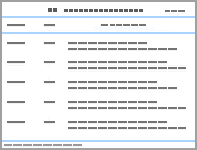
Tab 1
Results of consistency test for bilateral breast surgery types [n (%)]
| First tumor | Second tumor | Row sum | Kappa value | P value | |
|---|---|---|---|---|---|
| Breast conservation | Mastectomy | ||||
| Breast conservation | 56(17.4) | 13(4.0) | 69(21.4) | 0.548 | <0.001 |
| Mastectomy | 44(13.7) | 209(64.9) | 253(78.6) | ||
| Column sum | 100(31.1) | 222(68.9) | 322(100) | ||
Tab 2
Pathological characteristics of SBBC [n(%)]
| Pathological characteristics | First tumor | Second tumor | χ2 value | P value |
|---|---|---|---|---|
| Histology | 143.905 | <0.001 | ||
| In situ | 28(8.7) | 161(50.0) | ||
| Microinvasive carcinoma | 10(3.1) | 15(4.7) | ||
| IDC,NST | 229(71.1) | 115(35.7) | ||
| Invasive lobular carcinoma | 14(4.3) | 6(1.9) | ||
| Mucinous carcinoma | 15(4.7) | 3(0.9) | ||
| Others | 26(8.1) | 22(6.8) | ||
| Tumor diameter | 7.220 | 0.007 | ||
| ≤2 cm | 181(56.2) | 278(86.3) | ||
| >2 cm | 141(43.8) | 44(13.7) | ||
| Lymph node metastasis status a) | 25.555 | <0.001 | ||
| No | 225(70.5) | 241(87.6) | ||
| Yes | 94(29.5) | 34(12.4) | ||
| ER status | 2.769 | 0.096 | ||
| Positive | 248(77.0) | 265(82.3) | ||
| Negative | 74(23.0) | 57(17.7) | ||
| PR status | 5.110 | 0.024 | ||
| Positive | 216(67.1) | 242(75.2) | ||
| Negative | 106(32.9) | 80(24.8) | ||
| HER2 status b) | 3.169 | 0.075 | ||
| Positive | 62(21.1) | 23(14.3) | ||
| Negative | 232(78.9) | 138(85.7) | ||
| Ki-67 | 34.497 | <0.001 | ||
| High | 124(38.5) | 57(17.7) | ||
| Low | 198(61.5) | 265(82.3) |
Tab 3
Consistency test results of hormone receptor and HER2 status in SBBC [n(%)]
| First tumor | Second tumor | Kappa value | P value | |||||
|---|---|---|---|---|---|---|---|---|
| ER positive | ER negative | PR positive | PR negative | HER2 positivea) | HER2 negativea) | |||
| ER status | 0.399 | <0.001 | ||||||
| positive | 225(69.8) | 23(7.1) | — | — | — | — | ||
| negative | 40(12.4) | 34(10.6) | — | — | — | — | ||
| PR status | 0.385 | <0.001 | ||||||
| positive | — | — | 188(58.4) | 28(8.7) | ||||
| negative | — | — | 54(16.8) | 52(16.1) | ||||
| HER2 status a) | 0.368 | <0.001 | ||||||
| positive | — | — | — | 13(8.1) | 19(11.8) | |||
| negative | 10(6.2) | 119(73.9) | ||||||

Fig 1
Survival curve plotted by Kaplan-Meier method A: DFS; B: BCFI.

Tab 4
Univariate analysis of DFS and BCFI in SBBC
| Clinical and pathological features | DFS | BCFI | ||
|---|---|---|---|---|
| P value | P value | |||
| Age (year) | (<50,≥50) | 0.065 | 0.129 | |
| Menstrual status | (post-menopause, pre-menopause) | 0.309 | 0.704 | |
| Accompanied by chronic diseases a) | (No,Yes) | 0.882 | 0.459 | |
| History of benign breast diseases | (No,Yes) | 0.578 | 0.392 | |
| Family history of breast cancer | (No,Yes) | 0.078 | 0.005 | |
| Tumor diameter(cm) | (both T≤2,one T≤2,both T>2) | 0.073 | 0.292 | |
| Lymph node status | (both LN 0,one LN 1-3,both LN 1-3) | 0.172 | 0.014 | |
| ER status | (both positive,one positive,both negative) | 0.031 | 0.348 | |
| PR status | (both positive,one positive,both negative) | 0.001 | 0.017 | |
| HER2 status b) | (both positive,one positive,both negative) | 0.784 | 0.927 | |
| Ki-67 | (both low,one high,both high) | 0.426 | 0.058 | |
| Endocrine therapy | (Yes,No) | 0.014 | 0.243 | |
| Chemotherapy | (Yes,No) | 0.236 | 0.070 | |
| Anti-HER2 therapy | (Yes,No) | 0.436 | 0.913 | |
| Radiotherapy | (Yes,No) | 0.496 | 0.859 | |
Tab 5
Multivariate COX regression analysis of DFS and BCFI in SBBC
| Clinical and pathological features | DFS | BCFI | ||||||
|---|---|---|---|---|---|---|---|---|
| HR | 95%CI | P value | HR | 95%CI | P value | |||
| Family history of breast cancer | (No,Yes) | — | — | — | 6.162 | 1.919-19.787 | 0.002 | |
| Lymph node status | (both LN 0,one LN 1-3,both LN 1-3) | — | — | 0.031 | ||||
| (both LN 0,one LN 1-3) | — | — | — | 2.516 | 0.891-7.104 | 0.081 | ||
| (both LN 0,both LN 1-3) | — | — | — | 4.740 | 1.406-15.987 | 0.012 | ||
| PR status | (both positive,one positive,both negative) | — | — | 0.002 | — | — | 0.038 | |
| (both positive,one positive) | 1.151 | 0.426-3.114 | 0.781 | 1.088 | 0.327-3.629 | 0.890 | ||
| (both positive, both negative) | 3.977 | 1.753-9.024 | 0.001 | 3.384 | 1.242-9.219 | 0.017 | ||
| [1] |
Liu Y, Wang H, Wang X, et al. Prevalence and reclassification of BRCA1 and BRCA2 variants in a large, unselected Chinese Han breast cancer cohort[J] J Hematol Oncol, 2021, 14(1):18.
doi: 10.1186/s13045-020-01010-0 |
| [2] |
Sakai T, Ozkurt E, Desantis S, et al. National trends of synchronous bilateral breast cancer incidence in the United States[J]. Breast Cancer Res Treat, 2019, 178(1):161-167.
doi: 10.1007/s10549-019-05363-0 |
| [3] |
Schulze A K, Hoskin T L, Moldoveanu D, et al. Tumor characteristics of bilateral breast cancer compared with unilateral breast cancer[J]. Ann Surg Oncol, 2024, 31(2):947-956.
doi: 10.1245/s10434-023-14451-x |
| [4] |
Mejdahl M K, Wohlfahrt J, Holm M, et al. Synchronous bilateral breast cancer: a nationwide study on histopathology and etiology[J]. Breast Cancer Res Treat, 2020, 182(1):229-238.
doi: 10.1007/s10549-020-05689-0 |
| [5] |
Gollamudi S V, Gelman R S, Peiro G, et al. Breast-conserving therapy for stage Ⅰ-Ⅱ synchronous bilateral breast carcinoma[J]. Cancer, 1997, 79(7):1362-1369.
pmid: 9083159 |
| [6] |
Nichol A M, Yerushalmi R, Tyldesley S, et al. A case-match study comparing unilateral with synchronous bila-teral breast cancer outcomes[J]. J Clin Oncol, 2011, 29(36):4763-4768.
doi: 10.1200/JCO.2011.35.0165 pmid: 22105824 |
| [7] |
Li X, Wang Y, Pan B, et al. Clinical characteristics and clinicopathological correlations of bilateral breast cancer in China: a multicenter study from Chinese Society of Breast Surgery (CSBrS-006)[J]. Chin J Cancer Res, 2021, 33(1):27-32.
doi: 10.21147/j.issn.1000-9604.2021.01.03 URL |
| [8] |
Li B, Xu W, Cao J, et al. A study of clinical and molecular characteristics in bilateral primary breast cancer[J]. Cancer Med, 2023, 12(15):15881-15892.
doi: 10.1002/cam4.v12.15 URL |
| [9] |
Jiang H, Zhang R, Liu X, et al. Bilateral breast cancer in China: a 10-year single-center retrospective study (2006-2016)[J]. Cancer Med, 2021, 10(17):6089-6098.
doi: 10.1002/cam4.v10.17 URL |
| [10] | Bai Y, Lu J, Wu H, et al. A comparative clinicopathological and survival analysis of synchronous bilateral breast cancers[J]. Histol Histopathol, 2022, 37(8):791-802. |
| [11] |
Kim H, Lee H, Choi D H, et al. Distribution of tumor subtypes in bilateral breast cancer: comparison between synchronous and metachronous cancer[J]. Asia Pac J Clin Oncol, 2022, 18(1):28-34.
doi: 10.1111/ajco.v18.1 URL |
| [12] |
Chen J J, Wang Y, Xue J Y, et al. A clinicopathological study of early-stage synchronous bilateral breast cancer: a retrospective evaluation and prospective validation of potential risk factors[J]. PLoS One, 2014, 9(4):e95185.
doi: 10.1371/journal.pone.0095185 URL |
| [13] | Hewitt D B, Li Y, Bhattacharyya O, et al. Racial and ethnic disparities in synchronous and metachronous bilateral breast cancer[J]. J Racial Ethn Health Disparities, 2023, 10(3):1035-1046. |
| [14] |
Mruthyunjayappa S, Zhang K, Zhang L, et al. Synchronous and metachronous bilateral breast cancer: clinicopathologic characteristics and prognostic outcomes[J]. Hum Pathol, 2019, 92:1-9.
doi: S0046-8177(19)30130-3 pmid: 31351153 |
| [15] |
O’Brien J A, Ho A, Wright G P, et al. Breast-conserving surgery in bilateral breast cancer[J]. Ann Surg Oncol, 2015, 22(10):3389-3396.
doi: 10.1245/s10434-015-4746-2 pmid: 26265365 |
| [16] | 辛灵, 向泓雨, 刘荫华. 同时性双侧乳腺癌单中心回顾性观察及预后分析[J]. 中华医学杂志, 2021, 101(6):410-415. |
| Xin Ling, Xiang Hongyu, Liu Yinhua. A retrospective evaluation of clinicalopathologic characteristics and prognostic factors for synchronous bilateral breast cancer in a single center[J]. Natl Med J China, 2021, 101(6):410-415. | |
| [17] |
Chen J J, Huang N S, Xue J Y, et al. Surgical management for early-stage bilateral breast cancer patients in China[J]. PLoS One, 2015, 10(4):e0122692.
doi: 10.1371/journal.pone.0122692 URL |
| [18] |
Pan B, Xu Y, Zhou Y D, et al. The prognostic comparison among unilateral, bilateral, synchronous bilateral, and metachronous bilateral breast cancer: a meta-analysis of studies from recent decade (2008-2018)[J]. Cancer Med, 2019, 8(6):2908-2918.
doi: 10.1002/cam4.2019.8.issue-6 URL |
| [19] |
Huber A, Seidler S J, Huber D E. Clinicopathological characteristics, treatment and outcome of 123 patients with synchronous or metachronous bilateral breast cancer in a Swiss institutional retrospective series[J]. Eur J Breast Health, 2020, 16(2):129-136.
doi: 10.5152/ejbh.2020.5297 pmid: 32285035 |
| [20] |
Sim Y, Tan V K M, Sidek N A B, et al. Bilateral breast cancers in an Asian population, and a comparison between synchronous and metachronous tumours[J]. ANZ J Surg, 2018, 88(10):982-987.
doi: 10.1111/ans.14773 pmid: 30141242 |
| [21] |
Qiu R, Zhao W, Yang J, et al. Comparative analysis of outcomes and clinicopathological characteristics of synchronous and metachronous contralateral breast cancer: a study of the SEER database[J]. J Breast Cancer, 2019, 22(2):297-310.
doi: 10.4048/jbc.2019.22.e18 pmid: 31281731 |
| [22] |
Baretta Z, Olopade Oi, Huo D. Heterogeneity in hormone-receptor status and survival outcomes among women with synchronous and metachronous bilateral breast cancers[J]. Breast, 2015, 24(2):131-136.
doi: 10.1016/j.breast.2014.12.001 pmid: 25534718 |
| [23] | 牛一茹, 吴焕文, 梁智勇. 同时性双侧乳腺癌的临床病理学特征及预后分析[J]. 中华病理学杂志, 2020, 49(5):435-440. |
|
Niu Yiru, Wu Huanwen, Liang Zhiyong. Clinicopathological features and prognosis of synchronous bilateral breast cancers[J]. Chin J Pathol, 2020, 49(5):435-440.
doi: 10.3760/cma.j.cn112151-20191224-00825 pmid: 32392926 |
|
| [24] | Ramin C, Gierach G L, Abubakar M, et al. The influence of treatment on hormone receptor subgroups and breast cancer-specific mortality within US integrated healthcare systems[J]. Cancer Causes Control, 2022, 33(7):1019-1023. |
| [25] |
Hartman M, Czene K, Reilly M, et al. Genetic implications of bilateral breast cancer: a population based cohort study[J]. Lancet Oncol, 2005, 6(6):377-382.
doi: 10.1016/S1470-2045(05)70174-1 pmid: 15925815 |
| [1] | Wu Lizhen, Zhao Yifan, Qin Wenbin, Chen Wei. Knowledge-Data Fusion Model for Multivariate Load Short-Term Forecasting of Integrated Energy System [J]. J Shanghai Jiaotong Univ Sci, 2026, 31(2): 499-514. |
| [2] | SHEN Bing, CHAI Wei, WANG Kai, LI Xiaoyuan, LÜ Jing. Oscillation Suppression Method of Power Electronic Alternating Current Distribution System Based on Weak Point Location [J]. Journal of Shanghai Jiao Tong University, 2026, 60(1): 32-41. |
| [3] | CHE Zhiyuan, YU Haitao, PANG Yuyi, ZHANG Jiahui. Tracking Differentiator-Based Dual-Time-Scale Sliding Mode Control for Permanent Magnet Synchronous Motor [J]. Journal of Shanghai Jiao Tong University, 2025, 59(9): 1249-1259. |
| [4] | LI Dalin, HUA Hao, LI Ran, XU Shaolun, QI Wenjuan. Torque Improvement for High Power Density Machines with Shifted Surface-Inserted Permanent Magnets [J]. Journal of Shanghai Jiao Tong University, 2025, 59(9): 1237-1248. |
| [5] | WU Shuangxi, LI Wenbo, QIN Yingjie, YAN Binjie, LI Jiapeng, LI Yujun. Quantization and Enhancement of System Frequency Nadir in Power Step Control [J]. Journal of Shanghai Jiao Tong University, 2025, 59(6): 857-866. |
| [6] | LU Bin, WANG Yixiao, PU Chuanqing, CHEN Yunhui, CHEN Bobo, FAN Feilong. Asynchronous Coordinated Control Method for Regional Multi-Agent Integrated Energy Systems Considering Voltage Deviation [J]. Journal of Shanghai Jiao Tong University, 2025, 59(6): 758-767. |
| [7] | SI Wenjia, CHEN Junru, ZHANG Chenglin, LIU Muyang. Influence of DC-Bus Voltage on Synchronization Stability of Grid-Following Converters [J]. Journal of Shanghai Jiao Tong University, 2025, 59(3): 313-322. |
| [8] | Li Songyang, Chen Wenbo, Wan Heng. Model Predictive Control Method Based on Data-Driven Approach for Permanent Magnet Synchronous Motor Control System [J]. J Shanghai Jiaotong Univ Sci, 2025, 30(2): 270-279. |
| [9] | BAI Feng, CHEN Wuhui, QIN Wei. Sub-Synchronous Oscillations Caused by Interaction of a PMSG-Based Wind Farm with a Four-Terminal MMC-HVDC Grid [J]. Journal of Shanghai Jiao Tong University, 2025, 59(11): 1707-1719. |
| [10] | WANG Yu, HU Kaixin, ZHAO Fengqing, LI Huangbao. Efficacy variations of adjuvant chemotherapy across disease stages in duodenal adenocarcinoma: a multivariate survival analysis based on the SEER database [J]. Journal of Surgery Concepts & Practice, 2025, 30(05): 428-437. |
| [11] | DENG Xiaoyu, LIU Muyang, CHANG Xiqiang, NAN Dongliang, MO Ruo, CHEN Junru. Online Monitoring Method for Inertial Support Capacity of Point-to-Grid in New Power Systems [J]. Journal of Shanghai Jiao Tong University, 2024, 58(9): 1390-1399. |
| [12] | DU Haikuo1,2 (杜海阔), GUO Zhengyu3,4(郭正玉), ZHANG Lulu1,2(章露露), CAI Yunze1,2∗ (蔡云泽). Multi-Objective Loosely Synchronized Search for Multi-Objective Multi-Agent Path Finding with Asynchronous Actions [J]. J Shanghai Jiaotong Univ Sci, 2024, 29(4): 667-677. |
| [13] | WU Zhihai∗ (吴治海), XIE Linbo (谢林柏). Fault-Tolerant Dynamical Consensus of Double-Integrator Multi-Agent Systems in the Presence of Asynchronous Self-Sensing Function Failures [J]. J Shanghai Jiaotong Univ Sci, 2024, 29(4): 613-624. |
| [14] | LIU Cheng, WANG Xiaoguang, YIN Hao, ZHANG Guoguang, XIONG Chang. Design and Optimization of New Two-Pole Line-Start Permanent Magnet Synchronous Motor for Pump [J]. Journal of Shanghai Jiao Tong University, 2024, 58(12): 1977-1987. |
| [15] | CAI Zhenhua, LI Canbing, YANG Tongguang, WEI Juan, GE Rui, LI Lixiong. Participation of Energy Storage Batteries in Primary Frequency Control for Power Grid Considering Dynamic Frequency Inertia Characteristics [J]. Journal of Shanghai Jiao Tong University, 2024, 58(12): 1946-1956. |
| Viewed | ||||||
|
Full text |
|
|||||
|
Abstract |
|
|||||
