

Contemporary Foreign Languages Studies ›› 2026, Vol. 26 ›› Issue (2): 159-171.doi: 10.3969/j.issn.1674-8921.2026.02.013
Previous Articles Next Articles
LU Jiawei( )
)
Online:2026-04-28
Published:2026-05-22
CLC Number:
LU Jiawei. “Knowledge Flattening”: The Dilemma of MT+PE for the Cultural Images of Poenies and Its Solution from the Perspective of Transknowletology[J]. Contemporary Foreign Languages Studies, 2026, 26(2): 159-171.
| 概念 | 层面 | 功能 |
|---|---|---|
| 真善美 | 价值论原则 | 为知识重构提供评判标准 |
| 知识运作四环节 | 操作论流程 | 为知识重构提供分析路径 |
| 知识扁平化 | 问题诊断 | 揭示机器翻译在四环节中的失效本质 |
| 中文术语 | 推荐英译 | 文化注释(可选) | 适用语境 |
|---|---|---|---|
| 花中之王 | monarch of flowers | a historical title implying supremacy and imperial admiration | 文学/历史文本 |
| 国色 | beauty imperial | refers to its peerless beauty associated with the imperial court and elite culture | 文学/历史文本 |
| 洛阳红 | Luoyang Red | a renowned cultivar of peony | 植物学/旅游文本 |
| 富贵花 | flower of wealth and honor | a symbol of prosperity, nobility and happiness in Chinese culture | 文学/文化宣传文本 |
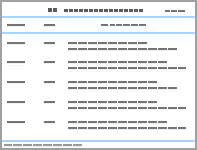
| 优先级 | 步骤 | 操作内容 | 干预 目标 | 价值维度 | 典型案例 |
|---|---|---|---|---|---|
| — | 1.知识检测与诊断 | 识别文化负载项,诊断问题类型 | 摸清症结所在 | 真(识别问题) | “国色”被误判为“national beauty” |
| 优先级1 | 2.知识匹配与锚定 | 若术语库有现成译法,直接强制替换 | 定准核心词 | 真(忠实再现) | 术语库预加载“国色→beauty imperial” |
| 优先级2 | 3.知识评估与预警 | 复杂背景/语用敏感/诗意需求→标记人工干预→关联案例库→提示择优 | 识别需深度干预项 | 真/善/美 (综合预警) | “洛阳为冠”涉及历史共识,“动京城”涉及情感召唤 |
| 优先级2 | 4.背景知识补偿 | 嵌入式显化、模块化注释 | 补偿性阐释 | 善(传播适切) | “长安”增补“the capital”,“洛阳为冠”加注文化背景 |
| 优先级2 | 5.语用知识适配 | 情感知识校准、召唤知识优化 | 跨文化适配 | 美(审美品质) | “move”校准为“captivate”,“meet”优化为“encounter” |
| 优先级3 | 6.知识决策与重构 | 译者根据文本类型、交际目的等,综合运用补偿、适配、再造等策略 | 重构译文 | 真善美(综合决策) | 人工译本“imperial beauty and celestial fragrance” |
| [1] | AlRousan R., R. Jaradat & M. Malkawi. 2025. ChatGPT translation vs. human translation: An examination of a literary text[J]. Cogent Social Sciences 11(1): Article 2472916. |
| [2] | Aldosari L. A. & N. Altuwairesh. 2025. Assessing the effects of translation prompts on the translation quality of GPT-4 Turbo using automated and human evaluation metrics: A case study[J]. Perspectives 1-25. |
| [3] | 王华树. 2020. 人工智能时代翻译技术研究[M]. 北京: 知识产权出版社. |
| [4] | 王宁. 2022. 翻译研究的文化转向[M]. 北京: 清华大学出版社. |
| [5] | 许渊冲. 1984. 翻译的艺术[M]. 北京: 中国对外翻译出版公司. |
| [6] | 杨枫. 2021a. 知识翻译学宣言[J]. 当代外语研究(5):2. |
| [7] | 杨枫. 2021b. 翻译是文化还是知识?[J]. 当代外语研究(6):2. |
| [8] |
杨枫. 2025. 从地方性到世界性:对外传播话语体系的范式转型与国际话语权构建[J]. 当代外语研究(6):1-9.
doi: 10.3969/j.issn.1674-8921.2025.06.001 |
| [9] | 杨枫、 李思伊. 2024. 真善美:作为方法论的中和翻译[J]. 中国翻译(1):9-15. |
| [10] | 赵春雨. 2012. 翻译·主体·意向——翻译中的意向性[J]. 湖南科技大学学报(社会科学版)(4):152-155. |
| Viewed | ||||||
|
Full text |
|
|||||
|
Abstract |
|
|||||
