

Contemporary Foreign Languages Studies ›› 2026, Vol. 26 ›› Issue (4): 42-53.doi: 10.3969/j.issn.1674-8921.2026.04.005
Previous Articles Next Articles
ZENG Tao, CHEN Chen, GAO Yarong
Online:2026-08-28
Published:2026-10-16
CLC Number:
ZENG Tao, CHEN Chen, GAO Yarong. The Coordinated Development of Foreign Language Proficiency and Executive Function[J]. Contemporary Foreign Languages Studies, 2026, 26(4): 42-53.
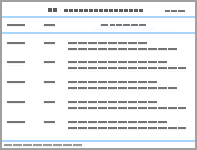
| 组别 | OQPT/月考 | 外语总评 | 听力 | 阅读 | 口语 | 写作 | |
|---|---|---|---|---|---|---|---|
| 大学 | 高水平 | 45.97 (2.28) | 5.69 (0.97) | 5.13 (0.98) | 6.06 (0.76) | 4.97 (1.03) | 5.47 (0.95) |
| 低水平 | 24.40 (4.34) | 1.63 (0.49) | 1.66 (0.70) | 1.94 (0.76) | 1.59 (0.56) | 1.50 (0.50) | |
| 初中 | 高水平 | 83.53 (7.55) | 5.12 (0.71) | 5.09 (0.84) | 5.16 (0.85) | 5.03 (0.93) | 4.84 (1.02) |
| 低水平 | 60.47 (8.12) | 3.19 (0.84) | 3.06 (0.98) | 2.59 (1.19) | 3.09 (0.82) | 2.72 (1.14) | |
| 组别 | 预测路径 | β(SE) | t | p | R2m | R2c | 截距 方差 | 残差 方差 |
|---|---|---|---|---|---|---|---|---|
| 初中 高水平 | 口语→非语言任务转换反应时代价 | -89.09 (27.49) | -3.24 | 0.003 | 0.434 | 0.593 | 1365.16 | 3494.45 |
| 口语→非语言任务转换正确率代价 | 0.06 (0.02) | 2.39 | 0.023 | 0.177 | 0.504 | 0.00148 | 0.00224 | |
| 听力→语言抑制与转换正确率代价 | 0.09 (0.04) | 2.25 | 0.032 | 0.147 | 0.568 | 0.00284 | 0.00292 | |
| 初中 低水平 | 口语→非语言任务转换正确率代价 | 0.53 (0.26) | 2.06 | 0.049 | 0.481 | 0.627 | 0.00075 | 0.00192 |
| 总评→非语言任务转换正确率代价 | -0.63 (0.19) | -3.31 | 0.003 | 0.481 | 0.627 | 0.00075 | 0.00192 | |
| 大学 高水平 | 听力→非语言任务转换反应时代价 | -74.08 (27.00) | -2.74 | 0.010 | 0.252 | 0.897 | 7988.43 | 1278.13 |
| 听力→非语言抑制控制反应时代价 | -7.90 (3.80) | -2.08 | 0.044 | 0.132 | 0.880 | 158.06 | 25.29 | |
| 大学 低水平 | 总评→非语言任务转换正确率代价 | -0.04 (0.02) | -2.05 | 0.050 | 0.170 | 0.885 | 0.00112 | 0.00018 |
| 组别 | 模型 | 方向 | χ2/df | RMSEA | RMR | GFI | CFI | NFI | IFI |
|---|---|---|---|---|---|---|---|---|---|
| 初中组 | M1 | 外语→执行 | 1.720 | 0.110 | 0.050 | 0.810 | 0.890 | 0.780 | 0.890 |
| M2 | 执行→外语 | 2.416 | 0.150 | 0.218 | 0.790 | 0.780 | 0.686 | 0.789 | |
| 大学组 | M3 | 外语→执行 | 1.112 | 0.042 | 0.042 | 0.846 | 0.981 | 0.848 | 0.982 |
| M4 | 执行→外语 | 0.918 | 0.000 | 0.065 | 0.889 | 1.000 | 0.892 | 1.011 |


| [1] | Bialystok E., F. I. M. Craik & G. Luk. 2008. Cognitive control and lexical access in younger and older bilinguals [J]. Journal of Experimental Psychology: Learning, Memory, and Cognition 34(4): 859-873. |
| [2] |
Bialystok E., G. Poarch, L. Luo, et al. 2014. Effects of bilingualism and aging on executive function and working memory[J]. Psychology and Aging 29(3): 696-705.
doi: 10.1037/a0037254 pmid: 25244487 |
| [3] |
Bialystok E. 2017. The bilingual adaptation: How minds accommodate experience[J]. Psychological Bulletin 143(3): 233-262.
doi: 10.1037/bul0000099 pmid: 28230411 |
| [4] |
Carter F., V. DeLuca, K. Segaert, et al. 2023. Functional neural architecture of cognitive control mediates the relationship between individual differences in bilingual experience and behaviour[J]. NeuroImage 273: 120085.
doi: 10.1016/j.neuroimage.2023.120085 URL |
| [5] |
Diamond A. 2013. Executive functions[J]. Annual Review of Psychology 64(1): 135-168.
doi: 10.1146/psych.2013.64.issue-1 URL |
| [6] |
Hernández M., C. D. Martin, F. Barceló, et al. 2013. Where is the bilingual advantage in task-switching?[J]. Journal of Memory and Language 69(3): 257-276.
doi: 10.1016/j.jml.2013.06.004 URL |
| [7] | Hu L. T. & P. M. Bentler. 1999. Cutoff criteria for fit indexes in covariance structure analysis: Conventional criteria versus new alternatives[J]. Structural Equation Modeling: A Multidisciplinary Journal 6(1): 1-55. |
| [8] |
Li S. 2023. Working memory and second language writing: A systematic review[J]. Studies in Second Language Acquisition 45(3): 647-679.
doi: 10.1017/S0272263123000189 URL |
| [9] |
Miyake A., N. P. Friedman, M. J. Emerson, et al. 2000. The unity and diversity of executive functions and their contributions to complex “frontal lobe” tasks: A latent variable analysis[J]. Cognitive Psychology 41(1): 49-100.
doi: 10.1006/cogp.1999.0734 pmid: 10945922 |
| [10] |
Paap K. R. & Z. I. Greenberg. 2013. There is no coherent evidence for a bilingual advantage in executive processing[J]. Cognitive Psychology 66(2): 232-258.
doi: 10.1016/j.cogpsych.2012.12.002 pmid: 23370226 |
| [11] | Prior A. & B. MacWhinney. 2010. A bilingual advantage in task switching[J]. Bilingualism: Language and Cognition 13(2): 253-262. |
| [12] | Xia L., A. Sorace, M. Vega-Mendoza, et al. 2025. How language proficiency and age of acquisition affect executive control in bilinguals: Continuous versus dichotomous analysis approaches[J]. Bilingualism: Language and Cognition 28(4): 1163-1176. |
| [13] | 常欣、 白鹤、王沛. 2017. 双语者语言切换代价的影响因素[J]. 心理科学进展 25(9): 1469-1478. |
| [14] | 姜淞秀、李杰、刘兴宇, 等. 2015. 不同熟练度双语者非语言任务转换的差异--来自ERP证据[J]. 心理学报 47(6): 746-756. |
| [15] | 刘建达. 2021. 《中国英语能力等级量表》效度验证[J]. 现代外语 44(1): 86-100. |
| Viewed | ||||||
|
Full text |
|
|||||
|
Abstract |
|
|||||
