

Contemporary Foreign Languages Studies ›› 2026, Vol. 26 ›› Issue (4): 67-81.doi: 10.3969/j.issn.1674-8921.2026.04.007
Previous Articles Next Articles
CHENG Lulu, XUE Xiaomeng, MAO Haoran, ZHANG Shujie
Online:2026-08-28
Published:2026-10-16
CLC Number:
CHENG Lulu, XUE Xiaomeng, MAO Haoran, ZHANG Shujie. How Are Foreign and Native Language Abilities Related: Evidence from Structural Equation Modeling[J]. Contemporary Foreign Languages Studies, 2026, 26(4): 67-81.
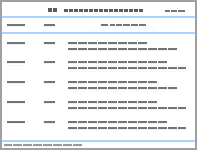
| 初中组 | 高中组 | 大学组 | |
|---|---|---|---|
| 男性(名) | 32 | 23 | 26 |
| 女性(名) | 32 | 24 | 31 |
| 总计 | 64 | 47 | 57 |
| 学段 | 英语能力- 汉语表达能力 | 英语能力- 汉语语用能力 | 汉语表达能力- 汉语语用能力 | |||
|---|---|---|---|---|---|---|
| r | P | r | P | r | P | |
| 初中 | 0.483 | <0.001 | 0.407 | <0.001 | 0.249 | 0.047 |
| 高中 | 0.333 | 0.022 | 0.407 | 0.005 | 0.196 | 0.187 |
| 大学 | 0.537 | <0.001 | 0.223 | 0.096 | 0.194 | 0.148 |
| 概念 | 测量维度 | 潜变量总量表Cronbach's α | ||
|---|---|---|---|---|
| 初中组 | 高中组 | 大学组 | ||
| 英语能力 | 听力 | 0.879 | 0.881 | 0.693 |
| 阅读 | ||||
| 写作 | ||||
| 语法 | ||||
| 汉语表达能力 | 词语使用 | 0.741 | 0.798 | 0.760 |
| 句式丰富性 | ||||
| 内容及逻辑 | ||||
| 写作格式 | ||||
| 汉语语用能力 | 叙实动词 | 0.725 | 0.745 | 0.792 |
| 改变状态动词 | ||||
| 语用推理能力 | ||||
| 初中组 | 高中组 | 大学组 | ||
|---|---|---|---|---|
| KMO取样适切性量数 | 0.811 | 0.704 | 0.746 | |
| Bartlett球形度检验 | 卡方值 | 348.537 | 313.050 | 293.439 |
| DF | 55 | 55 | 55 | |
| P | <0.001 | <0.001 | <0.001 | |
| 成分 | 最初特征值 | 提取后平方和载荷 | |||||||||||
|---|---|---|---|---|---|---|---|---|---|---|---|---|---|
| 合计 | 方差的% | 累计% | 合计 | 方差的% | 累计% | ||||||||
| 初中组 | |||||||||||||
| 1 | 4.612 | 41.923 | 41.923 | 4.612 | 41.923 | 41.923 | |||||||
| 2 | 1.932 | 17.560 | 59.483 | 1.932 | 17.560 | 59.483 | |||||||
| 3 | 1.309 | 11.896 | 71.379 | 1.309 | 11.896 | 71.379 | |||||||
| 4 | 0.804 | 7.307 | 78.686 | ||||||||||
| 高中组 | |||||||||||||
| 1 | 4.415 | 40.139 | 40.139 | 4.415 | 40.139 | 40.139 | |||||||
| 2 | 2.270 | 20.639 | 60.777 | 2.270 | 20.639 | 60.777 | |||||||
| 3 | 1.592 | 14.470 | 75.248 | 1.592 | 14.470 | 75.248 | |||||||
| 4 | 0.667 | 6.067 | 81.315 | ||||||||||
| 大学组 | |||||||||||||
| 1 | 4.218 | 38.342 | 38.342 | 4.218 | 38.342 | 38.342 | |||||||
| 2 | 2.076 | 18.875 | 57.216 | 2.076 | 18.875 | 57.216 | |||||||
| 3 | 1.317 | 11.977 | 69.194 | 1.317 | 11.977 | 69.194 | |||||||
| 4 | 0.781 | 7.101 | 76.295 | ||||||||||
| 拟合指标 | 指标值 | 参考标准 | ||
|---|---|---|---|---|
| 初中组 | 高中组 | 大学组 | ||
| χ2(CMIN) | 51.252 | 54.867 | 55.045 | — |
| DF | 41 | 41 | 41 | — |
| χ2检验P值 | 0.131 | 0.072 | 0.070 | 不作单独判定 |
| CMIN/DF | 1.250 | 1.338 | 1.343 | <3,可接受 |
| GFI(拟合优度指数) | 0.879 | 0.841 | 0.868 | >0.8,可接受 |
| AGFI(调整优度指数) | 0.838 | 0.786 | 0.823 | >0.7,可接受 |
| NFI(规范拟合指数) | 0.866 | 0.845 | 0.831 | >0.8,可接受 |
| TLI(非规范拟合指数) | 0.958 | 0.938 | 0.930 | ≥.90,可接受 |
| SRMR(标准化残差均方根) | 0.094 | 0.088 | 0.099 | <0.08较好 0.08-0.10临界范围 |
| CFI(比较拟合指数) | 0.969 | 0.954 | 0.948 | ≥0.90,可接受 |
| RMSEA(近似误差均方根) | 0.063 | 0.086 | 0.078 | <0.08,可接受 0.08-0.10临界范围 |


| 影响路径 | B(非标 准化) | β(标 准化) | S.E. | C.R. | P | B的偏差 校正95% CI | β的偏差 校正95% CI |
|---|---|---|---|---|---|---|---|
| 英语能力→汉语表达能力 | 0.076 | 0.547 | 0.019 | 3.898 | <0.001 | [0.038, 0.115] | [0.284, 0.743] |
| 英语能力→汉语语用能力 | 0.082 | 0.470 | 0.027 | 2.994 | 0.003 | [0.028, 0.151] | [0.194, 0.719] |


| 影响路径 | B(非标 准化) | β(标 准化) | S.E. | C.R. | P | B的偏差 校正95% CI | β的偏差 校正95% CI |
|---|---|---|---|---|---|---|---|
| 英语能力→汉语表达能力 | 0.041 | 0.395 | 0.017 | 2.418 | 0.016 | [0.001, 0.075] | [0.007, 0.658] |
| 英语能力→汉语语用能力 | 0.110 | 0.382 | 0.045 | 2.447 | 0.014 | [0.042, 0.195] | [0.146, 0.583] |


| 影响路径 | B(非标 准化) | β(标 准化) | S.E. | C.R. | P | B的偏差 校正95% CI | β的偏差 校正95% CI |
|---|---|---|---|---|---|---|---|
| 英语能力→汉语表达能力 | 0.054 | 0.660 | 0.016 | 3.255 | 0.001 | [0.002, 0.091] | [0.317, 0.895] |
| 英语能力→汉语语用能力 | 0.100 | 0.322 | 0.043 | 2.310 | 0.021 | [0.009, 0.198] | [0.035, 0.546] |
| 学段 | 初中 | 高中 | 大学 | |||
|---|---|---|---|---|---|---|
| 路径系数 (标准化) | 路径系数 | P | 路径系数 | P | 路径系数 | P |
| 英语能力→汉语表达能力 | 0.547 | <0.001 | 0.395 | 0.016 | 0.660 | 0.001 |
| 英语能力→汉语语用能力 | 0.470 | 0.003 | 0.382 | 0.014 | 0.322 | 0.021 |
| [1] | Bachman L. F. 1990. Fundamental Considerations in Language Testing[M]. Oxford: Oxford University Press. |
| [2] | Bialystok E. 2001. Bilingualism in Development: Language, Literacy, And Cognition[M]. Cambridge: Cambridge University Press. |
| [3] | Cook V. J. 1991. The poverty-of-the-stimulus argument and multicompetence[J]. Interlanguage Studies Bulletin (Utrecht) 7(2): 103-117. |
| [4] |
Cummins J. 1979. Linguistic interdependence and the educational development of bilingual children[J]. Review of Educational Research 49(2): 222-251.
doi: 10.3102/00346543049002222 URL |
| [5] |
Feder L. & S. Abu-Rabia. 2021. Cognitive retroactive transfer of language skills from English as a foreign language to Hebrew as the first language[J]. Journal of Learning Disabilities 55(3): 213-228.
doi: 10.1177/00222194211003820 URL |
| [6] | Kecskes I. & T. Papp. 2000. Foreign Language and Mother Tongue[M]. Mahwah: Lawrence Erlbaum Associates. |
| [7] |
Xu F., L. Cheng, X. Gong, et al. 2024. Delayed predictive inference integration with and revision by low-competitive inference alternatives in Chinese narrative text reading[J]. Frontiers in Psychology 15: 1403479.
doi: 10.3389/fpsyg.2024.1403479 URL |
| [8] | 程璐璐、张婷、展琳琳, 等. 2024. 学龄前儿童语用预设能力发展的实证研究[J]. 外语导刊47(04): 30-38, 158-159. |
| [9] | 梁浩. 2019. 汉语中预设触发语的ERP研究[D]. 南京: 南京师范大学. |
| [10] | 潘雪瑶、 姜孟. 2018. 英语对高水平汉-英双语者汉语同译近义词加工的影响:来自ERPs的证据[J]. 外国语文34(06): 111-120. |
| [11] | 张爱萍. 2014. 中国英、日语学习者汉语赞扬应答言语行为中的反向概念迁移研究[J]. 解放军外国语学院学报37(01): 109-118, 160. |
| Viewed | ||||||
|
Full text |
|
|||||
|
Abstract |
|
|||||
