

Journal of Diagnostics Concepts & Practice ›› 2026, Vol. 25 ›› Issue (03): 278-286.doi: 10.16150/j.1671-2870.2026.03.004
• Academic trend at home and abroad • Previous Articles Next Articles
LU Renquan1,2( ), HU Ling2
Received:2025-10-15
Revised:2025-11-03
Accepted:2026-02-10
Online:2026-06-25
Published:2026-06-27
Contact:
LU Renquan
E-mail:lurenquan@126.com
CLC Number:
LU Renquan, HU Ling. Advances in novel tumor markers for cancer diagnosis and treatment in an era of integration of multi-omics technologies and artificial intelligence[J]. Journal of Diagnostics Concepts & Practice, 2026, 25(03): 278-286.

Figure 1
Multi omics - AI fusion mode jointly promotes the research and application of new tumor markers in tumor diagnosis and treatment

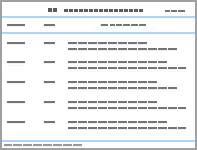
Table 1
Research progress of novel tumor markers in tumor diagnosis and treatment
| 标志物 | 肿瘤类型 | 临床意义 | 参考文献 |
|---|---|---|---|
| 基因组学 | |||
| MMR | 直肠癌 | 预测PD-1抑制剂疗效 | [ |
| ARID1A | 泛癌 | 改善免疫治疗耐药 | [ |
| 甲基化+蛋白标志物 | 早期肝细胞癌 | 早期筛查 | [ |
| CpG岛甲基化表型 | 结直肠癌 | 早期筛查与治疗靶向性 | [ |
| 特异性DNA甲基化谱 | 急性白血病 | 精准分类 | [ |
| cfDNA片段 | 肺癌 | 早期筛查 | [ |
| cfDNA片段及5hmC数据 | 肝细胞癌 | 早期筛查 | [ |
| 转录组学 | |||
| TRGC2+自然杀伤细胞 | 食管鳞癌 | 评估疗效 | [ |
| TPX2 | 胰腺癌 | 抑制TPX2表达可增强奥拉帕尼与吉西他滨的联合疗效 | [ |
| 蛋白组学 | |||
| 47个核心蛋白标志物 | 泛癌 | 早期筛查与监测手术疗效 | [ |
| GUK1 | 肺癌 | 细胞增殖靶点 | [ |
| SRC | 肝细胞癌 | 恶性亚型靶点 | [ |
| 糖蛋白 | 非小细胞肺癌 | 早期筛查 | [ |
| H2BK120ac、H3.3K18ac和H4K77ac | 肝细胞癌 | 预后 | [ |
| EP300 | 宫颈癌 | 治疗靶点 | [ |
| 代谢组学 | |||
| 谷氨酰胺 | 泛癌 | 调控抗肿瘤免疫 | [ |
| 谷胱甘肽 | 胃癌 | 早期筛查与预后评估 | [ |
| 天冬氨酸 | 乳腺癌 | 促进肿瘤远端转移 | [ |
| n-6多不饱和脂肪酸 | 结直肠癌 | 早期筛查 | [ |
| 胞嘧啶脱氨酶 | 胰腺导管腺癌 | 改善临床获得性耐药 | [ |
| 微生物组学 | |||
| 11种细菌,4种真菌和1种古菌 | 结直肠癌 | 早期筛查 | [ |
| 口腔微生物群 | 胰腺癌等 | 早期筛查 | [ |
| 脆弱拟杆菌和解没食子酸链球菌等 | 结直肠癌 | 早期筛查 | [ |
| [1] |
BRUHM D C, VULPESCU N A, FODA Z H, et al. Genomic and fragmentomic landscapes of cell-free DNA for early cancer detection[J]. Nat Rev Cancer, 2025, 25(5):341-358.
doi: 10.1038/s41568-025-00795-x pmid: 40038442 |
| [2] | 章新, 郑莹. 2005-2020年中国国家及分省疾病监测点的肿瘤死亡疾病负担数据解读[J]. 诊断学理论与实践, 2024, 23(4):371-377. |
| ZHANG X, ZHENG Y. Interpretation of cancer death burden data from disease surveillance sites in China from 2005 to 2020[J]. J Diagn Concepts Pract, 2024, 23(4):371-377. | |
| [3] | 姚宏伟, 高加勒, 杨正阳, 等. 结直肠癌精准治疗的现状与展望[J]. 中华消化外科杂志, 2025, 24(6):690-694. |
| YAO H W, GAO J L, YANG Z Y, et al. Current status and prospect of precision treatment for colorectal cancer[J]. Chin J Dig Surg, 2025, 24(6):690-694. | |
| [4] |
SEWPERSAD S, PILLAY T S. Historical perspectives in clinical pathology: Bence Jones protein: Early urine chemistry and the impact on modern day diagnostics[J]. J Clin Pathol, 2021, 74(4):212-215.
doi: 10.1136/jclinpath-2020-206675 URL |
| [5] | ZHOU Y, TAO L, QIU J, et al. Tumor biomarkers for diagnosis, prognosis and targeted therapy[J]. Sig Transduct Target Ther, 2024,9:132. |
| [6] |
WANG D, LIU B, ZHANG Z. Accelerating the understanding of cancer biology through the lens of genomics[J]. Cell, 2023, 186(8):1755-1771.
doi: 10.1016/j.cell.2023.02.015 pmid: 37059071 |
| [7] |
CERCEK A, LUMISH M, SINOPOLI J, et al. PD-1 blockade in mismatch repair-deficient, locally advanced rectal cancer[J]. N Engl J Med, 2022, 386(25):2363-2376.
doi: 10.1056/NEJMoa2201445 URL |
| [8] |
BELK J A, YAO W, LY N, et al. Genome-wide CRISPR screens of T cell exhaustion identify chromatin remode-ling factors that limit T cell persistence[J]. Cancer Cell, 2022, 40(7):768-786.e7.
doi: 10.1016/j.ccell.2022.06.001 URL |
| [9] |
SUN L, ZHANG H, GAO P. Metabolic reprogramming and epigenetic modifications on the path to cancer[J]. Protein Cell, 2022, 13(12):877-919.
doi: 10.1007/s13238-021-00846-7 |
| [10] | CAO W, LEE H, WU W, et al. Multi-faceted epigenetic dysregulation of gene expression promotes esophageal squamous cell carcinoma[J]. Nat Commun, 2020,11:3675. |
| [11] |
DUAN R, DU W, GUO W. EZH2: A novel target for cancer treatment[J]. J Hematol Oncol, 2020, 13(1):104.
doi: 10.1186/s13045-020-00937-8 |
| [12] | DAVALOS V, ESTELLER M. Cancer epigenetics in clinical practice[J]. CA Cancer J Clin, 2023, 73(4):376-424. |
| [13] |
LIN N, LIN Y, XU J, et al. A multi-analyte cell-free DNA-based blood test for early detection of hepatocellular carcinoma[J]. Hepatol Commun, 2022, 6(7):1753-1763.
doi: 10.1002/hep4.1918 pmid: 35244350 |
| [14] |
LIU Z, HU Y, XIE H, et al. Single-cell chromatin accessibility analysis reveals the epigenetic basis and signature transcription factors for the molecular subtypes of colorectal cancers[J]. Cancer Discov, 2024, 14(6):1082-1105.
doi: 10.1158/2159-8290.CD-23-1445 URL |
| [15] |
STEINICKE T L, BENFATTO S, CAPILLA-GUERRA M R, et al. Rapid epigenomic classification of acute leukemia[J]. Nat Genet, 2025, 57(10):2456-2467.
doi: 10.1038/s41588-025-02321-z |
| [16] |
CESCON D W, BRATMAN S V, CHAN S M, et al. Circulating tumor DNA and liquid biopsy in oncology[J]. Nat Cancer, 2020, 1(3):276-290.
doi: 10.1038/s43018-020-0043-5 |
| [17] | VAN ’T ERVE I, ALIPANAHI B, LUMBARD K, et al. Cancer treatment monitoring using cell-free DNA fragmentomes[J]. Nat Commun, 2024,15:8801. |
| [18] | CHEN L, WU T, FAN R, et al. Cell-free DNA testing for early hepatocellular carcinoma surveillance[J]. EBioMedicine, 2024,100:104962. |
| [19] |
SUN Y M, CHEN Y Q. Principles and innovative technologies for decrypting noncoding RNAs: from discovery and functional prediction to clinical application[J]. J Hematol Oncol, 2020, 13(1):109.
doi: 10.1186/s13045-020-00945-8 |
| [20] | 中华人民共和国国家卫生健康委员会医政司,中华医学会肿瘤学分会. 国家卫生健康委员会中国结直肠癌诊疗规范(2025版)(精简版)[J]. 中华消化外科杂志, 2025, 24(12):1507-1515. |
| Department of Medical Administration, National Health Commission of the People's Republic of China; Oncology Society of Chinese Medical Association. Chinese protocol of diagnosis and treatment of colorectal cancer of the National Health Commission (2025 edition) (condensed version)[J]. Chin J Dig Surg, 2025, 24(12):1507-1515. | |
| [21] |
XU H, WANG C, SONG H, et al. RNA-Seq profiling of circular RNAs in human colorectal cancer liver metastasis and the potential biomarkers[J]. Mol Cancer, 2019, 18(1):8.
doi: 10.1186/s12943-018-0932-8 pmid: 30630466 |
| [22] |
SHANG X, XIE Y, YU J, et al. A prospective study of neoadjuvant pembrolizumab plus chemotherapy for resecta-ble esophageal squamous cell carcinoma: The Keystone-001 trial[J]. Cancer Cell, 2024, 42(10):1747-1763.e7.
doi: 10.1016/j.ccell.2024.09.008 URL |
| [23] |
XIAO M, TANG R, PAN H, et al. TPX2 serves as a novel target for expanding the utility of PARPi in pancreatic cancer through conferring synthetic lethality[J]. Gut, 2025, 74(3):410-423.
doi: 10.1136/gutjnl-2024-332782 pmid: 39500552 |
| [24] |
BAI L, LYU J, FENG J, et al. Cancer biomarkers disco-vered using pan-cancer plasma proteomic profiling[J]. Nat Biomed Eng, 2026, 10(1):16-38.
doi: 10.1038/s41551-025-01448-y |
| [25] |
SCHNEIDER J L, KURMI K, DAI Y, et al. GUK1 activation is a metabolic liability in lung cancer[J]. Cell, 2025, 188(5):1248-1264.e23.
doi: 10.1016/j.cell.2025.01.024 pmid: 39919745 |
| [26] |
ZHANG Z, ZHANG Z, ZHANG Y, et al. Phosphoproteomics delineates hepatocellular carcinoma subtypes and pinpoints therapeutic targets[J]. Hepatology, 2025, 82(6):1432-1449.
doi: 10.1097/HEP.0000000000001250 URL |
| [27] |
SHIH H C, CHANG M C, CHEN C H, et al. High accuracy differentiating autoimmune pancreatitis from panc-reatic ductal adenocarcinoma by immunoglobulin G glycosylation[J]. Clin Proteom, 2019, 16(1):1.
doi: 10.1186/s12014-018-9221-1 |
| [28] | MITCHELL A, PICKERING C, XU G, et al. Glycoproteomics as a powerful liquid biopsy-based screening tool for non-small cell lung cancer[J]. J Clin Oncol, 2022, 40(16_suppl):e21148. |
| [29] |
CHAI X, GUO J, DONG R, et al. Quantitative acetylome analysis reveals histone modifications that may predict prognosis in hepatitis B-related hepatocellular carcinoma[J]. Clin Transl Med, 2021, 11(3):e313.
doi: 10.1002/ctm2.313 pmid: 33783990 |
| [30] |
YU J, GUI X, ZOU Y, et al. A proteogenomic analysis of cervical cancer reveals therapeutic and biological insights[J]. Nat Commun, 2024, 15(1):10114.
doi: 10.1038/s41467-024-53830-0 |
| [31] | SCHMIDT D R, PATEL R, KIRSCH D G, et al. Metabolomics in cancer research and emerging applications in clinical oncology[J]. CA Cancer J Clin, 2021, 71(4):333-358. |
| [32] | SINKALA M, MULDER N, PATRICK MARTIN D. Metabolic gene alterations impact the clinical aggressiveness and drug responses of 32 human cancers[J]. Commun Biol, 2019,2:414. |
| [33] | 冯国伟, 黄新韵, 孟宏平, 等. 18F-氟脱氧葡萄糖正电子发射断层扫描/磁共振成像(18F-FDG PET/MRI)在诊断胰腺癌术后复发中的价值[J]. 诊断学理论与实践, 2024, 23(5):517-523. |
| FENG G W, HUANG X Y, MENG H P, et al. Value of 18F-fluorodeoxyglucose positron emission tomography/magnetic resonance imaging(18F-FDG PET/MRI)in diagnosis of postoperative recurrence of pancreatic cancer[J]. J Diagn Concepts Pract, 2024, 23(5):517-523. | |
| [34] |
HU L, XIE H, LIU X, et al. TBK1 is a synthetic lethal target in cancer withVHLLoss[J]. Cancer Discov, 2020, 10(3):460-475.
doi: 10.1158/2159-8290.CD-19-0837 URL |
| [35] | MARTÍNEZ-REYES I, CHANDEL N S. Mitochondrial TCA cycle metabolites control physiology and disease[J]. Nat Commun, 2020,11:102. |
| [36] |
SU W, CHAPMAN N M, WEI J, et al. Protein prenylation drives discrete signaling programs for the differentiation and maintenance of effector Treg cells[J]. Cell Metab, 2020, 32(6):996-1011.
doi: 10.1016/j.cmet.2020.10.022 URL |
| [37] |
LEONE R D, ZHAO L, ENGLERT J M, et al. Glutamine blockade induces divergent metabolic programs to overcome tumor immune evasion[J]. Science, 2019, 366(6468):1013-1021.
doi: 10.1126/science.aav2588 pmid: 31699883 |
| [38] |
ALTMAN B J, STINE Z E, DANG C V. From Krebs to clinic: glutamine metabolism to cancer therapy[J]. Nat Rev Cancer, 2016; 16(11):749.
doi: 10.1038/nrc.2016.114 pmid: 28704361 |
| [39] | CHEN Y, WANG B, ZHAO Y, et al. Metabolomic machine learning predictor for diagnosis and prognosis of gastric cancer[J]. Nat Commun, 2024,15:1657. |
| [40] |
DOGLIONI G, FERNÁNDEZ-GARCÍA J, IGELMANN S, et al. Aspartate signalling drives lung metastasis via alternative translation[J]. Nature, 2025, 638(8049):244-250.
doi: 10.1038/s41586-024-08335-7 |
| [41] |
SUN Y, ZHANG X, HANG D, et al. Integrative plasma and fecal metabolomics identify functional metabolites in adenoma-colorectal cancer progression and as early diagnostic biomarkers[J]. Cancer Cell, 2024, 42(8):1386-1400.e8.
doi: 10.1016/j.ccell.2024.07.005 pmid: 39137727 |
| [42] |
HUANG G M, JIANG Q H, CAI C, et al. SCD1 negatively regulates autophagy-induced cell death in human hepatocellular carcinoma through inactivation of the AMPK signaling pathway[J]. Cancer Lett, 2015, 358(2):180-190.
doi: 10.1016/j.canlet.2014.12.036 URL |
| [43] |
MULLEN N J, SINGH P K. Nucleotide metabolism: A pancancer metabolic dependency[J]. Nat Rev Cancer, 2023, 23(5):275-294.
doi: 10.1038/s41568-023-00557-7 |
| [44] |
KAWADA K, TODA K, SAKAI Y. Targeting metabolic reprogramming in KRAS-driven cancers[J]. Int J Clin Oncol, 2017, 22(4):651-659.
doi: 10.1007/s10147-017-1156-4 pmid: 28647837 |
| [45] |
OLOU A A, KING R J, YU F, et al. MUC1 oncoprotein mitigates ER stress via CDA-mediated reprogramming of pyrimidine metabolism[J]. Oncogene, 2020, 39(16):3381-3395.
doi: 10.1038/s41388-020-1225-4 pmid: 32103170 |
| [46] |
DOHLMAN A B, KLUG J, MESKO M, et al. A pan-cancer mycobiome analysis reveals fungal involvement in gastrointestinal and lung tumors[J]. Cell, 2022, 185(20):3807-3822.
doi: 10.1016/j.cell.2022.09.015 pmid: 36179671 |
| [47] |
NEJMAN D, LIVYATAN I, FUKS G, et al. The human tumor microbiome is composed of tumor type-specific intracellular bacteria[J]. Science, 2020, 368(6494):973-980.
doi: 10.1126/science.aay9189 pmid: 32467386 |
| [48] |
LIU N N, JIAO N, TAN J C, et al. Multi-Kingdom microbiota analyses identifybacterial-fungal interactions and biomarkers of colorectal cancer acrosscohorts[J]. Nat Microbiol, 2022, 7(2):238-250.
doi: 10.1038/s41564-021-01030-7 |
| [49] |
NAGATA N, NISHIJIMA S, KOJIMA Y, et al. Metagenomic identification of microbial signatures predicting pancreatic cancer from a multinational study[J]. Gastroenterology, 2022, 163(1):222-238.
doi: 10.1053/j.gastro.2022.03.054 pmid: 35398347 |
| [50] | KWONG T N Y, WANG X, NAKATSU G, et al. Association between bacteremia from specific microbes and subsequent diagnosis of colorectal cancer[J]. Gastroentero-logy, 2018, 155(2):383-390. |
| [51] |
MARRA A, MORGANTI S, PAREJA F, et al. Artificial intelligence entering the pathology arena in oncology: current applications and future perspectives[J]. Ann Oncol, 2025, 36(7):712-725.
doi: 10.1016/j.annonc.2025.03.006 URL |
| [52] | 姜家钰, 方振, 郑可心, 等. Claudin 18.2在胃癌靶向免疫治疗中的新突破与展望[J]. 中华消化外科杂志, 2025, 24(3):343-349. |
| JIANG J Y, FANG Z, ZHENG K X, et al. Emerging breakthroughs and future prospects of Claudin18.2 in targeted therapy and immuno-therapy for gastric cancer[J]. Chin J Dig Surg, 2025, 24(3):343-349. | |
| [53] |
LIGERO M, EL NAHHAS O S M, ALDEA M, et al. Artificial intelligence-based biomarkers for treatment decisions in oncology[J]. Trends Cancer, 2025, 11(3):232-244.
doi: 10.1016/j.trecan.2024.12.001 URL |
| [54] |
WAGNER S J, REISENBÜCHLER D, WEST N P, et al. Transformer-based biomarker prediction from colorectal cancer histology: A large-scale multicentric study[J]. Cancer Cell, 2023, 41(9):1650-1661.
doi: 10.1016/j.ccell.2023.08.002 pmid: 37652006 |
| [55] |
ARANGO-ARGOTY G, BIKIEL D E, SUN G J, et al. AI-driven predictive biomarker discovery with contrastive learning to improve clinical trial outcomes[J]. Cancer Cell, 2025, 43(5):875-890.
doi: 10.1016/j.ccell.2025.03.029 URL |
| [1] | ZHANG Tingting, HUANG Hui, SUN Hongli. Current status and research advances in laboratory diagnosis of non-tuberculous mycobacteria [J]. Journal of Diagnostics Concepts & Practice, 2026, 25(03): 249-259. |
| [2] | WANG Yan, FAN Lei. Application progress of artificial intelligence in morphological diagnosis of blood diseases [J]. Journal of Diagnostics Concepts & Practice, 2026, 25(01): 15-20. |
| [3] | YANG Ruixin, YU Yingyan. Application of artificial intelligence in medical image data processing for digestive tract tumors [J]. Journal of Diagnostics Concepts & Practice, 2025, 24(06): 605-612. |
| [4] | DAI Min, JIANG Yuxiong, SHI Yuling. Progress in diagnosis and treatment of psoriasis from 2023 to 2024 [J]. Journal of Diagnostics Concepts & Practice, 2025, 24(06): 593-604. |
| [5] | LIU Gan, DAI Yuanyuan, CHANG Wenjiao, MA Xiaoling. Advances in sepsis screening technologies [J]. Journal of Diagnostics Concepts & Practice, 2025, 24(06): 567-575. |
| [6] | HONG Yena, ZHANG Yü, SHI Kuangyu, LI Biao, GUO Rui. Issues and solutions in integrated radionuclide diagnosis and treatment [J]. Journal of Diagnostics Concepts & Practice, 2025, 24(03): 263-267. |
| [7] | XU Mengdi, GAO Feng, ZHU Jian, CHEN Lei, QIN Yumeng, HUANG Yue, TANG Yinping, SHA Jie. Value of novel sponge capsules combined with AI-based cell DNA detection in early esophageal cancer screening [J]. Journal of Diagnostics Concepts & Practice, 2024, 23(06): 580-586. |
| [8] | LI Zhuohan, HUANG Xinyun, GUO Rui, LI Biao. 18F-FDG PET/CT in the diagnosis and prognosis evaluation of follicular lymphoma [J]. Journal of Diagnostics Concepts & Practice, 2024, 23(04): 439-444. |
| [9] | WU Nanming, LI Jun, TAO Juan. Hot spots in diagnosis of malignant melanoma [J]. Journal of Diagnostics Concepts & Practice, 2023, 22(03): 215-220. |
| [10] | XU Hao, ZHANG Zhi, XIE Xueqian, YANG Wenyi, LIU Shaowen. Comparative study on software DEEPVESSEL FFR and invasive FFR in assessing coronary ischemia [J]. Journal of Diagnostics Concepts & Practice, 2021, 20(04): 384-390. |
| [11] | . [J]. Journal of Diagnostics Concepts & Practice, 2007, 6(04): 309-314. |
| Viewed | ||||||
|
Full text |
|
|||||
|
Abstract |
|
|||||
