

Journal of Diagnostics Concepts & Practice ›› 2026, Vol. 25 ›› Issue (04): 517-522.doi: 10.16150/j.1671-2870.2026.04.017
• Medical education • Previous Articles
MA Juna, XU Xub, MA Xiaoyub, LU Wenlib, XU Jinga, YU Yib( )
Received:2026-04-10
Revised:2026-07-17
Accepted:2026-07-18
Online:2026-08-25
Published:2026-08-31
Contact:
YU Yi
E-mail:yy11635@rjh.com.cn
CLC Number:
MA Jun, XU Xu, MA Xiaoyu, LU Wenli, XU Jing, YU Yi. Current situation and suggestions on medical communication for internal medicine residency programs[J]. Journal of Diagnostics Concepts & Practice, 2026, 25(04): 517-522.
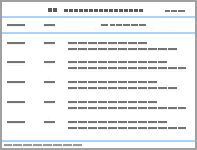
Table 1
Basic characteristics of survey subjects[n(%)]
| 特征 | 教师组(n=36) | 学员组(n=50) |
|---|---|---|
| 性别 | ||
| 女 | 23(63.9) | 40(80.0) |
| 男 | 13(36.1) | 10(20.0) |
| 学历 | ||
| 本科 | 0(0) | 10(20.0) |
| 硕士 | 13(36.1) | 16(32.0) |
| 博士 | 23(63.9) | 24(48.0) |
| 基地分布 | ||
| 儿内科(n=38) | 21(58.3) | 17(34.0) |
| 成人内科(n=48) | 15(41.7) | 33(66.0) |
| 年级 | ||
| 1年级 | / | 10(20.0) |
| 2年级 | / | 18(36.0) |
| 3年级 | / | 22(44.0) |
Table 2
Key patient communication skills required for interns in adult and pediatric internal medicine
| 专科 | 医患沟通能力 | 例数 | 响应率 |
|---|---|---|---|
| 成人内科 | 肿瘤、危重症、临终等高风险沟通事件的处理 | 60 | 69.8% |
| 达成医患共同决策 | 54 | 62.8% | |
| 复杂病情的解释 | 75 | 87.2% | |
| 患者情感阻抗(沟通中的回避、防御性回应)化解 | 58 | 67.4% | |
| 应对医患冲突 | 55 | 64.0% | |
| 兼顾宗教信仰与文化敏感性 | 19 | 22.1% | |
| 患者共情与情感支持 | 46 | 53.5% | |
| 儿内科 | 与不同年龄阶段儿童互动的技巧 | 53 | 61.6% |
| 儿童情感支持和安抚 | 42 | 48.8% | |
| 专业术语的简化与可视化表达 | 44 | 51.2% | |
| 直接沟通对象主要是家长,由监护人决策 | 38 | 44.2% | |
| 关系构建的双重性:与儿童建立信任关系,与家长建立基于专业和信任的伙伴关系 | 65 | 75.6% | |
| 家长情绪管理(焦虑型、暴躁型、攻击型) | 71 | 82.6% | |
| 医疗决策三方共识推进(青少年患者) | 48 | 55.8% |
Table 3
The views of teachers and students on the main differences in doctor-patient communication between pediatric and adult internal medicine[n(%)]
| 基地 | 沟通对象 | 沟通内容 | 沟通方式 | P值 |
|---|---|---|---|---|
| 成人内科 | 0.630 | |||
| 教师(n=15) | 8(53.3) | 1(6.7) | 6(40.0) | |
| 学员(n=33) | 17(51.5) | 6(18.2) | 10(30.3) | |
| 儿内科 | <0.001 | |||
| 教师(n=21) | 15(71.4) | 3(14.3) | 3(14.3) | |
| 学员(n=17) | 2(11.8) | 7(41.2) | 8(47.1) |
Table 4
Cognitive status,teaching practice,and training effectiveness evaluation of differences in communication between pediatric and adult internal medicine doctors and patients (points)
| 维度 | 问题 | 总计 (分) | 师生分组 | 基地分组 | |||||
|---|---|---|---|---|---|---|---|---|---|
| 教师组 | 学员组 | P值 | 成人内科 | 儿内科 | P值 | ||||
| 差异的认知现状 | 沟通对象不同 | 4.56±0.66 | 4.61±0.77 | 4.52±0.58 | 0.220 | 4.48±0.77 | 4.66±0.48 | 0.370 | |
| 决策主体差异 | 4.52±0.61 | 4.67±0.48 | 4.42±0.67 | 0.090 | 4.40±0.68 | 4.68±0.47 | 0.040 | ||
| 我已熟知二者的差异 | 3.98±0.91 | 4.06±1.01 | 3.92±0.83 | 0.350 | 3.65±0.93 | 4.39±0.68 | <0.001 | ||
| 教学实践情况 | 课程已明确区分二者 | 3.81±0.79 | 3.53±0.88 | 4.02±0.65 | 0.004 | 3.63±0.82 | 4.05±0.70 | 0.010 | |
| 会经常强调二者的差异 | 3.85±1.07 | 4.00±1.01 | 3.74±1.10 | 0.270 | 3.33±1.08 | 4.50±0.60 | <0.001 | ||
| 培训效果现状 | 能有效模拟本专科特有沟通场景 | 4.17±0.80 | 4.36±0.59 | 4.04±0.90 | 0.110 | 3.96±0.82 | 4.45±0.69 | 0.001 | |
| 能及时反馈并指导学员改进 | 4.16±0.81 | 4.33±0.63 | 4.04±0.90 | 0.150 | 3.94±0.89 | 4.45±0.60 | 0.003 | ||
| 学员有足够的机会练习高风险沟通 | 3.93±0.92 | 4.00±0.76 | 3.88±1.02 | 0.860 | 3.73±0.94 | 4.18±0.83 | 0.015 | ||
| 结业后能独立处理高风险沟通 | 3.91±0.88 | 3.86±0.90 | 3.94±0.87 | 0.680 | 3.67±0.93 | 4.21±0.70 | 0.006 | ||
Table 5
Factors affecting the perception of differences between the two and core expectations for training reform[n(%)]
| 维度 | 问题 | 总计 | 师生分组 | 基地分组 | |||||
|---|---|---|---|---|---|---|---|---|---|
| 教师组 | 学员组 | P值 | 成人内科 | 儿内科 | P值 | ||||
| 影响二者差异认知度的因素 | 培训课程设计 | 56(65.1) | 29(80.6) | 27(54.0) | 0.011 | 31(64.6) | 25(65.8) | 0.910 | |
| 带教老师经验 | 64(74.4) | 28(77.8) | 36(72.0) | 0.550 | 38(79.2) | 26(68.4) | 0.260 | ||
| 学员临床实践机会 | 67(77.9) | 31(86.1) | 36(72.0) | 0.120 | 36(75.0) | 31(81.6) | 0.470 | ||
| 教学资源支持 | 46(53.5) | 20(55.6) | 26(52.0) | 0.740 | 27(56.3) | 19(50.0) | 0.560 | ||
| 考核方式与反馈机制 | 54(62.8) | 28(77.8) | 26(52.0) | 0.015 | 24(50.0) | 30(78.9) | 0.006 | ||
| 培训改革的核心期望 | 提高医患沟通能力 | 78(90.7) | 33(91.7) | 45(90.0) | 0.790 | 43(89.6) | 35(92.1) | 0.730 | |
| 增强患者满意度 | 61(70.9) | 30(83.3) | 31(62.0) | 0.030 | 30(62.5) | 31(81.6) | 0.060 | ||
| 减少医疗纠纷 | 72(83.7) | 28(77.8) | 44(88.0) | 0.210 | 39(81.3) | 33(86.8) | 0.560 | ||
| 提升培训成效 | 49(57.0) | 27(75.0) | 22(44.0) | 0.004 | 29(60.4) | 20(52.6) | 0.510 | ||
Table 6
Acceptance of newly added teaching methods (points)
| 新增教学模式 | 总计 | 师生分组 | 基地分组 | |||||
|---|---|---|---|---|---|---|---|---|
| 教师组 | 学员组 | P值 | 成人组 | 儿科组 | P值 | |||
| 情景模拟 | 4.36±0.67 | 4.61±0.55 | 4.18±0.69 | 0.003 | 4.25±0.73 | 4.50±0.56 | 0.120 | |
| AI智能决策教练 | 4.05±0.86 | 4.33±0.68 | 3.86±0.93 | 0.018 | 3.88±0.91 | 4.29±0.73 | 0.030 | |
| 生物反馈仪 | 4.00±0.87 | 4.14±0.72 | 3.90±0.95 | 0.330 | 3.81±0.92 | 4.24±0.75 | 0.030 | |
| 适龄数字化工具 | 4.17±0.72 | 4.31±0.67 | 4.08±0.75 | 0.180 | 4.06±0.76 | 4.32±0.66 | 0.130 | |
| 师生互换演练 | 4.29±0.70 | 4.53±0.51 | 4.12±0.77 | 0.013 | 4.17±0.78 | 4.45±0.56 | 0.110 | |
| 案例讨论式小组 | 4.28±0.68 | 4.50±0.51 | 4.12±0.75 | 0.018 | 4.13±0.73 | 4.47±0.56 | 0.026 | |
| 理论课程 | 4.21±0.71 | 4.25±0.77 | 4.18±0.66 | 0.560 | 4.08±0.77 | 4.37±0.59 | 0.090 | |
| [1] |
Strom D, Feinberg E C. Teaching empathy and communication in graduate medical education[J]. Fertil Steril, 2023, 119(1):27-28.
doi: 10.1016/j.fertnstert.2022.10.001 URL |
| [2] | 徐琪, 梁红敏, 韩睿, 等. 临床专业学位研究生医患沟通现状及策略[J]. 中国继续医学教育, 2019, 11(25):73-76. |
| Xu Qi, Liang Hongmin, Han Rui, et al. Status quo and strategy of communication between doctors and patients in clinical professional degree[J]. Chin Contin Med Educ, 2019, 11(25):73-76. | |
| [3] |
Medeiros G J M, Negrão B J, Sales M R P, et al. Communication skills in pediatrics: Perception of medical students[J]. BMC Med Educ, 2024, 24(1):1545.
doi: 10.1186/s12909-024-06578-6 pmid: 39732667 |
| [4] |
Medeiros G J M, Appenzeller S. Communication skills in pediatrics: Validation of a training course for students[J]. BMC Med Educ, 2025, 26(1):48.
doi: 10.1186/s12909-025-08407-w |
| [5] |
Krauss B A, Leroy P L, Krauss B S. Establishing trust with children[J]. Eur J Pediatr, 2024, 183(10):4185-4193.
doi: 10.1007/s00431-024-05704-2 pmid: 39136756 |
| [6] |
Forsey J, Ng S, Rowland P, et al. The basic science of patient-physician communication: A critical scoping review[J]. Acad Med, 2021, 96(11S):S109-S118.
doi: 10.1097/ACM.0000000000004323 URL |
| [7] |
Bylund C L, Vasquez T S, Peterson E B, et al. Effect of experiential communication skills education on graduate medical education trainees’ communication behaviors: A systematic review[J]. Acad Med, 2022, 97(12):1854-1866.
doi: 10.1097/ACM.0000000000004883 URL |
| [8] |
Wang Y, Wang F, Liu G, et al. Enhancing clinical competencies through peer role-play in oncology graduate students: Mixed methods study[J]. JMIR Med Educ, 2025, 11:e79771.
doi: 10.2196/79771 URL |
| [9] |
Montori V M, Ruissen M M, Hargraves I G, et al. Shared decision-making as a method of care[J]. BMJ Evid Based Med, 2023, 28(4):213-217.
doi: 10.1136/bmjebm-2022-112068 URL |
| [10] |
Makoul G. Essential elements of communication in medical encounters: The Kalamazoo consensus statement[J]. Acad Med, 2001, 76(4):390-393.
doi: 10.1097/00001888-200104000-00021 URL |
| [11] |
Anderson L N, Ledford C J W. Improving medical communication[J]. JAMA, 2024, 331(18):1592.
doi: 10.1001/jama.2024.2590 pmid: 38619847 |
| [12] |
Boer C, Daelmans H E M. Team up with the hidden curriculum in medical teaching[J]. Br J Anaesth, 2020, 124(3):e52-e54.
doi: 10.1016/j.bja.2019.12.031 pmid: 31973827 |
| [13] |
McDougall A, Claudio F, Pound C, et al. From challenge to growth: Exploring physician narratives of patient complaints during residency[J]. Med Educ, 2025, 59(11):1204-1213.
doi: 10.1111/medu.v59.11 URL |
| [14] |
Linder U, Hartmann L, Schatz M, et al. Employing simulated participants to develop communication skills in medical education: A systematic review[J]. Sim Healthcare, 2025, 20(4):215-222.
doi: 10.1097/SIH.0000000000000841 URL |
| [15] |
Gil F L, Hernández-Ribas R, Sánchez N, et al. Communication skills training for medical residents: Enhancing a psychosocial approach of patient care[J]. Pall Supp Care, 2023, 21(3):392-398.
doi: 10.1017/S147895152200030X URL |
| [16] | 李辉雁, 黄应雄, 顾宏林, 等. TSP结合情境模拟对住院医师规范化培训指导医师医患沟通教学能力培训的效果研究[J]. 中国毕业后医学教育, 2025, 9(2):127-132. |
| Li Huiyan, Huang Yingxiong, Gu Honglin, et al. Effectiveness of teacher standardized patients(TSP)combined with scenario simulation in faculty training of doctor-patient communication teaching abilities for standardized residency training[J]. Chin J Grad Med Educ, 2025, 9(2):127-132. | |
| [17] |
Lee H Y, Kim J, Choi H, et al. Comparing AI chatbot simulation and peer role-play for OSCE preparation: A pilot randomized controlled trial[J]. BMC Med Educ, 2025, 25(1):1755.
doi: 10.1186/s12909-025-08308-y |
| [18] |
Ahmed H S, Suhas D, D’Souza L, et al. Evaluating the performance of five large language models in generating patient educational content for pediatric cardiothoracic procedures: A comparative study[J]. Gen Thorac Cardiovasc Surg, 2026, 74(3):227-239.
doi: 10.1007/s11748-025-02203-5 |
| [19] |
Grefen L, Rudolf F, Herz C, et al. Evaluating 3D-printed models for congenital heart disease: Impact on parental anxiety and procedural understanding[J]. Pediatr Res, 2025, 98(5):1835-1840.
doi: 10.1038/s41390-025-03999-x |
| [20] | 曾亮, 何晓瑾, 王泉荃, 等. 人工智能赋能医学影像学线上线下混合教学模式的实践研究[J]. 中国临床研究, 2025, 38 (5):700-705. |
| Zeng Liang, He Xiaojin, Wang Quanquan, et al. Practical research on the online and offline hybrid teaching model of medical imaging with artificial intelligence empowerment[J]. Chin J Clin Res, 2025, 38(5):700-705. | |
| [21] |
Wartman S A. Medicine, machines, and medical education[J]. Acad Med, 2021, 96(7):947-950.
doi: 10.1097/ACM.0000000000004113 URL |
| [22] | 中国精英教学医院联盟. 中国精英教学医院联盟医学教师数智胜任力框架共识[J]. 中华医学教育探索杂志, 2026, 25(6):641-650. |
| China Consortium of Elite Teaching Hospitals. Consensus on the digital intelligence competency framework for medical teachers by the China Consortium of Elite Teaching Hospitals[J]. Chin J Med Edu Res, 2026, 25(6):641-650. | |
| [23] | 张捷, 常杏芝, 姜玉武, 等. 中美儿童神经专科医师规范化培训现状对比分析[J]. 中华医学教育探索杂志, 2025, 24(12):1600-1606. |
| Zhang Jie, Chang Xingzhi, Jiang Yuwu, et al. Comparative analysis of standardized training systems for pediatric neurologists in China and the United States[J]. Chin J Med Edu Res, 2025, 24(12):1600-1606. |
| [1] | SHEN Xiaoyu, SHA Sha, YIN Lei, ZHOU Wei, MAO Youying, WANG Zhangjuan, SUN Yan, WU Yan. Clinical study of ambulatory blood pressure changes in children with stage Ⅰ-Ⅱ chronic kidney disease combined with proteinuria [J]. Journal of Diagnostics Concepts & Practice, 2024, 23(05): 531-536. |
| Viewed | ||||||
|
Full text |
|
|||||
|
Abstract |
|
|||||
