

Journal of Internal Medicine Concepts & Practice ›› 2026, Vol. 21 ›› Issue (01): 28-38.doi: 10.16138/j.1673-6087.2026.01.04
Previous Articles Next Articles
ZHANG Yina( ), SHEN Honghuaa, XU Yiminga, DU Jingboa, LIU Jieb, WU Shunjunb, LING Xiaonanb, REN Leia,*()
Received:2025-02-24
Online:2026-02-25
Published:2026-04-08
CLC Number:
ZHANG Yin, SHEN Honghua, XU Yiming, DU Jingbo, LIU Jie, WU Shunjun, LING Xiaonan, REN Lei. Effects of exercise combined with nutrition intervention on body composition, physical function and sleep quality in elderly patients with sarcopenia[J]. Journal of Internal Medicine Concepts & Practice, 2026, 21(01): 28-38.
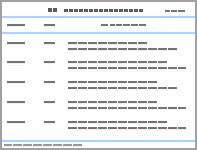
Table 1
Comparison of baseline characteristics between the two groups [n(%)/$\bar{x}±s$]
| 项目 | 对照组(n=42) | 干预组(n=41) | t/χ2 | P |
| *:Fisher精确检验。 | ||||
| 年龄(岁) | 83.62±7.48 | 80.78±8.40 | 1.627 | 0.108 |
| 年龄分层(岁)[n (%)] | 1.167 | 0.243 | ||
| 65~75 | 9 (21.4) | 16 (39.0) | ||
| 76~85 | 15 (35.7) | 9 (22.0) | ||
| >85 | 18 (42.8) | 16 (39.0) | ||
| 性别[n (%)] | 1.487 | 0.223 | ||
| 男性 | 13 (31.0) | 18 (43.9) | ||
| 女性 | 29 (69.0) | 23 (56.7) | ||
| 合并症[n (%)] | ||||
| 冠心病 | 19 (45.2) | 18 (43.9) | 0.015 | 0.903 |
| 高血压 | 28 (66.7) | 23 (56.7) | 0.978 | 0.323 |
| 卒中 | 13 (30.0) | 8 (19.5) | 1.437 | 0.231 |
| 慢性气道疾病 | 6 (14.3) | 7 (17.0) | 0.122 | 0.727 |
| 2型糖尿病 | 14 (33.3) | 9 (22.0) | 1.342 | 0.247 |
| 骨质疏松 | 21 (50.0) | 19 (46.3) | 0.111 | 0.739 |
| 身高(m) | 1.60±0.09 | 1.63±0.09 | 1.406 | 0.164 |
| 体重(kg) | 55.08±10.79 | 54.88±8.25 | 0.096 | 0.934 |
| BMI(kg/m2) | 21.50±2.95 | 20.83±3.12 | 1.008 | 0.317 |
| BMI分层 [n (%)] | - | 0.105* | ||
| <18.5 | 11 (26.2) | 9 (22.0) | ||
| 18.5~23.9 | 20 (47.6) | 27 (65.9) | ||
| 24.0~27.9 | 11 (26.2) | 4 (9.7) | ||
| ≥28.0 | 0 (0.0) | 1 (2.4) | ||
Table 2
Comparison of body composition parameters before and after intervention between the two groups($\bar{x}±s$)
| 指标 | 对照组(n=42) | 干预组(n=41) | t/F | P |
| 与对照组相比,1): P<0.05;与治疗前相比,2):P<0.05;与对照组治疗前后差值相比,3):P<0.05。 | ||||
| BMI(kg/m2) | ||||
| 治疗前 | 21.50±2.95 | 20.83±3.12 | 1.008 | 0.317 |
| 治疗后 | 22.17±3.15 | 21.52±2.88 | 0.747 | 0.390 |
| t | 0.983 | 1.073 | ||
| P | 0.328 | 0.287 | ||
| 治疗前后差值 | 0.67±0.61 | 0.69±0.68 | 0.128 | 0.898 |
| 25羟维生素D(ng/mL) | ||||
| 治疗前 | 20.45±5.23 | 21.29±7.04 | 0.620 | 0.537 |
| 治疗后 | 21.04±4.81 | 25.30±6.911)2) | 15.081 | 0.0002 |
| t | 0.541 | 2.607 | ||
| P | 0.590 | 0.011 | ||
| 治疗前后差值 | 0.59±2.98 | 4.02±6.133) | 3.225 | 0.002 |
| 小腿围(cm) | ||||
| 治疗前 | 29.20±3.79 | 29.11±2.81 | 0.131 | 0.896 |
| 治疗后 | 29.76±3.93 | 30.60±2.47 | 3.811 | 0.055 |
| t | 0.659 | 1.509 | ||
| P | 0.512 | 0.135 | ||
| 治疗前后差值 | 0.55±0.86 | 1.49±1.043) | 4.490 | <0.000 1 |
| VFA(cm2) | ||||
| 治疗前 | 110.10±48.71 | 95.47±40.48 | 1.489 | 0.141 |
| 治疗后 | 101.90±49.12 | 93.73±32.97 | 2.512 | 0.117 |
| t | 0.772 | 0.214 | ||
| P | 0.442 | 0.831 | ||
| 治疗前后差值 | −8.24±18.31 | 1.82±29.42 | 1.866 | 0.067 |
| SMI(kg/m2) | ||||
| 治疗前 | 5.60±1.13 | 5.82±0.88 | 1.006 | 0.318 |
| 治疗后 | 5.77±1.14 | 6.29±0.881)2) | 6.427 | 0.013 |
| t | 0.692 | 2.399 | ||
| P | 0.491 | 0.019 | ||
| 治疗前后差值 | 0.17±0.20 | 0.47±0.513) | 3.451 | 0.001 |
Table 3
Comparison of muscle strength and physical function parameters before and after intervention between the two groups($\bar{x}±s$)
| 指标 | 对照组(n=42) | 干预组(n=41) | t/F | P |
| 与对照组相比,1): P<0.05;与治疗前相比,2): P<0.05;与对照组治疗前后差值相比,3): P<0.05。 | ||||
| 握力(kg) | ||||
| 治疗前 | 16.22±6.86 | 16.96±7.01 | 0.487 | 0.628 |
| 治疗后 | 17.38±7.18 | 19.47±8.25 | 0.519 | 0.474 |
| t | 0.762 | 1.495 | ||
| P | 0.448 | 0.139 | ||
| 治疗前后差值 | 1.17±1.47 | 2.87±2.933) | 3.335 | 0.002 |
| 6 m步速(m/s) | ||||
| 治疗前 | 0.56±0.23 | 0.59±0.25 | 0.489 | 0.626 |
| 治疗后 | 0.63±0.30 | 0.74±0.351)2) | 12.292 | 0.001 |
| t | 1.122 | 2.232 | ||
| P | 0.265 | 0.029 | ||
| 治疗前后差值 | 0.07±0.10 | 0.15±0.143) | 3.130 | 0.002 |
| 5次起坐时间(s) | ||||
| 治疗前 | 26.99±17.70 | 23.81±15.08 | 0.882 | 0.380 |
| 治疗后 | 23.86±14.17 | 16.79±7.861)2) | 4.205 | 0.043 |
| t | 0.895 | 2.666 | ||
| P | 0.374 | 0.009 | ||
| 治疗前后差值 | −0.75±4.78 | −1.73±6.91 | 0.753 | 0.454 |
| SPPB总分(分) | ||||
| 治疗前 | 4.79±2.17 | 5.39±2.05 | 1.305 | 0.196 |
| 治疗后 | 5.38±2.84 | 7.12±2.251)2) | 17.213 | <0.000 1 |
| t | 1.080 | 3.645 | ||
| P | 0.283 | 0.001 | ||
| 治疗前后差值 | 0.60±1.25 | 1.73±1.123) | 4.360 | <0.000 1 |
Table 4
Comparison of sleep quality before and after intervention between the two groups [($\bar{x}±s$)/[M (Q1,Q3)]
| 指标 | 对照组(n=42) | 干预组(n=41) | t/Z | P |
| 与对照组相比,1):P<0.05; 与治疗前相比,2): P<0.05。 | ||||
| 主观睡眠质量(分) | ||||
| 治疗前 | 1.12±0.71 | 0.95±0.55 | 1.210 | 0.230 |
| 治疗后 | 0.74±0.541) | 0.61±0.491)2) | 1.125 | 0.264 |
| t | 2.772 | 2.971 | ||
| P | 0.007 | 0.004 | ||
| 入睡时间(分) | ||||
| 治疗前 | 1(1,1) | 1(1,1) | 0.057 | 0.955 |
| 治疗后 | 1(1,1) | 1(1,1) | 0.605 | 0.545 |
| Z | 1.083 | 0.591 | ||
| P | 0.279 | 0.554 | ||
| 睡眠时间(分) | ||||
| 治疗前 | 0.74±0.59 | 0.66±0.66 | 0.583 | 0.562 |
| 治疗后 | 0.57±0.50 | 0.22±0.421)2) | 3.467 | 0.001 |
| t | 1.400 | 3.611 | ||
| P | 0.165 | 0.001 | ||
| 睡眠效率(分) | ||||
| 治疗前 | 1.64±0.79 | 1.42±0.81 | 1.303 | 0.196 |
| 治疗后 | 1.04±0.731) | 0.90±0.621) | 0.972 | 0.334 |
| t | 3.582 | 3.217 | ||
| P | 0.001 | 0.002 | ||
| 睡眠障碍(分) | ||||
| 治疗前 | 1(1,2) | 1(1,1) | 0.353 | 0.724 |
| 治疗后 | 1(1,1) | 1(1,1)1)2) | 2.627 | 0.009 |
| Z | 0.836 | 2.695 | ||
| P | 0.403 | 0.007 | ||
| 催眠药物使用(分) | ||||
| 治疗前 | 0(0,1) | 0(0,1) | 0.461 | 0.645 |
| 治疗后 | 0(0,1) | 0(0,0) 1)2) | 2.046 | 0.041 |
| Z | 0.336 | 2.978 | ||
| P | 0.737 | 0.003 | ||
| 日间功能障碍(分) | ||||
| 治疗前 | 1.38±0.94 | 1.10±1.00 | 1.337 | 0.185 |
| 治疗后 | 1.26±0.66 | 0.78±0.42 | 3.124 | 0.081 |
| t | 0.672 | 1.880 | ||
| P | 0.504 | 0.066 | ||
| PSQI总分(分) | ||||
| 治疗前 | 7.62±3.91 | 6.93±3.47 | 0.852 | 0.397 |
| 治疗后 | 6.05±2.611) | 4.51±1.861)2) | 3.090 | 0.003 |
| t | 2.167 | 3.870 | ||
| P | 0.034 | 0.000 | ||
| ISI评分(分) | ||||
| 治疗前 | 8.31±4.69 | 7.15±4.68 | 1.131 | 0.262 |
| 治疗后 | 6.45±3.331) | 4.93±3.351)2) | 2.081 | 0.041 |
| t | 2.092 | 2.470 | ||
| P | 0.040 | 0.016 | ||
| ESS评分(分) | ||||
| 治疗前 | 8.38±4.40 | 7.15±3.37 | 1.434 | 0.155 |
| 治疗后 | 6.76±3.23 | 5.20±2.681)2) | 2.404 | 0.019 |
| t | 1.924 | 2.609 | ||
| P | 0.059 | 0.005 | ||
Table 5
Comparison of therapeutic efficacy on sleep quality based on PSQI between the two groups [n (%)]
| 疗效 | 对照组(n=42) | 干预组(n=41) | Z | P |
| 无效 | 21(50.0) | 11(26.8) | 2.198 | 0.028 |
| 有效 | 15(35.7) | 19(46.4) | ||
| 显效 | 6(14.3) | 11(26.8) | ||
| 痊愈 | 0(0.0) | 0(0.0) |
Table 6
Variable assignment for factors influencing PSQI efficacy
| 因素 | 赋值 | ||
| 疗效 | 0=无效 | 1=有效 | 2=显效 |
| 分组 | 0=对照组 | 1=干预组 | |
| 性别 | 0=女性 | 1=男性 | |
| 年龄 | 0=65~75岁 | 1=76~85岁 | 2=>85岁 |
| 冠心病 | 0=否 | 1=是 | |
| 高血压 | 0=否 | 1=是 | |
| 脑卒中 | 0=否 | 1=是 | |
| 慢性气道疾病 | 0=否 | 1=是 | |
| 2型糖尿病 | 0=否 | 1=是 | |
| 骨质疏松 | 0=否 | 1=是 | |
Table 7
Logistic regression analysis of factors influencing PSQI efficacy
| 因素 | β | SE | Wald χ2 | P | OR的95%CI |
| 疗效 | |||||
| 无效 | −0.403 | 0.373 | 1.165 | 0.280 | 0.322~1.389 |
| 有效 | −2.384 | 0.463 | 26.526 | <0.000 1 | 0.037~0.228 |
| 显效 | 0 | ||||
| 分组 | |||||
| 干预组 | 0.992 | 0.419 | 5.389 | 0.020 | 1.167~6.235 |
| 对照组 | 0 | ||||
| 骨质疏松 | |||||
| 有 | 0.860 | 0.425 | 4.092 | 0.043 | 1.027~5.433 |
| 无 | 0 |
| [1] |
Damluji AA, Alfaraidhy M, AlHajri N, et al. Sarcopenia and cardiovascular diseases[J]. Circulation, 2023, 147(20):1534-1553.
doi: 10.1161/CIRCULATIONAHA.123.064071 |
| [2] |
Tan X, Titova OE, Lindberg E, et al. Association between self-reported sleep duration and body composition in middle-aged and older adults[J]. J Clin Sleep Med, 2019, 15(3):431-435.
doi: 10.5664/jcsm.7668 |
| [3] |
Locquet M, Beaudart C, Delandsheere L, et al. Subjective sleep quality among sarcopenic and non-sarcopenic older adults: results from the SarcoPhAge cohort[J]. J Frailty Aging, 2018, 7(3):176-181.
doi: 10.14283/jfa.2018.13 |
| [4] |
de Sá Souza H, de Melo CM, Piovezan RD, et al. Resistance training improves sleep and anti-inflammatory parameters in sarcopenic older adults: a randomized controlled trial[J]. Int J Environ Res Public Health, 2022, 19(23):16322.
doi: 10.3390/ijerph192316322 |
| [5] |
崔华, 王朝晖, 吴剑卿, 等. 老年人肌少症防控干预中国专家共识(2023)[J]. 中华老年医学杂志, 2023, 42(2):144-153.
doi: 10.3760/cma.j.issn.0254-9026.2023.02.002 |
|
Cui H, Wang ZH, Wu JQ, et al. Chinese expert consensus on prevention and intervention for elderly with sarcopenia (2023)[J]. Chin J Geriatr, 2023, 42(2):144-153.
doi: 10.3760/cma.j.issn.0254-9026.2023.02.002 |
|
| [6] |
Shen Y, Shi Q, Nong K, et al. Exercise for sarcopenia in older people: a systematic review and network meta-analysis[J]. J Cachexia Sarcopenia Muscle, 2023, 14(3):1199-1211.
doi: 10.1002/jcsm.13225 |
| [7] |
Lu L, Mao L, Feng Y, et al. Effects of different exercise training modes on muscle strength and physical performance in older people with sarcopenia: a systematic review and meta-analysis[J]. BMC Geriatr, 2021, 21(1):708.
doi: 10.1186/s12877-021-02642-8 |
| [8] |
Cereda E, Pisati R, Rondanelli M, et al. Whey protein, leucine- and vitamin-D-enriched oral nutritional supplementation for the treatment of sarcopenia[J]. Nutrients, 2022, 14(7):1524.
doi: 10.3390/nu14071524 |
| [9] |
Peng LN, Cheng YC, Yu PC, et al. Oral nutritional supplement with β-hydroxy-β-methylbutyrate (HMB) improves nutrition, physical performance and ameliorates intramuscular adiposity in pre-frail older adults: a randomized controlled trial[J]. J Nutr Health Aging, 2021, 25(6):767-773.
doi: 10.1007/s12603-021-1621-7 |
| [10] |
Cangussu LM, Nahas-Neto J, Orsatti CL, et al. Effect of vitamin D supplementation alone on muscle function in postmenopausal women: a randomized, double-blind, placebo-controlled clinical trial[J]. Osteoporos Int, 2015, 26(10):2413-2421.
doi: 10.1007/s00198-015-3151-9 |
| [11] |
Li ML, Zhang F, Luo HY, et al. Improving sarcopenia in older adults: a systematic review and meta-analysis of randomized controlled trials of whey protein supplementation with or without resistance training[J]. J Nutr Health Aging, 2024, 28(4):100184.
doi: 10.1016/j.jnha.2024.100184 |
| [12] |
Gu WT, Zhang LW, Wu FH, et al. The effects of beta-hydroxy-beta-methylbutyrate supplementation in patients with sarcopenia: a systematic review and meta-analysis[J]. Maturitas, 2025, 195:108219.
doi: 10.1016/j.maturitas.2025.108219 |
| [13] |
Hernández-Lepe MA, Miranda-Gil MI, Valbuena-Gregorio E, et al. Exercise programs combined with diet supplementation improve body composition and physical function in older adults with sarcopenia: a systematic review[J]. Nutrients, 2023, 15(8):1998.
doi: 10.3390/nu15081998 |
| [14] |
Gao X, Qiao Y, Chen Q, et al. Effects of different types of exercise on sleep quality based on Pittsburgh Sleep Quality Index in middle-aged and older adults: a network meta-analysis[J]. J Clin Sleep Med, 2024, 20(7):1193-1204.
doi: 10.5664/jcsm.11106 |
| [15] |
Tseng TH, Chen HC, Wang LY, et al. Effects of exercise training on sleep quality and heart rate variability in middle-aged and older adults with poor sleep quality: a randomized controlled trial[J]. J Clin Sleep Med, 2020, 16(9):1483-1492.
doi: 10.5664/jcsm.8560 |
| [16] |
Akbari Kamrani AA, Shams A, Shamsipour Dehkordi P, et al. The effect of low and moderate intensity aerobic exercises on sleep quality in men older adults[J]. Pak J Med Sci, 2014, 30(2):417-421.
doi: 10.12669/pjms.302.4386 |
| [17] |
Zhou Y, Wu W, Zou Y, et al. Benefits of different combinations of aerobic and resistance exercise for improving plasma glucose and lipid metabolism and sleep quality among elderly patients with metabolic syndrome: a randomized controlled trial[J]. Endocr J, 2022, 69(7):819-830.
doi: 10.1507/endocrj.EJ21-0589 |
| [18] |
Al-Jiffri OH, Abd El-Kader SM. Aerobic versus resistance exercises on systemic inflammation and sleep parameters in obese subjects with chronic insomnia syndrome[J]. Afr Health Sci, 2021, 21(3):1214-1222.
doi: 10.4314/ahs.v21i3.30 |
| [19] |
张艳, 谈玉婷, 黄夕夏, 等. 上海市社区老年人肌少症患病率及相关危险因素分析[J]. 老年医学与保健, 2018, 24(6):608-613.
doi: 10.3969/j.issn.1008-8296.2018.06.014 |
|
Zhang Y, Tan YT, Huang XX, et al. Prevalence of sarcopenia and the associated risk factors in community elderly in Shanghai[J]. Geriatr Health Care, 2018, 24(6):608-613.
doi: 10.3969/j.issn.1008-8296.2018.06.014 |
|
| [20] | 《运动处方中国专家共识(2023)》专家组. 运动处方中国专家共识(2023)[J]. 中国运动医学杂志, 2023, 42(1): 3-13. |
| Writing Group of Chinese expert consensus on exercise prescription (2023). Chinese expert consensus on exercise prescription (2023)[J]. Chin J Sports Med, 2023, 42(1):3-13. | |
| [21] | 方蔓倩, 葛烨培, 杨黎明, 等. 解郁安神方加减联合西药治疗肝郁化火型失眠的临床观察[J]. 现代中医临床, 2016, 23(4):16-20. |
| Fang MQ, Ge YP, Yang LM, et al. Clinical observation of modified Jieyu Anshen Formula combined with western medicine on the treatment of liver stagnation transforming into fire type insomnia[J]. Modern Chinese Clinical Medicine, 2016, 23(4):16-20. | |
| [22] |
Wang H, Huang WY, Zhao Y. Efficacy of exercise on muscle function and physical performance in older adults with sarcopenia: an updated systematic review and meta-analysis[J]. Int J Environ Res Public Health, 2022, 19(13):8212.
doi: 10.3390/ijerph19138212 |
| [23] |
Grgic J, Mcllvenna LC, Fyfe JJ, et al. Does aerobic training promote the same skeletal muscle hypertrophy as resistance training?[J]. Sports Med, 2019, 49(2):233-254.
doi: 10.1007/s40279-018-1008-z |
| [24] |
Song Z, Moore DR, Hodson N, et al. Resistance exercise initiates mechanistic target of rapamycin (mTOR) translocation and protein complex co-localisation in human skeletal muscle[J]. Sci Rep, 2017, 7(1):5028.
doi: 10.1038/s41598-017-05483-x |
| [25] |
Kakigi R, Yoshihara T, Ozaki H, et al. Whey protein intake after resistance exercise activates mTOR signaling in a dose-dependent manner in human skeletal muscle[J]. Eur J Appl Physiol, 2014, 114(4):735-742.
doi: 10.1007/s00421-013-2812-7 |
| [26] |
Kaczka P, Michalczyk MM, Jastrząb R, et al. Mechanism of action and the effect of beta-hydroxy-beta-methylbutyrate (HMB) supplementation on different types of physical performance - a systematic review[J]. J Hum Kinet, 2019, 68:211-222.
doi: 10.2478/hukin-2019-0070 |
| [27] |
Mendes MM, Botelho PB, Ribeiro H. Vitamin D and musculoskeletal health: outstanding aspects to be considered in the light of current evidence[J]. Endocr Connect, 2022, 11(10):e210596.
doi: 10.1530/ec-21-0596 |
| [28] |
Choi M, Park H, Cho S, et al. Vitamin D3 supplementation modulates inflammatory responses from the muscle damage induced by high-intensity exercise in SD rats[J]. Cytokine, 2013, 63(1):27-35.
doi: 10.1016/j.cyto.2013.03.018 |
| [29] |
Roldán-Jiménez C, Bennett P, Cuesta-Vargas AI. Muscular activity and fatigue in lower-limb and trunk muscles during different sit-to-stand tests[J]. PLoS One, 2015, 10(10):e0141675.
doi: 10.1371/journal.pone.0141675 |
| [30] |
Anan M, Hattori H, Tanimoto K, et al. The coordination of joint movements during sit-to-stand motion in old adults: the uncontrolled manifold analysis[J]. Phys Ther Res, 2017, 20(2):44-50.
doi: 10.1298/ptr.E9923 |
| [31] |
Miyazaki R, Ayabe M, Kumahara H, et al. Effects of light-to-moderate intensity aerobic exercise on objectively measured sleep parameters among community-dwelling older people[J]. Arch Gerontol Geriatr, 2021, 94:104336.
doi: 10.1016/j.archger.2020.104336 |
| [32] |
Hasan F, Tu YK, Lin CM, et al. Comparative efficacy of exercise regimens on sleep quality in older adults: a systematic review and network meta-analysis[J]. Sleep Med Rev, 2022, 65:101673.
doi: 10.1016/j.smrv.2022.101673 |
| [33] |
Gupta S, Bansal K, Saxena P. A clinical trial to compare the effects of aerobic training and resistance training on sleep quality and quality of life in older adults with sleep disturbance[J]. Sleep Sci, 2022, 15(2):188-195.
doi: 10.5935/1984-0063.20220040 |
| [34] |
Bonardi JMT, Lima LG, Campos GO, et al. Effect of different types of exercise on sleep quality of elderly subjects[J]. Sleep Med, 2016, 25:122-129.
doi: 10.1016/j.sleep.2016.06.025 |
| [35] |
Maric D, Ficarra S, Di Bartolo L, et al. Effects of resistance training on sleep quality and disorders among individuals diagnosed with cancer: a systematic review and meta-analysis of randomized controlled trials[J]. Cancer Med, 2024, 13(8):e7179.
doi: 10.1002/cam4.7179 |
| [36] |
Karandikar-Agashe G, Agrawal R. Comparative study of the effect of resistance exercises versus aerobic exercises in postmenopausal women suffering from insomnia[J]. J Midlife Health, 2020, 11(1):2-5.
doi: 10.4103/jmh.jmh_35_19 |
| [37] |
Yu X, Sun S, Zhang S, et al. A pooled analysis of the association between sarcopenia and osteoporosis[J]. Medicine (Baltimore), 2022, 101(46):e31692.
doi: 10.1097/md.0000000000031692 |
| [38] |
Chen S, Xu X, Gong H, et al. Global epidemiological features and impact of osteosarcopenia: a comprehensive meta-analysis and systematic review[J]. J Cachexia Sarcopenia Muscle, 2024, 15(1):8-20.
doi: 10.1002/jcsm.13392 |
| [39] | 王亮, 陶天遵, 杨惠林, 等. 中国老年骨质疏松症诊疗指南(2023)[J]. 中华骨与关节外科杂志, 2023, 16(10):865-885. |
| Wang L, Tao TZ, Yang HL, et al. China guideline for diagnosis and treatment of senile osteoporosis (2023)[J]. Chin J Bone Joint Surg, 2023, 16(10):865-885. | |
| [40] |
Abboud M. Vitamin D supplementation and sleep: a systematic review and meta-analysis of intervention studies[J]. Nutrients, 2022, 14(5):1076.
doi: 10.3390/nu14051076 |
| [1] | YANG Dongming, LI Huilin. Nutritional therapy for sarcopenia in rheumatoid arthritis patients [J]. Journal of Internal Medicine Concepts & Practice, 2026, 21(01): 91-97. |
| [2] | WANG Yi, HUANG Hui. Advances in pathogenesis and treatment of chronic obstructive pulmonary disease complicated with sarcopenia [J]. Journal of Internal Medicine Concepts & Practice, 2025, 20(05): 415-419. |
| [3] | YANG Qirui, BAI Tingting, JIANG Qianwen, ZHANG Weiqi, LU Yiyin, ZHAO Wei, WU Fang, LI Feika. Prognostic factor analysis of sarcopenia in elderly patients with heart failure and preserved ejection fraction [J]. Journal of Internal Medicine Concepts & Practice, 2025, 20(03): 210-215. |
| [4] | LIU Jie, ZHANG Yin, XU Yiming, REN Lei, SHEN Honghua. Rehabilitation efficacy of aerobic exercise on patients with overlap syndrome of chronic obstructive pulmonary disease and obstructive sleep apnea [J]. Journal of Internal Medicine Concepts & Practice, 2024, 19(05): 295-302. |
| [5] | WU Mengmeng, YANG Fuyan, LIU Yuchen, LU Xuke, GAO Jingge, YE Ziling. Analysis of related factors of sarcopenia in type 2 diabetic nephropathy patients on maintenance hemodialysis [J]. Journal of Internal Medicine Concepts & Practice, 2024, 19(02): 102-106. |
| [6] | HUANG Yi, YANG Meng, LIU Hangxu. Association between sarcopenia and pneumonia in elderly and prevention strategies [J]. Journal of Internal Medicine Concepts & Practice, 2024, 19(01): 1-5. |
| [7] | ZHAO Yajie, HE Qing, XU Zhihong. Impact of sarcopenia on quality of life and mobility in elderly patients with chronic obstructive pulmonary disease [J]. Journal of Internal Medicine Concepts & Practice, 2023, 18(06): 383-387. |
| [8] | ZHANG Yin, SHEN Honghua, XU Yiming, REN Lei, LI jun, WU Shunjun, LING Xiaonan. Effect of sarcopenia combined with abdominal obesity on muscle strength and physical function in hospitalized elderly [J]. Journal of Internal Medicine Concepts & Practice, 2023, 18(02): 76-82. |
| [9] | LI Feika, YANG Wenli, JIANG Qianwen, FANG Fang, BAI Tingting, XU Gang, WU Fang, HE Qing. Development of preliminary scales for elderly sarcopenia based on Delphi method [J]. Journal of Internal Medicine Concepts & Practice, 2022, 17(03): 238-242. |
| [10] | QIU Liwen, XU Yiming, ZHANG Yin, SHEN Honghua, CHEN Shen. Evaluate therapeutic efficacy of resistance training and aerobic training for gerontal patients with chronic obstructive pulmonary disease [J]. Journal of Internal Medicine Concepts & Practice, 2022, 17(01): 78-83. |
| [11] | CHEN Mei, FU Conghui, YU Xiaoping, WANG Gang, XU Ying. Effect of low intensity resistance training on balance function and depression state in elderly patients [J]. Journal of Internal Medicine Concepts & Practice, 2021, 16(05): 344-348. |
| Viewed | ||||||
|
Full text |
|
|||||
|
Abstract |
|
|||||
