

Contemporary Foreign Languages Studies ›› 2026, Vol. 26 ›› Issue (3): 41-50.doi: 10.3969/j.issn.1674-8921.2026.03.004
Previous Articles Next Articles
DING Hongwei( )
Online:2026-06-28
Published:2026-07-28
CLC Number:
DING Hongwei. Speech and Language as Biosocial Markers for Mild Cognitive Impairment in Older Adults: Theoretical Construction and Multidimensional Framework[J]. Contemporary Foreign Languages Studies, 2026, 26(3): 41-50.


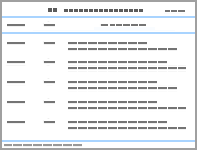
| 对比维度 | 语言作为生物标志物指标 | 言语语言作为生物社会标志物指标 |
|---|---|---|
| 评估维度 | 仅聚焦词汇、句法、语义等传统语言结构特征 无社会认知相关维度 | 涵盖传统语言特征 新增情绪韵律、动态交互等社会认知维度 所有指标需考虑方言等社会人口学因素 |
| 神经基础 | 语言相关脑区异常,语言网络连接性下降 执行控制网络及注意调控脑区出现异常 | 语言相关脑区异常,语言网络连接性下降 执行控制网络及注意调控脑区出现异常 情绪加工网络(右侧颞上回等)受损 预测性编码(镜像神经系统等)网络受损 |
| 社会功能 | 与社会功能关联薄弱 无法反映个体社交适应与参与能力 | 可映射神经退变对社交能力的影响 能评估社交适应与参与能力 较语言指标更为敏感,更早出现异常 |
| 核心定位与 临床应用 | 单一病理导向,指导药物研发 应用于精神障碍阶段 | 病理—功能双重导向,支持药物与非药物协同康复 应用扩展至老年MCI早期 |
| [1] | Amlerova J., J. Laczó, Z. Nedelska, et al. 2022. Emotional prosody recognition is impaired in Alzheimer’s disease[J]. Alzheimer’s Research & Therapy 14(1): 50. |
| [2] |
Bonini L., C. Rotunno, E. Arcuri, et al. 2022. Mirror neurons 30 years later: Implications and applications[J]. Trends in Cognitive Sciences 26(9): 767-781.
doi: 10.1016/j.tics.2022.06.003 pmid: 35803832 |
| [3] |
Ding H. & Y. Zhang. 2023. Speech prosody in mental disorders[J]. Annual Review of Linguistics 9(1): 335-355.
doi: 10.1146/linguistics.2023.9.issue-1 URL |
| [4] | Dunbar R. I. M. 2024. The social brain hypothesis-thirty years on[J]. Annals of Human Biology 51(1): 2359920. |
| [5] |
Fan X., E. Tang, M. Zhang, et al. 2024. Decline of affective prosody recognition with a positivity bias among older adults: A systematic review and meta-analysis[J]. Journal of Speech Language and Hearing Research 67(10): 3862-3879.
doi: 10.1044/2024_JSLHR-23-00775 URL |
| [6] | Hickok G. 2022. The dual stream model of speech and language processing[A]. In A. E. Hillis & J. Fridriksson (eds.). Handbook of Clinical Neurology[C]. Elsevier. 57-69. |
| [7] | Kovac D., L. Novakova, J. Mekyska, et al. 2025. Digital speech biomarkers for assessing cognitive decline across neurodegenerative conditions[J]. Computers in Biology and Medicine 198: 111251. |
| [8] |
Lima M. R., A. Capstick, F. Geranmayeh, et al. 2025. Evaluating spoken language as a biomarker for automated screening of cognitive impairment[J]. Communications Medicine 6:6.
doi: 10.1038/s43856-025-01263-1 |
| [9] |
Lin Y., X. Ye, H. Zhang, et al. 2024. Category-sensitive age-related shifts between prosodic and semantic dominance in emotion perception linked to cognitive capacities[J]. Journal of Speech Language and Hearing Research 67(12): 4829-4849.
doi: 10.1044/2024_JSLHR-23-00817 URL |
| [10] |
Palaniyappan L. 2021. More than a biomarker: Could language be a biosocial marker of psychosis?[J]. NPJ Schizophrenia 7(1): 42.
doi: 10.1038/s41537-021-00172-1 pmid: 34465778 |
| [11] | Salman Y., T. Gérard, L. Huyghe, et al. 2024. Amygdala atrophies in specific subnuclei in preclinical Alzheimer’s disease[J]. Alzheimer’s & Dementia 20(10): 7205-7219. |
| [12] | Shi, P., H. Chapman, L. Liu, et al. 2025. Social cognition in mild cognitive impairment and dementia: A systematic review and meta-analysis[J]. Alzheimer’s & Dementia 21(3): e70076. |
| [13] | Vigliocco G., L. Convertino, S. De Felice, et al. 2024. Ecological brain: Reframing the study of human behaviour and cognition[J]. Royal Society Open Science 11(11). |
| [14] | Zhi N., R. J. Ren, J. L. Qi, et al. 2025. The China Alzheimer Report 2025[J]. General Psychiatry 38(4): e102020. |
| [15] | 丁红卫. 2023. 人工智能透过言语语言识别精神障碍[J]. 上海师范大学学报(哲学社会科学版) (4): 24-34. |
| [16] | 樊心然、 谢佳言、 丁红卫. 2025. 听损老年人言语感知障碍的国际前沿探索[J]. 外国语言文学 (6): 16-26,48,129. |
| [17] | 黄立鹤. 2025. 阿马蒂亚·森可行能力理论视域下的老年人语言能力问题[J]. 同济大学学报(社会科学版) (4): 122-132. |
| [18] |
马博森、 张来运、 曾小荣. 2024. 国外特殊人群会话修正研究:现状与启示[J]. 当代外语研究 (3): 83-95.
doi: 10.3969/j.issn.1674-8921.2024.03.009 |
| Viewed | ||||||
|
Full text |
|
|||||
|
Abstract |
|
|||||
