

Journal of Diagnostics Concepts & Practice ›› 2025, Vol. 24 ›› Issue (06): 621-627.doi: 10.16150/j.1671-2870.2025.06.007
• Original articles • Previous Articles Next Articles
JIA Liying, XU Haifeng, YU Chong, GUO Wanhai, LONG Rui( )
)
Received:2025-04-19
Revised:2025-06-24
Online:2025-12-25
Published:2025-12-25
Contact:
LONG Rui
E-mail:1107417401@qq.com
CLC Number:
JIA Liying, XU Haifeng, YU Chong, GUO Wanhai, LONG Rui. Study on drug resistance of carbapenem-resistant Acinetobacter baumannii in a tertiary hospital in Xinjiang from 2023 to 2024[J]. Journal of Diagnostics Concepts & Practice, 2025, 24(06): 621-627.
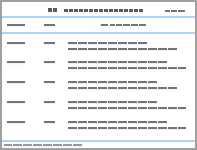
Table 1
PCR primer sequences of drug resistance genes
| Gene name | Primer sequences(5´→3´) | Length(bp) |
|---|---|---|
| Carbapenemase gene | ||
| blaTEM | F:ATCAGCAATAAACCAGC | 522 |
| R:CCCCGAAGAACGTTTTC | ||
| blaNDM-1 | F:CTCGCACCGAATGTCTGG | 713 |
| R:CATTGGCGGCGAAAGTCA | ||
| blaVIM | F:GTTTGGTCGCATATCGCAAC | 278 |
| R:AATGCGCAGCACCAGGATAG | ||
| blaIMP | F:CATGGTTTGGTGGTTCTTGT | 524 |
| R:AATATTTTGGCGGACTTTGGC | ||
| blaOXA-23 | F:GATCGGATTGGAGAACCAGA | 517 |
| R:ATTTCTGACCGCATTTCCAT | ||
| blaOXA-51 | F:TAATGCTTTGATCGGCCTGG | 367 |
| R:TGGATTGCACTTCATCTTGG | ||
| blaOXA-58 | F:AAGTATTGGGGCTTGTGCTG | 603 |
| R:CCCCTCTGCGCTCTACATAC | ||
| RND efflux pump gene | ||
| adeB | F:TGGCGGAATGAAGTATGT | 885 |
| R:GCAGTGCGGCAGGTTAG | ||
| adeM | F:GTAGGTGTAGGCTTATGGA | 687 |
| R:GTACCGAAGTGACTGAAAT | ||
| adeJ | F:TTAACGATAGCGTTGTAACC | 481 |
| R:TGAGCAGACAATGGAATAGT |
Table 2
Percentage of CRABA accounting for Acinetobacter baumannii from 2023 to 2024
| Year | Pathogenic bacteria (N) | Acinetobacter baumannii (n) | CRABA(n) | Percentage of CRABA accounting for Acinetobacter baumannii (%) |
|---|---|---|---|---|
| 2023 | 2 272 | 101 | 81 | 80.20 |
| 2024 | 3 652 | 124 | 98 | 79.03 |
| Total | 5 924 | 225 | 179 | 79.56 |
Table 3
Distribution of specimens with CRABA detected
| Specimen source | Number | Percentage(%) |
|---|---|---|
| Sputum | 146 | 81.56 |
| Throat swab | 10 | 5.59 |
| Bronchial aspirate | 7 | 3.91 |
| Blood | 6 | 3.35 |
| Secretion | 5 | 2.79 |
| Urine | 2 | 1.12 |
| Bile | 2 | 1.12 |
| Pus | 1 | 0.56 |
| Total | 179 | 100 |
Table 4
Distribution of clinical department with CRABA detected
| Specimen source | Number | Percentage(%) |
|---|---|---|
| Intensive care unit | 112 | 62.60 |
| Respiratory intensive care unit | 21 | 11.73 |
| Neurological intensive care unit | 16 | 8.94 |
| Respiratory department | 12 | 6.70 |
| Neurology | 3 | 1.68 |
| Neurosurgery | 2 | 1.12 |
| Emergency Department | 2 | 1.12 |
| General foreign language one | 2 | 1.12 |
| Urology | 2 | 1.12 |
| Burn department | 1 | 0.56 |
| Coronar/Care unit | 1 | 0.56 |
| Infection department | 1 | 0.56 |
| Nephrology department | 1 | 0.56 |
| Gastroenterology department | 1 | 0.56 |
| Rehabilitation department | 1 | 0.56 |
| Orthopaedics | 1 | 0.56 |
| Total | 179 | 100 |
Table 5
Antibiotic resistance rate of CRABA
| Antibiotic name | Number | Percentage(%) |
|---|---|---|
| Compound sulfamethoxazole | 46 | 25.70 |
| Ceftazidime | 177 | 98.88 |
| Cefepime | 175 | 97.77 |
| Piperacillin tazobactam | 177 | 98.88 |
| Cefoperazone and sulbactam | 109 | 60.89 |
| Imipenem | 179 | 100 |
| Meropenem | 179 | 100 |
| Doxycycline | 91 | 50.84 |
| Minocycline | 97 | 54.19 |
| Tobramycin | 126 | 70.39 |
| Levofloxacin | 136 | 75.98 |
| Ciprofloxacin | 179 | 100 |
| Tigecycline | 21 | 11.73 |

Figure 1
Electrophoretic analysis of PCR products for durg resistance genes in CRABA Note: M refers to DL 2000 DNA marker;1: gene blaTEM(522 bp);2: gene blaNDM-1 (713 bp); 3: gene blaIMP (524 bp); 4: gene blaOXA-23 (517 bp); 5: gene blaOXA-51 (367 bp); 6: gene blaOXA-58 (603 bp);7: gene adeB (885 bp); 8: gene adeM (687 bp); 9: gene adeJ (481 bp).

| [1] | 张瑞凌, 冼盈, 张扣兴. 鲍曼不动杆菌感染与免疫研究进展[J]. 中国感染与化疗杂志, 2017, 17(2):224-228. |
| ZHANG R L, XIAN Y, ZHANG K X. Research advances in Acinetobacter baumannii infection and host immunity[J]. Chin J Infect Chemother, 2017, 17(2):224-228. | |
| [2] |
JAMAL S, AL ATROUNI A, RAFEI R, et al. Molecular mechanisms of antimicrobial resistance in Acinetobacter baumannii, with a special focus on its epidemiology in Lebanon[J]. J Glob Antimicrob Resist, 2018, 15:154-163.
doi: S2213-7165(18)30106-1 pmid: 29859266 |
| [3] |
郭燕, 胡付品, 朱德妹, 等. 2023年CHINET中国细菌耐药监测[J]. 中国感染与化疗杂志, 2024, 24(6):627-637.
doi: 10.16718/j.1009-7708.2024.06.001 |
| GUO Y, HU F P, ZHU D M, et al. Antimicrobial resistance profile of clinical isolates in hospitals across China:report from the CHINET Antimicrobial Resistance Surveillance Program,2023[J]. Chin J Infect Chemother, 2024, 24(6):627-637. | |
| [4] |
BOYLE D P, ZEMBOWER T R. Epidemiology and mana-gement of emerging drug-resistant gram-negative bacteria: extended-spectrum β-lactamases and beyond[J]. Urol Clin North Am, 2015, 42(4):493-505.
doi: 10.1016/j.ucl.2015.05.005 URL |
| [5] |
RANJBAR R, FARAHANI A. Study of genetic diversity, biofilm formation, and detection of carbapenemase, MBL, ESBL, and tetracycline resistance genes in multidrug-resistant Acinetobacter baumannii isolated from burn wound infections in Iran[J]. Antimicrob Resist Infect Control, 2019, 8:172.
doi: 10.1186/s13756-019-0612-5 |
| [6] | 刘秋萍, 徐凌. 鲍曼不动杆菌耐药机制的研究进展[J]. 中国抗生素杂志, 2018, 43(10):1179-1187. |
| LIU Q P, XV L. Advances in resistance mechanisms of drug-resistant Acinetobacter baumannii[J]. Chin J Antibiot, 2018, 43(10):1179-1187. | |
| [7] | 周亚玲, 阴晴, 王中新. 鲍曼不动杆菌碳青霉烯酶和RND外排泵相关耐药基因的研究[J]. 国际检验医学杂志, 2021, 42(21):2635-2639. |
| ZHOU Y L, YIN Q, WANG Z X. Study on carbapenemase and RND efflux pump related drug resistance genes in Acinetobacter baumannii[J]. Int J Lab Med, 2021, 42(21):2635-2639. | |
| [8] |
ABOUELFETOUH A, TORKY A S, ABOULMAGD E. Phenotypic and genotypic characterization of carbapenem-resistant Acinetobacter baumannii isolates from Egypt[J]. Antimicrob Resist Infect Control, 2019, 8:185.
doi: 10.1186/s13756-019-0611-6 |
| [9] | BAGHERI JOSHEGHANI S, MONIRI R, FIROOZEH F, et al. Susceptibility pattern and distribution of oxacilli-nases and bla PER-1 Genes among multidrug resistant Acinetobacter baumannii in a teaching hospital in Iran[J]. J Pathog, 2015, 2015:957259. |
| [10] |
ZHAO S Y, JIANG D Y, XU P C, et al. An investigation of drug-resistant Acinetobacter baumannii infections in a comprehensive hospital of East China[J]. Ann Clin Microbiol Antimicrob, 2015, 14:7.
doi: 10.1186/s12941-015-0066-4 URL |
| [11] |
HOU P F, CHEN X Y, YAN G F, et al. Study of the correlation of imipenem resistance with efflux pumps AdeABC, AdeIJK, AdeDE and AbeM in clinical isolates of Acinetobacter baumannii[J]. Chemotherapy, 2012, 58(2):152-158.
doi: 10.1159/000335599 URL |
| [12] | 陈娇, 刘康, 李剑平, 等. 鲍曼不动杆菌RND主动外排泵的表达与耐药性的关系[J]. 中国感染控制杂志, 2018, 17(11):951-957. |
| CHEN J, LIU K, LI J P, et al. Relationship between expression and antimicrobial resistance of RND efflux pump of Acinetobacter baumannii[J]. Chin J Infect Control, 2018, 17(11):951-957. | |
| [13] |
CHEN Y, ZHOU Z, JIANG Y, et al. Emergence of NDM-1-producing Acinetobacter baumannii in China[J]. J Antimicrob Chemother, 2011, 66(6):1255-1259.
doi: 10.1093/jac/dkr082 URL |
| [14] |
朱秋丽, 卫菊, 胡丹, 等. 耐碳青霉烯类鲍曼不动杆菌下呼吸道感染的危险因素研究[J]. 中国消毒学杂志, 2019, 36(5):359-361,364.
doi: 10.11726/j.issn.1001-7658.2019.05.013 |
| ZHU Q L, WEI J, HU D, et al. Risk factors of carbape-nem-resistant Acinetobacter baumannii infection in low respiratory tract[J]. Chin J Disinfection, 2019, 36(5):359-361,364. | |
| [15] | 习慧明, 徐英春, 朱德妹, 等. 2010年中国CHINET鲍曼不动杆菌耐药性监测[J]. 中国感染与化疗杂志, 2012, 12(2):98-104. |
| XI H M, XV Y C, ZHU D M, et al. CHINET 2010 surveillance of antibiotic resistance in Acinetobacter baumannii in China[J]. Chin J Infect Chemother, 2012, 12(2):98-104. | |
| [16] | 张辉, 张小江, 徐英春, 等. 2011年中国CHINET不动杆菌属细菌耐药性监测[J]. 中国感染与化疗杂志, 2013, 13(5):342-348. |
| ZHANG H, ZHANG X J, XV Y C, et al. CHINET 2011 surveillance of antibiotic resistance in A.baumannii isolates in China[J]. Chin J Infect Chemother,2013, 13(5):342-348. | |
| [17] | 陈鹏. 鲍曼不动杆菌耐药机制的研究进展[J]. 医学综述, 2012, 18(15):2463-2466. |
| CHEN P. Research advances in drug resistance mechanism of Acinetobacter baumannii[J]. Med Recapitulate, 2012, 18(15):2463-2466. | |
| [18] | 韩燕霞, 白海, 哈小琴, 等. 2015-2017年某院鲍曼不动杆菌临床分布及耐药性分析[J]. 国际检验医学杂志, 2018, 39(20):2556-2559. |
| HAN Y X, BAI H, HA X Q, et al. Analysis of clinical distribution and drug resistance of Acinetobacter baumannii in a hospital from 2015 to 2017[J]. Int J Lab Med, 2018, 39(20):2556-2559. | |
| [19] | 周华, 周建英, 俞云松. 中国鲍曼不动杆菌感染诊治与防控专家共识解读[J]. 中国循证医学杂志, 2016, 16(1):26-29. |
| ZHOU H, ZHOU J Y, YÜ Y S. The interpretation of chinese expert consensus for the diagnosis, treatment, prevention and control of Acinetobacter Baumannii infection[J]. Chin J Evid-based Med, 2016, 16(1):26-29. | |
| [20] | 蔡果果. 耐碳青霉烯类鲍曼不动杆菌耐药机制及治疗研究进展[J]. 现代医药卫生, 2019, 35(2):234-237. |
| CAI G G, WANG C Y. Research progress on drug resistance mechanism and treatment of carbapenem resistant Acinetobacter baumannii[J]. Modern Med Health, 2019, 35 (2): 234-237. | |
| [21] | 陈志勇, 袁学刚, 喻军华. 腰大池引流加鞘内注射治疗泛耐药鲍曼不动杆菌颅内感染的疗效和安全性[J]. 中国临床研究, 2023, 36 (7): 1038-1042. |
| CHEN ZY, YUAN XG, YU JH. The efficacy and safety of lumbar cistern drainage combined with intrathecal injection in treatment of pan-durg resistant Acinetobacter baumannii intracranial infection[J]. Chin J Clin Res,2023,36(7):1038-1042. | |
| [22] | 毛炜, 黄春华, 方英, 等. 四川省简阳市院感鲍曼不动杆菌耐药性及同源性溯源研究[J]. 中国热带医学, 2023, 23(1):44-48. |
| MAO W, HUANG C H, FANG Y, et al. Value of drug resistance and homology of Acinetobacter baumannii in tracing the source of nosocomial infection in Jianyang,Sichuan[J]. Chin Trop Med, 2023, 23(1):44-48. | |
| [23] | 丁梦珊, 蔡蕊, 花璇, 等. 耐碳青霉烯类鲍曼不动杆菌碳青霉烯酶耐药基因及整合子检测与分析[J]. 临床检验杂志, 2016, 34(10):795-797. |
| DING M S, CAI R, HUA X, et al. Detection and analysis of carbapenemase resistance genes and integrons in carbapenem resistant Acinetobacter baumannii strains[J]. Chin J Clin Lab Sci, 2016, 34(10):795-797. | |
| [24] | 邓德耀, 袁文丽, 刘春林. OXA-51型β内酰胺酶的研究进展[J]. 中国感染与化疗杂志, 2014, 14(5):451-454. |
| DENG D Y, YUAN W L, LIU C L. Research update on OXA-51 β-lactamase[J]. Chin J Infect Chemother, 2014, 14(5):451-454. | |
| [25] |
BORAL B, UNALDI Ö, ERGIN A, et al. A prospective multicenter study on the evaluation of antimicrobial resistance and molecular epidemiology of multidrug-resistant Acinetobacter baumannii infections in intensive care units with clinical and environmental features[J]. Ann Clin Microbiol Antimicrob, 2019, 18(1):19.
doi: 10.1186/s12941-019-0319-8 |
| [26] | 陈荣忠, 杨子依, 向蓉. 鲍曼不动杆菌耐药性与外排泵基因、外膜孔蛋白基因的相关性研究[J]. 国际检验医学杂志, 2022, 43(24):2969-2972,2976. |
| CHEN R Z, YANG Z Y, XIANG R. Study on correlation between drug resistance of Acinetobacter baumannii with efflux pump gene and outer membrane porin gene[J]. Int J Lab Med, 2022, 43(24):2969-2972,2976. | |
| [27] | 程建军, KESAVAN DINESH KUMAR, 阴晴, 等. 鲍曼不动杆菌分子特征及其在替加环素压力下外排泵表达的变化[J]. 医学研究生学报, 2020, 33(1):18-24. |
| CHEN J J, KESAVAN DINESH KUMAR, YIN Q, et al. Molecular characteristics of Acinetobacter baumannii and the changes of efflux pump expression under tigecycline pressure[J]. J Med Postgra, 2020, 33(1):18-24. | |
| [28] | MORGAN C E, ZHANG Z, BONOMO R A, et al. An analysis of the novel fluorocycline TP-6076 bound to both the ribosome and multidrug efflux pump AdeJ from Acinetobacter baumannii[J]. mBio, 2021, 13(1):e0373221. |
| [29] | 廖佳馨, 胡韦维. 群体感应系统信号分子受体abaR基因对鲍曼不动杆菌致病性和获得性耐药的影响[J]. 重庆医科大学学报, 2025, 50(1):52-57. |
| LIAO J X, HU W W. Effect of the quorum sensing system LuxR type regulator abaR on the pathogenicity and drug resistance of Acinetobacter baumannii[J]. J Chongqing Med Univ, 2025, 50(1):52-57 | |
| [30] | 陈志勇, 袁学刚, 喻军华. 腰大池引流加鞘内注射治疗泛耐药鲍曼不动杆菌颅内感染的疗效和安全性[J]. 中国临床研究, 2023, 36(7):1038-1042. |
| CHEN Z Y, YUAN X G, YU J H. The efficacy and safety of lumbar cistern drainage combined with intrathecal injection in treatment of pan-drug resistant Acinetobacter baumannii intracranial infection[J]. Chin J Clin Res, 2023, 36 (7): 1038-1042. |
| [1] | LI Li, ZHU Yongzhen, ZHOU Min, QIAN Jia, FANG Lili. Clinical isolates of multi drug resistant bacteria in a hospital from 2017 to 2021 in Jiading District of Shanghai [J]. Journal of Diagnostics Concepts & Practice, 2022, 21(01): 62-67. |
| [2] | . [J]. Journal of Diagnostics Concepts & Practice, 2006, 5(02): 134-138. |
| Viewed | ||||||
|
Full text |
|
|||||
|
Abstract |
|
|||||
