

Journal of Diagnostics Concepts & Practice ›› 2026, Vol. 25 ›› Issue (04): 450-456.doi: 10.16150/j.1671-2870.2026.04.008
• Original articles • Previous Articles Next Articles
LI Yang, WANG Sicong, ZHU Difeng, YAO Junjie, XU Guanqun, LIU Yu, LIANG Qian, DAI Jing, WANG Xuefeng( )
Received:2026-05-14
Revised:2026-07-01
Accepted:2026-07-20
Online:2026-08-25
Published:2026-08-31
Contact:
WANG Xuefeng
E-mail:wxf63@shsmu.edu.cn
CLC Number:
LI Yang, WANG Sicong, ZHU Difeng, YAO Junjie, XU Guanqun, LIU Yu, LIANG Qian, DAI Jing, WANG Xuefeng. Clinical and laboratory diagnostic features of acquired von Willebrand syndrome associated with M protein:an analysis of four cases[J]. Journal of Diagnostics Concepts & Practice, 2026, 25(04): 450-456.
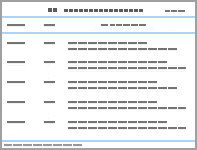
Table 1
Clinical characteristics of four patients with M-protein-associated AVWS
| Characteristic | Case 1 | Case 2 | Case 3 | Case 4 |
|---|---|---|---|---|
| Age (years) | 38 | 53 | 71 | 61 |
| Sex | Female | Male | Male | Male |
| Initial presentation and diagnostic trigger | No overt bleeding; screening showed high-normal APTT and reduced VWF:Ag/VWF:Act | Gastric ulcer bleeding after aspirin use; subsequent coagulation and VWF abnormalities | Persistent gingival bleeding; subsequent coagulation and VWF abnormalities | Gingival bleeding; subsequent coagulation and VWF abnormalities |
| Personal/family blee-ding history | None | None | None | None |
| M-protein type | IgM-κ | IgM-λ | IgG-κ | IgG-λ |
| M-protein concentration (g/L) | 65.10 | 54.22 | 7.43 | 13.35 |
| Underlying disorder | WM | WM | Clinically suspected MGUS | Clinically suspected MGUS |
Table 2
Laboratory findings in four patients with M-protein-associated AVWS
| Parameter | Case 1 | Case 2 | Case 3 | Case 4 |
|---|---|---|---|---|
| PLT (×10⁹/L) | 315 | 229 | 104 | 366 |
| APTT (s) | 36.2 | 39.6 | 41.3 | 36.6 |
| VWF:Ag (%) | 48.8 | 33.6 | 32.3 | 27.5 |
| VWF:Act (%) | 25.5 | 25.0 | 12.6 | 12.2 |
| FⅧ:C (%) | 21.1 | 31.3 | 26.8 | 44.7 |
| VWF:Act/VWF:Ag | 0.52 | 0.74 | 0.39 | 0.44 |

Figure 1
VWF multimer analysis in four patients with M-protein-associated AVWS

| [1] |
Rand J, Bucciarelli P, Budde U, et al. Acquired von wille-brand syndrome: Data from an international registry: On behalf of the subcommittee on von willebrand factor[J]. Thromb Haemost, 2000, 84(8):345-349.
doi: 10.1055/s-0037-1614018 URL |
| [2] |
Franchini M, Mannucci P M. Acquired von Willebrand syndrome: Focused for hematologists[J]. Haematologica, 2020, 105(8):2032-2037.
doi: 10.3324/haematol.2020.255117 pmid: 32554559 |
| [3] |
Tiede A, Rand J H, Budde U, et al. How I treat the acquired von Willebrand syndrome[J]. Blood, 2011, 117(25):6777-6785.
doi: 10.1182/blood-2010-11-297580 pmid: 21540459 |
| [4] |
Leebeek F W G, Eikenboom J C J. Von willebrand’s di-sease[J]. N Engl J Med, 2016, 375(21):2067-2080.
doi: 10.1056/NEJMra1601561 URL |
| [5] | 中华医学会血液学分会血栓与止血学组. 血管性血友病诊断与治疗中国指南(2022年版)[J]. 中华血液学杂志, 2022, 43(1):1-6. |
| Thrombosis and Hemostasis Group, Chinese Society of Hematology, Chinese Medical Association. Chinese guideline on the diagnosis and management of von Wille-brand disease (2022)[J]. Chin J Hematol, 2022, 43(1):1-6. | |
| [6] |
Veyradier A, Jenkins C, Fressinaud E, et al. Acquired von willebrand syndrome: From pathophysiology to mana-gement[J]. Thromb Haemost, 2000, 84(8):175-182.
doi: 10.1055/s-0037-1613993 URL |
| [7] |
Mannucci P M, Lombardi R, Bader R, et al. Studies of the pathophysiology of acquired von Willebrand’s disease in seven patients with lymphoproliferative disorders or benign monoclonal gammopathies[J]. Blood, 1984, 64(3):614-621.
pmid: 6432075 |
| [8] |
Mohri H, Motomura S, Kanamori H, et al. Clinical significance of inhibitors in acquired von willebrand syndrome[J]. Blood, 1998, 91(10):3623-3629.
pmid: 9572997 |
| [9] |
Richard C, Cuadrado M A, Prieto M, et al. Acquired von willebrand disease in multiple myeloma secondary to absorption of von willebrand factor by plasma cells[J]. American J Hematol, 1990, 35(2):114-117.
doi: 10.1002/ajh.v35:2 URL |
| [10] |
Scrobohaci M L, Daniel M T, Levy Y, et al. Expression of GpIb on plasma cells in a patient with monoclonal IgG and acquired von Willebrand disease[J]. Br J Haematol, 1993, 84(3):471-475.
doi: 10.1111/bjh.1993.84.issue-3 URL |
| [11] | 欧阳皖雁, 余自强, 殷杰, 等. 获得性血管性血友病三例报告并文献复习[J]. 中华血液学杂志, 2016, 37(8):692-695. |
|
Ouyang Wanyan, Yu Ziqiang, Yin Jie, et al. Acquired von Willebrand syndrome in three patients and literature review[J]. Chin J Hematol, 2016, 37(8):692-695.
doi: 10.3760/cma.j.issn.0253-2727.2016.08.012 pmid: 27587252 |
|
| [12] | 余丹丹, 刘葳, 张磊. 获得性凝血因子缺乏症的发病机制、诊断与治疗[J]. 中华血液学杂志, 2023, 44(11):956-962. |
|
Yu Dandan, Liu Wei, Zhang Lei. Pathophysiology, diagnosis, and therapy for the management of acquired clotting factor deficiency[J]. Chin J Hematol, 2023, 44(11):956-962.
doi: 10.3760/cma.j.issn.0253-2727.2023.11.014 pmid: 38185529 |
|
| [13] |
Ott H W, Griesmacher A, Schnapka-Koepf M, et al. Analysis of von willebrand factor multimers by simulta-neous high- and low-resolution vertical SDS-agarose gel electrophoresis and Cy5-labeled antibody high-sensitivity fluorescence detection[J]. Am J Clin Pathol, 2010, 133(2):322-330.
doi: 10.1309/AJCPZSBTD2BWOMVL URL |
| [14] |
Ledford-Kraemer M R. Analysis of von Willebrand factor structure by multimer analysis[J]. American J Hematol, 2010, 85(7):510-514.
doi: 10.1002/ajh.v85:7 URL |
| [15] |
Tiede A, Collins P, Knoebl P, et al. International recommendations on the diagnosis and treatment of acquired hemophilia A[J]. Haematologica, 2020, 105(7):1791-1801.
doi: 10.3324/haematol.2019.230771 pmid: 32381574 |
| [16] |
Gresele P, Harrison P, Gachet C, et al. Diagnosis of inhe-rited platelet function disorders: Guidance from the SSC of the ISTH[J]. J Thromb Haemost, 2015, 13(2):314-322.
doi: 10.1111/jth.12792 pmid: 25403439 |
| [17] |
Iba T, Levy J H, Maier C L, et al. Updated definition and scoring of disseminated intravascular coagulation in 2025: Communication from the ISTH SSC Subcommittee on Disseminated Intravascular Coagulation[J]. J Thromb Haemost, 2025, 23(7):2356-2362.
doi: 10.1016/j.jtha.2025.03.038 URL |
| [18] |
Alaggio R, Amador C, Anagnostopoulos I, et al. The 5th edition of the World Health Organization classification of haematolymphoid tumours: Lymphoid neoplasms[J]. Leukemia, 2022, 36(7):1720-1748.
doi: 10.1038/s41375-022-01620-2 pmid: 35732829 |
| [19] | 中华医学会血液学分会浆细胞疾病学组, 中国医师协会多发性骨髓瘤专业委员会. 意义未明的单克隆免疫球蛋白血症和冒烟型多发性骨髓瘤全程管理中国专家共识(2025年版)[J]. 中华血液学杂志, 2025, 46(3):198-208. |
| Plasma Cell Disease Group, Chinese Society of Hemato-logy, Chinese Medical Association; Chinese Myeloma Committee-Chinese Hematology Association. Expert consensus on the comprehensive management of monoclonal gammopathy of undetermined significance and smolde-ring multiple myeloma in China (2025)[J]. Chin J Hematol, 2025, 46(3):198-208. | |
| [20] | 中华医学会血液学分会, 中国抗癌协会血液肿瘤专业委员会, 中国少见浆细胞病协作组. 有临床意义的单克隆免疫球蛋白血症的诊断及鉴别诊断中国专家共识(2022年版)[J]. 中华血液学杂志, 2022, 43(8):631-635. |
| Chinese Society of Hematology at Chinese Medical Association; Hematology Oncology Committee of China Anti-Cancer Association; Chinese Rare Plasma Cell Disorders Network. The consensus of the diagnosis of monoclonal gammopathies of clinical significance in China (2022)[J]. Chin J Hematol, 2022, 43(8):631-635. | |
| [21] |
Treon S P, Xu L, Yang G, et al. MYD88 L265P somatic mutation in Waldenström’s macroglobulinemia[J]. N Engl J Med, 2012, 367(9):826-833.
doi: 10.1056/NEJMoa1200710 URL |
| [22] | 中国抗癌协会血液肿瘤专业委员会, 中华医学会血液学分会, 中国华氏巨球蛋白血症工作组. 淋巴浆细胞淋巴瘤/华氏巨球蛋白血症诊断与治疗中国指南(2022年版)[J]. 中华血液学杂志, 2022, 43(8):624-630. |
| Hematology Oncology Committee of China Anti-Cancer Association; Chinese Society of Hematology, Chinese Medical Association; Chinese Working Group of Walderström Macroglobulinemia. Chinese guideline for diagnosis and treatment of lymphoplasmacytic lymphoma/Walderström macroglobulinemia (2022)[J]. Chin J Hematol, 2022, 43(8):624-630. | |
| [23] |
Favaloro E J, Facey D, Grispo L. Laboratory assessment of von willebrand factor: Use of different assays can influe-nce the diagnosis of von willebrand’s disease, dependent on differing sensitivity to sample preparation and differential recognition of high molecular weight VWF forms[J]. Am J Clin Pathol, 1995, 104(3):264-271.
pmid: 7677113 |
| [24] |
Voisin S, Hamidou M, Lefrançois A, et al. Acquired von willebrand syndrome associated with monoclonal gammopathy: A single-center study of 36 patients[J]. Medicine, 2011, 90(6):404-411.
doi: 10.1097/MD.0b013e3182397166 pmid: 22033454 |
| [1] | LIN Liya, WU Xi, MAO Yinqi, CHEN Guangming, WU Wenman, DAI Jing, WANG Xuefeng, DING Qiulan. Three gene mutations in disintegrin-like domain encoded by ADAMTS13 causing functional defects in protein products and inducing thrombosis [J]. Journal of Diagnostics Concepts & Practice, 2025, 24(04): 431-440. |
| [2] | YANG Mingkang, LIU Yu, XU Guanqun, WANG Jianbiao, WANG Xuefeng, LIANG Qian. Value of vWF-related indicators in the diagnosis of liver cirrhosis progression in patients with hepatitis B [J]. Journal of Diagnostics Concepts & Practice, 2024, 23(06): 574-579. |
| [3] | PAN Xiaoyuan, SHI Hui, CAO Jijun, SHI Xinming, SHI Ce. Advancements in M protein interference in the clinical laboratory detection [J]. Journal of Diagnostics Concepts & Practice, 2023, 22(04): 407-411. |
| [4] | ZHOU Xiaona, FANG Honggang, CAO Yanfei, LI Xinna, ZHANG Lina, LU Yide. Analysis of interference factors in measurement of serum uric acid by uricase-peroxidase coupled reaction [J]. Journal of Diagnostics Concepts & Practice, 2020, 19(04): 426-429. |
| [5] | JIN Peipei, LIANG Qian, DAI Jing, DING Qiulan, SUN Shunchang, WANG Xuefeng. Phenotype and genotype analysis of a Chinese pedigree with 2N type von Willebrand disease [J]. Journal of Diagnostics Concepts & Practice, 2018, 17(02): 151-154. |
| Viewed | ||||||
|
Full text |
|
|||||
|
Abstract |
|
|||||
