

内科理论与实践 ›› 2025, Vol. 20 ›› Issue (05): 376-380.doi: 10.16138/j.1673-6087.2025.05.05
王琳a, 项晓刚b, 李丽a, 钱珠萍a( )
)
收稿日期:2024-08-07
出版日期:2025-12-10
发布日期:2025-12-26
通讯作者:
钱珠萍
E-mail:qzp21408@rjh.com.cn
基金资助:
WANG Lina, XIANG Xiaogangb, LI Lia, QIAN Zhupinga()
Received:2024-08-07
Online:2025-12-10
Published:2025-12-26
Contact:
QIAN Zhuping
E-mail:qzp21408@rjh.com.cn
摘要:
目的:评估肝硬化住院患者的营养风险状况,探讨其与临床转归的关系。方法:选择2020年6月至2022年6月收治于上海市某三级甲等医院感染科的401例肝硬化患者为研究对象,采用皇家自由医院营养优先筛查工具(the Royal Free Hospital-nutritional prioritizing tool,RFH-NPT)进行营养风险评价,比较不同营养风险肝硬化患者在一般资料、疾病特征、实验室指标和临床转归方面的差异。结果:401例患者中86例(21.45%)存在中度营养风险,122例(30.42%)为高度营养风险;不同营养风险患者的病因分类、终末期肝病模型(model for end-stage liver disease,MELD)评分、Child-Pugh分级、腹水量以及血清白蛋白、前白蛋白、甘油三酯和血红蛋白等实验室指标差异均有统计学意义(P<0.05);随营养风险等级升高,感染、上消化道出血和电解质紊乱的发生率上升,日常生活活动能力评分下降(P<0.05)。结论:存在中高度营养风险的肝硬化患者较低风险者肝功能损害更严重,并发症发生率高且临床预后差。
中图分类号:
王琳, 项晓刚, 李丽, 钱珠萍. 住院肝硬化患者营养风险评估与临床转归的相关性研究[J]. 内科理论与实践, 2025, 20(05): 376-380.
WANG Lin, XIANG Xiaogang, LI Li, QIAN Zhuping. Study on correlation between nutritional risk assessment and clinical outcome in hospitalized patients with cirrhosis[J]. Journal of Internal Medicine Concepts & Practice, 2025, 20(05): 376-380.
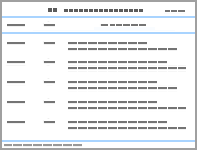
表1
不同营养风险患者的临床资料比较[n(%)/$\bar x $±s]
| 项目 | 低风险(n=193) | 中风险(n=86) | 高风险(n=122) | x2/F | P |
| 性别[n (%)] | |||||
| 男性 | 140(75.54) | 58(67.44) | 86(70.49) | 0.757 | 0.685 |
| 女性 | 53(24.46) | 28(32.56) | 36(29.51) | ||
| 年龄(岁) | 56.26±12.19 | 54.19±13.63 | 55.39±11.49 | 0.858 | 0.425 |
| 病因[n (%)] | |||||
| 病毒性肝炎 | 141(73.06) | 51(59.30) | 74(60.66) | 10.376 | 0.031 |
| 酒精性肝硬化 | 16(8.29) | 7(8.14) | 12(9.84) | ||
| 自身免疫性肝硬化 | 9(4.66) | 6(6.98) | 12(9.84) | ||
| 其他 | 27(13.99) | 22(25.58) | 24(19.66) | ||
| MELD评分 | 11.60±5.19 | 14.26±5.71 | 14.83±6.02 | 14.757 | 0.001 |
| Child-Pugh分级[n (%)] | |||||
| A级 | 99(51.30) | 9(10.47) | 17(13.93) | 80.915 | 0.000 |
| B级 | 76(39.38) | 45(52.33) | 67(54.92) | ||
| C级 | 18(9.32) | 32(37.20) | 38(31.15) | ||
| 腹水量[n (%)] | |||||
| 无 | 140(72.54) | 11(12.79) | 40(32.79) | 111.194 | 0.000 |
| 少量(<3 cm) | 34(17.62) | 30(34.88) | 30(24.59) | ||
| 中量(3~10 cm) | 15(7.77) | 30(34.88) | 30(24.59) | ||
| 大量(>10 cm) | 4(2.07) | 15(17.45) | 22(18.03) | ||
| ALB(g/L) | 33.69±6.37 | 29.07±5.61 | 30.06±5.69 | 23.314 | 0.000 |
| PAB(mg/L) | 126.08±63.57 | 86.99±44.83 | 94.84±54.55 | 18.564 | 0.000 |
| TC(mmol/L) | 3.69±1.23 | 3.55±2.04 | 3.45±1.48 | 0.876 | 0.417 |
| TG(mmol/L) | 1.22±0.69 | 1.10±0.56 | 1.44±1.29 | 3.588 | 0.029 |
| Hb(g/L) | 123.60±22.17 | 113.23±23.90 | 111.30±24.09 | 12.520 | 0.000 |
表2
不同营养风险级别患者临床预后的比较[n(%)/$\bar x $±s]
| 项目 | 低风险(n =193) | 中风险(n =86) | 高风险(n =122) | x2/F | P |
| 生存率[n (%)] | 189(97.93) | 86(100) | 118(96.72) | 2.785 | 0.248 |
| 住院时间(d) | 20.82±23.76 | 22.40±16.72 | 25.40±18.77 | 1.763 | 0.173 |
| 并发症[n (%)] | |||||
| 感染 | 45(23.32) | 24(27.91) | 50(40.98) | 11.344 | 0.003 |
| 上消化道出血 | 11(5.70) | 7(8.14) | 17(13.93) | 6.411 | 0.041 |
| 肾功能不全 | 50(25.91) | 20(23.26) | 30(24.59) | 0.235 | 0.889 |
| 电解质紊乱 | 51(26.42) | 34(39.53) | 56(45.90) | 13.356 | 0.001 |
| 轻微型肝性脑病 | 86(44.56) | 38(44.19) | 64(52.46) | 2.193 | 0.334 |
| 并发症总体发生率 | 132(68.39) | 68(79.07) | 106(86.89) | 14.600 | 0.001 |
| BI | 98.11±7.51 | 96.86±9.11 | 94.96±13.57 | 3.675 | 0.026 |
| [1] |
Shah ND, Barritt AS 4th. Nutrition as therapy in liver disease[J]. Clin Ther, 2022, 44(5): 682-696.
doi: 10.1016/j.clinthera.2022.04.012 |
| [2] | Aller de la Fuente R. Nutrition and chronic liver disease[J]. Clin Drug Investig, 2022, 42(Suppl 1): 55-61. |
| [3] |
Gonçalves F, Cabral S, Moreira AP, et al. Characterization and monitoring of nutritional risk and nutritional status in oncological patients admitted to an oncological surgery unit: a longitudinal study[J]. Clin Nutr ESPEN, 2023, 57: 637-646.
doi: 10.1016/j.clnesp.2023.08.015 |
| [4] |
Bellanti F, Lo Buglio A, Quiete S, et al. Malnutrition in hospitalized old patients: screening and diagnosis, clinical outcomes, and management[J]. Nutrients, 2022, 14(4): 910.
doi: 10.3390/nu14040910 |
| [5] | 熊万银, 高莉. 营养支持小组在肝硬化病人营养管理中的应用效果分析[J]. 全科护理, 2022, 20(5): 619-621. |
| Xiong WY, Gao L. Effect of a nutrition support team on the nutritional management of patients with cirrhosis[J]. Chinese General Practice Nursing, 2022, 20(5): 619-621. | |
| [6] | 中华医学会肝病学分会. 肝硬化诊治指南[J]. 实用肝脏病杂志, 2019, 22(6): 770-786. |
| Chinese Society of Hepatology. Chinese guidelines on the management of cirrhosis[J]. J Prac Hepatol, 2019, 22(6): 770-786. | |
| [7] |
Glasenapp JH, Zuchinali P, Alba VD. Translation and cross-cultural adaptation of the Royal Free Hospital-Nutritional Prioritizing Tool (RFH-NPT)[J]. Arq Gastroenterol, 2023, 60(1): 84-90.
doi: 10.1590/s0004-2803.202301000-11 |
| [8] |
Saeki C, Kinoshita A, Kanai T, et al. The Geriatric Nutritional Risk Index predicts sarcopenia in patients with cirrhosis[J]. Sci Rep, 2023, 13(1): 3888.
doi: 10.1038/s41598-023-31065-1 |
| [9] | 苏蒙召, 吴远珏, 李玲, 等. NRS-2002与RFH-NPT在肝硬化患者中应用比较: 基于SGA标准[J]. 临床消化病杂志, 2022, 34(1): 1-6. |
| Su MZ, Wu YJ, Li L, et al. Comparison of the NRS-2002 and RFH-NPT in patients with cirrhosis: based on SGA criteria[J]. Chin J Clin Gastroenterol, 2022, 34(1): 1-6. | |
| [10] | 赵勋念, 杨杰. 肝硬化患者营养不良风险筛查及评估方法的研究进展[J]. 临床内科杂志, 2023, 40(12): 862-864. |
| Zhao XN, Yang J. Research progress on malnutrition risk screening and assessment methods in patients with cirrhosis[J]. J Clin Intern Med, 2023, 40(12): 862-864. | |
| [11] |
Zhang P, Wang Q, Zhu M, et al. Differences in nutritional risk assessment between NRS2002, RFH-NPT and LDUST in cirrhotic patients[J]. Sci Rep, 2023, 13(1): 3306.
doi: 10.1038/s41598-023-30031-1 |
| [12] | 中华医学会肝病学分会, 中华医学会消化病学分会. 终末期肝病临床营养指南[J]. 实用肝脏病杂志, 2019, 22(5): 624-635. |
| Chinese Society of Hepatology, Chinese Society of Gastroenterology. Clinical guidelines on nutrition in end-stage liver disease[J]. J Prac Hepatol, 2019, 22(5): 624-635. | |
| [13] |
Aghemo A, Alekseeva OP, Angelico F, et al. Role of silymarin as antioxidant in clinical management of chronic liver diseases: a narrative review[J]. Ann Med, 2022, 54(1): 1548-1560.
doi: 10.1080/07853890.2022.2069854 |
| [14] | 邱敏. 多学科团队协作营养管理方案在口腔癌病人中的应用[J]. 全科护理, 2023, 21(14): 1937-1940. |
| Qiu M. Application of a multidisciplinary team-based nutritional management program in patients with oral cancer[J]. Chinese General Practice Nursing, 2023, 21(14): 1937-1940. | |
| [15] | 孔凡美, 高坤范, 鲍建丽, 等. 个案管理师主导的多学科协作重症患者肠内营养管理方案的实践[J]. 现代临床护理, 2023, 22(11): 43-49. |
| Kong FM, Gao KF, Bao JL, et al. Effect of case manager led multidisciplinary management on enteral nutrition for critically ill patients[J]. Modern Clinical Nursing, 2023, 22(11): 43-49. | |
| [16] | 刘春燕, 刘婷, 黄慧. 基于营养风险等级的多学科营养管理模式在脑梗死吞咽障碍患者中的应用研究[J]. 中国当代医药, 2023, 30(25): 60-64. |
| Liu CY, Liu T, Huang H. Application of multidisciplinary nutrition management based on nutritional risk level in patients with dysphagia of cerebral infarction[J]. China Modern Medicine, 2023, 30(25): 60-64. | |
| [17] | 史志红, 周晓, 班志芬. 乙型肝炎肝硬化与酒精性肝硬化患者营养状况评估分析[J]. 实用肝脏病杂志, 2018, 21(4): 629-630. |
| Shi ZH, Zhou X, Ban ZF. Evaluation of nutritional status in patients with hepatitis B-related and alcoholic cirrhosis[J]. J Prac Hepatol, 2018, 21(4): 629-630. | |
| [18] | 王劲松, 胡鹏. 肌少症诊断研究进展[J]. 现代医药卫生, 2022, 38(19): 3335-3338. |
| Wang JS, Hu P. Advances in the diagnosis of sarcopenia[J]. J Mod Med Health, 2022, 38(19): 3335-3338. | |
| [19] |
Kaplan A, Rosenblatt R. Symptom management in patients with cirrhosis: a practical guide[J]. Curr Treat Options Gastroenterol, 2022, 20(2): 144-159.
doi: 10.1007/s11938-022-00377-y |
| [20] | 张一骏, 张茜, 罗新华. 肝硬化患者营养不良和衰弱的评估与临床管理[J]. 临床肝胆病杂志, 2022, 38(7): 1646-1649. |
| Zhang YJ, Zhang Q, Luo XH. Assessment and clinical management of malnutrition and asthenia in patients with liver cirrhosis[J]. J Clin Hepatol, 2022, 38(7): 1646-1649. | |
| [21] |
Haj Ali S, Abu Sneineh A, Hasweh R. Nutritional assessment in patients with liver cirrhosis[J]. World J Hepatol, 2022, 14(9): 1694-1703.
doi: 10.4254/wjh.v14.i9.1694 |
| [22] |
European Association for the Study of the Liver. EASL Clinical Practice Guidelines on the management of hepatic encephalopathy[J]. J Hepatol, 2022, 77(3): 807-824.
doi: 10.1016/j.jhep.2022.06.001 |
| [23] | 章晓云, 邓俊黎, 张霓, 等. 失代偿期乙型病毒性肝炎肝硬化病人实施个体化蛋白质-热量饮食方案的干预研究[J]. 护理研究, 2019, 33(9): 1613-1615. |
| Zhang XY, Deng JL, Zhang N, et al. Intervention study on individualized protein-calorie diet in patients with decompensated hepatitis B cirrhosis[J]. Chinese Nursing Research, 2019, 33(9): 1613-1615. | |
| [24] |
Semmler G, Datz C, Trauner M. Eating, diet, and nutrition for the treatment of non-alcoholic fatty liver disease[J]. Clin Mol Hepatol, 2023, 29(Supp1): S244-S260.
doi: 10.3350/cmh.2022.0364 |
| [25] | 郑小静, 严红虹, 甘彬, 等. 肝细胞癌患者低血糖发生率和影响因素研究[J]. 护理学报, 2022, 29(17): 43-46. |
| Zheng XJ, Yan HH, Gan B, et al. Incidence and risk factors of hypoglycemia in patients with hepatocellular carcinoma[J]. Journal of Nursing, 2022, 29(17): 43-46. | |
| [26] | 宋健, 李红亮, 戚旭飞, 等. 失代偿期乙型肝炎后肝硬化病人营养状况与预后关系的研究[J]. 肠外与肠内营养, 2018, 25(6): 346-348. |
| Song J, Li HL, Qi XF, et al. The relationship between nutritional status and prognosis of patients with decompensated hepatitis B virus-related liver cirrhosis[J]. Parenteral & Enteral Nutrition, 2018, 25(6): 346-348. | |
| [27] |
Magnussen C, Ojeda FM, Leong DP, et al. Global effect of modifiable risk factors on cardiovascular disease and mortality[J]. N Engl J Med, 2023, 389(14): 1273-1285.
doi: 10.1056/NEJMoa2206916 |
| [28] |
Tadokoro T, Morishita A, Himoto T, et al. Nutritional support for alcoholic liver disease[J]. Nutrients, 2023, 15(6): 1360.
doi: 10.3390/nu15061360 |
| [1] | 陈洪卫, 朱婷, 刘燕, 侯彦强, 范广建. 外周血Scimp可作为代谢相关脂肪性肝病肝硬化的生物诊断标志物——基于动物实验的研究[J]. 诊断学理论与实践, 2025, 24(01): 35-42. |
| [2] | 杨铭康, 刘禹, 许冠群, 王剑飚, 王学锋, 梁茜. vWF相关指标在诊断乙肝患者肝硬化进展中的价值[J]. 诊断学理论与实践, 2024, 23(06): 574-579. |
| [3] | 刘悦, 吴翰林, 佟武强, 许静. 自身抗体和D-二聚体检测评估慢性乙型肝炎及乙型肝炎肝硬化患者预后的价值[J]. 诊断学理论与实践, 2024, 23(02): 173-179. |
| [4] | 郑佳丽, 周文君, 倪小君, 等.
颌面部骨折患者术前营养风险发生率调查及口腔健康相关生活质量研究
[J]. 组织工程与重建外科杂志, 2023, 19(2): 166-. |
| [5] | 蔡波尔, 朱枫, 柏晓金, 张家雯, 陈湘珺. 基于微信平台的个案管理延伸护理模式在肝硬化合并食管胃底静脉曲张患者中的应用[J]. 内科理论与实践, 2023, 18(05): 344-347. |
| [6] | Chang Jessica, 陈旭晓, 陈拥军. 脾脏在肝癌合并肝硬化中的临床价值[J]. 外科理论与实践, 2023, 28(04): 394-398. |
| [7] | 杨文康, 张俊, 王淑秋, 祥巴央宗, 杨翠萍. 我国云南香格里拉地区104例肝硬化患者的病因及临床特征分析[J]. 诊断学理论与实践, 2022, 21(06): 730-734. |
| [8] | 崔岩, 葛海萍. 老年脑卒中后患者营养风险筛查研究[J]. 诊断学理论与实践, 2022, 21(06): 726-729. |
| [9] | 周香雪, 黄海威. 肝豆状核变性影像学研究进展[J]. 内科理论与实践, 2021, 16(05): 308-314. |
| [10] | 赵英妹, 聂红明, 张珏, 黄燕. 肝硬化患者凝血五项的测定及其临床意义[J]. 诊断学理论与实践, 2021, 20(05): 480-483. |
| [11] | 陈炜, 卜俊峰. 肝功能评估方式及在门静脉高压症围术期的应用[J]. 外科理论与实践, 2021, 26(03): 212-216. |
| [12] | 胡明礼, 王绮夏, 马雄. 肝硬化食管胃底静脉曲张的药物治疗[J]. 外科理论与实践, 2021, 26(03): 203-207. |
| [13] | 罗蒙, 李泓杰, 郑磊. 肝硬化门静脉高压症发病机制的研究现状[J]. 外科理论与实践, 2021, 26(03): 195-198. |
| [14] | 李涛, 陈皓. 肝硬化门静脉高压症的肝移植治疗[J]. 外科理论与实践, 2021, 26(03): 189-194. |
| [15] | 盛虹, 章安迪. 慢性心力衰竭住院患者营养风险评估的临床应用研究[J]. 诊断学理论与实践, 2021, 20(02): 178-183. |
| 阅读次数 | ||||||
|
全文 |
|
|||||
|
摘要 |
|
|||||
