

Journal of Internal Medicine Concepts & Practice ›› 2025, Vol. 20 ›› Issue (05): 359-364.doi: 10.16138/j.1673-6087.2025.05.02
Previous Articles Next Articles
XIE Chong( ), WAN Wenbin, YAO Xiaoying, ZHANG Ying, WANG Gang()
Received:2025-08-25
Accepted:2025-10-15
Online:2025-12-10
Published:2025-12-26
Contact:
WANG Gang
E-mail:xiechong06@163.com;wanggang@renji.com
CLC Number:
XIE Chong, WAN Wenbin, YAO Xiaoying, ZHANG Ying, WANG Gang. Clinical characteristic and treatment progress of neurologic immune-related adverse events associated with immune checkpoint inhibitors[J]. Journal of Internal Medicine Concepts & Practice, 2025, 20(05): 359-364.
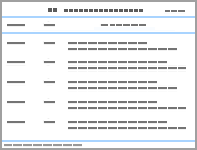
Table 1
Currently approved immune checkpoint inhibitors
| 检查点靶标 | 药物 |
| PD-1 | 纳武利尤单抗(nivolumab) |
| 帕博利珠单抗(pembrolizumab) | |
| 西普利单抗(cemiplimab) | |
| 信迪利单抗(sintilimab) | |
| 卡瑞利珠单抗(camrelizumab) | |
| 多塔利单抗(dostarlimab) | |
| 替雷利珠单抗(tislelizumab) | |
| 派安普利单抗(penpulimab) | |
| 特瑞普利单抗(toripalimab) | |
| 赛帕利单抗(zimberelimab) | |
| 斯鲁利单抗(serplulimab) | |
| PD-L1 | 普特利单抗(pucotenlimab) |
| 度伐利尤单抗(durvalumab) | |
| 阿替利珠单抗(atezolizumab) | |
| 阿维鲁单抗(avelumab) | |
| 恩沃利单抗(envafolimab) | |
| 舒格利单抗(sugemalimab) | |
| CTLA-4 | 伊匹木单抗(ipilimumab) |
| 曲美木单抗(tremelimumab) |
Table 2
Clinical features of ICI related n-irAE
| 分类 | 并发症 | 主要临床表现 | 辅助检查表现 |
| 神经肌肉接头 | 眼睑下垂、复视、吞咽及呼吸困难 | AChR抗体阳性,重复神经电刺激递减 | |
| 肌肉 | 肌炎(心肌炎) | 肌无力、肌痛,如有心肌炎可表现为心脏症状 | 肌酸激酶显著升高,肌活检提示肌肉炎性浸润(伴或不伴坏死) 心电图、心脏彩色超声及心肌酶谱可提示心肌炎 |
| PNS | GBS | 进行性四肢瘫、呼吸肌麻痹、感觉障碍 | 脑脊液蛋白-细胞分离,神经传导速度减慢 |
| 颅神经病变 | 面瘫、听力受损等 | / | |
| CNS | 边缘叶脑炎 | 认知障碍、癫痫发作、精神行为异常 | 脑脊液淋巴细胞增多,抗神经元抗体阳性;MRI等提示海马、颞叶等异常信号 |
| 小脑炎 | 步态不稳、构音障碍、眼震 | 抗Yo抗体等阳性,MRI可见小脑异常信号 | |
| 无菌性脑膜炎 | 头痛、颈强直 | 脑脊液以淋巴细胞为主的细胞增多,蛋白轻中度升高 | |
| 脊髓炎 | 肢体麻木、乏力、括约肌功能障碍 | 脊髓MRI可见异常信号,脑脊液蛋白升高,细胞数增多 |
Table 3
Graded treatment strategy of ICI related n-irAE
| 毒性分级 | 治疗原则 | 具体方案 | ICI管理 |
| IVIG:静脉注射免疫球蛋白(intravenous immunoglobulin)。 | |||
| 1级 | 对症支持 | 观察症状变化,无需免疫抑制 | 继续治疗 |
| 2级 | 一线免疫抑制 | 泼尼松0.5~1 mg/(kg·d),减量≥4周 | 暂停,恢复至≤1级后可重启 |
| 3级 | 强化免疫抑制 | 甲泼尼龙1 g/d,3~5 d后泼尼松1~2 mg/(kg·d) | 永久停用 |
| 二线治疗(激素无效) | IVIG 0.4 g/(kg·d),共5 d或血浆置换隔日1次,共5次 | ||
| 4级 | 多模式强化治疗+重症监护 | 甲泼尼龙冲击+IVIG/血浆置换±利妥昔单抗/环磷酰胺 | 永久停用 |
| 难治性病例 | 生物制剂(如托珠单抗、依库珠单抗) | ||
| [1] |
Chambers CA, Kuhns MS, Egen JG, et al. CTLA-4-mediated inhibition in regulation of T cell responses: mechanisms and manipulation in tumor immunotherapy[J]. Annu Rev Immunol, 2001, 19: 565-94.
doi: 10.1146/annurev.immunol.19.1.565 |
| [2] |
Ishida Y, Agata Y, Shibahara K, et al. Induced expression of PD-1, a novel member of the immunoglobulin gene superfamily, upon programmed cell death[J]. EMBO J, 1992, 11(11): 3887-95.
doi: 10.1002/j.1460-2075.1992.tb05481.x |
| [3] |
Ribas A, Wolchok JD. Cancer immunotherapy using checkpoint blockade[J]. Science, 2018, 359(6382): 1350-1355.
doi: 10.1126/science.aar4060 |
| [4] | Arafat Hossain M. A comprehensive review of immune checkpoint inhibitors for cancer treatment [J]. Int Immunopharmacol, 2024, 143 Pt 2:113365. |
| [5] |
Wang SJ, Dougan SK, Dougan M. Immune mechanisms of toxicity from checkpoint inhibitors[J]. Trends Cancer, 2023, 9(7): 543-553.
doi: 10.1016/j.trecan.2023.04.002 |
| [6] |
Haugh AM, Probasco JC, Johnson DB. Neurologic complications of immune checkpoint inhibitors[J]. Expert Opin Drug Saf, 2020, 19(4): 479-488.
doi: 10.1080/14740338.2020.1738382 |
| [7] |
Ghisoni E, Wicky A, Bouchaab H, et al. Late-onset and long-lasting immune-related adverse events from immune checkpoint-inhibitors: an overlooked aspect in immunotherapy[J]. Eur J Cancer, 2021, 149: 153-164.
doi: 10.1016/j.ejca.2021.03.010 |
| [8] |
Casagrande S, Sopetto GB, Bertalot G, et al. Immune-related adverse events due to cancer immunotherapy: immune mechanisms and clinical manifestations[J]. Cancers (Basel), 2024, 16(7): 1440.
doi: 10.3390/cancers16071440 |
| [9] |
Carr AS, Vonberg FW, Koay S, et al. Neurological complications of immune checkpoint inhibitors: a practical guide[J]. Pract Neurol, 2025, 25(2): 116-126.
doi: 10.1136/pn-2024-004327 |
| [10] |
Diamanti L, Picca A, Bini P, et al. Characterization and management of neurological adverse events during immune-checkpoint inhibitors treatment: an Italian multicentric experience[J]. Neurol Sci, 2022, 43(3): 2031-2041.
doi: 10.1007/s10072-021-05561-z |
| [11] |
Cuzzubbo S, Javeri F, Tissier M, et al. Neurological adverse events associated with immune checkpoint inhibitors: review of the literature[J]. Eur J Cancer, 2017, 73: 1-8.
doi: 10.1016/j.ejca.2016.12.001 |
| [12] |
Cuzzubbo S, Carpentier AF. Neurological adverse events of immune checkpoint blockade: from pathophysiology to treatment[J]. Curr Opin Neurol, 2022, 35(6): 814-822.
doi: 10.1097/WCO.0000000000001113 |
| [13] |
Kao JC, Liao B, Markovic SN, et al. Neurological complications associated with anti-programmed death 1 (PD-1) antibodies[J]. JAMA Neurol, 2017, 74(10): 1216-1222.
doi: 10.1001/jamaneurol.2017.1912 |
| [14] |
Willis MD, Schroeder B, Marandino L, et al. Neurological immune-related adverse events with checkpoint inhibitor therapy: challenges for the neurologist[J]. J Neurol Neurosurg Psychiatry, 2025, 96(11): 1024-1037.
doi: 10.1136/jnnp-2025-335998 |
| [15] |
Jayan A, Mammen AL, Suarez-Almazor ME. Immune checkpoint inhibitor-induced myositis[J]. Rheum Dis Clin North Am, 2024, 50(2): 281-290.
doi: 10.1016/j.rdc.2024.02.003 |
| [16] |
Marini A, Bernardini A, Gigli GL, et al. Neurologic adverse events of immune checkpoint inhibitors: a systematic review[J]. Neurology, 2021, 96(16): 754-766.
doi: 10.1212/WNL.0000000000011795 |
| [17] |
Shi J, Tan Y, Huang Y, et al. Association between clinical factors and result of immune checkpoint inhibitor related myasthenia gravis: a single center experience and systematic review[J]. Front Neurol, 2022, 13: 858628.
doi: 10.3389/fneur.2022.858628 |
| [18] |
Niimura T, Zamami Y, Miyata K, et al. Characterization of immune checkpoint inhibitor-induced myasthenia gravis using the US Food and Drug Administration Adverse Event Reporting System[J]. J Clin Pharmacol, 2023, 63(4): 473-479.
doi: 10.1002/jcph.2187 |
| [19] |
Fonseca E, Cabrera-Maqueda JM, Ruiz-García R, et al. Neurological adverse events related to immune-checkpoint inhibitors in Spain: a retrospective cohort study[J]. Lancet Neurol, 2023, 22(12): 1150-1159.
doi: 10.1016/S1474-4422(23)00335-6 |
| [20] |
Wai Siu DH, O'Neill RS, Harris CA, et al. Immune checkpoint inhibitor-induced myocarditis, myositis, myasthenia gravis and transaminitis: a case series and review[J]. Immunotherapy, 2022, 14(7): 511-520.
doi: 10.2217/imt-2021-0225 |
| [21] |
ANON. Immune checkpoint inhibitor-related myositis and myocarditis in patients with cancer[J]. Neurology, 2019, 93(6): 280.
doi: 10.1212/WNL.0000000000007380 |
| [22] |
Saygin D, Ghosh N, Reid P. Immune checkpoint inhibitor-associated myositis: a distinct form of inflammatory myopathy[J]. J Clin Rheumatol, 2022, 28(7): 367-373.
doi: 10.1097/RHU.0000000000001874 |
| [23] | 陈华春, 吴晓虞, 陈桂园, 等. 免疫检查点抑制剂相关神经毒性的诊治现状及研究进展[J]. 医学信息, 2023, 36(8): 175-179. |
| Chen HC, Wu XY, Chen GY, et al. Current status and research progress in the diagnosis and management of immune checkpoint inhibitor-related neurotoxicity[J]. Journal of Medical Information, 2023, 36(8): 175-179. | |
| [24] |
Ruggiero R, Stelitano B, Fraenza F, et al. Neurological manifestations related to immune checkpoint inhibitors: reverse translational research by using the European real-world safety data[J]. Front Oncol, 2022, 12: 824511.
doi: 10.3389/fonc.2022.824511 |
| [25] | Dubey D, David WS, Amato AA, et al. Varied phenotypes and management of immune checkpoint inhibitor-associated neuropathies[J]. Neurology, 2019, 93(11): e1093-e1103. |
| [26] | Vogrig A, Muñiz-Castrillo S, Joubert B, et al. Cranial nerve disorders associated with immune checkpoint inhibitors[J]. Neurology, 2021, 96(6): e866-e875. |
| [27] |
Farina A, Birzu C, Elsensohn MH, et al. Neurological outcomes in immune checkpoint inhibitor-related neurotoxicity[J]. Brain Commun, 2023, 5(3): fcad169.
doi: 10.1093/braincomms/fcad169 |
| [28] |
Farina A, Villagrán-García M, Honnorat J. Neurological adverse events of immune checkpoint inhibitors: an update of clinical presentations, diagnosis, and management[J]. Rev Neurol (Paris), 2023, 179(5): 506-515.
doi: 10.1016/j.neurol.2023.03.003 |
| [29] |
Vogrig A, Muñiz-Castrillo S, Joubert B, et al. Central nervous system complications associated with immune checkpoint inhibitors[J]. J Neurol Neurosurg Psychiatry, 2020, 91(7): 772-778.
doi: 10.1136/jnnp-2020-323055 |
| [30] |
Velasco R, Villagrán M, Jové M, et al. Encephalitis induced by immune checkpoint inhibitors: a systematic review[J]. JAMA Neurol, 2021, 78(7): 864-873.
doi: 10.1001/jamaneurol.2021.0249 |
| [31] |
Farina A, Villagrán-García M, Vogrig A, et al. Central nervous system adverse events of immune checkpoint inhibitors[J]. Curr Opin Neurol, 2024, 37(3): 345-352.
doi: 10.1097/WCO.0000000000001259 |
| [32] |
Dinoto A, Mantovani E, Ferrari S, et al. Cerebellar involvement associated with immune checkpoint inhibitors: a systematic review[J]. Eur J Neurol, 2023, 30(3): 774-781.
doi: 10.1111/ene.15624 |
| [33] |
Albarrán V, Chamorro J, Rosero DI, et al. Neurologic toxicity of immune checkpoint inhibitors: a review of literature[J]. Front Pharmacol, 2022, 13: 774170.
doi: 10.3389/fphar.2022.774170 |
| [34] |
Chatterton S, Xi S, Jia JX, et al. Case series: Immune checkpoint inhibitor-induced transverse myelitis[J]. Front Neurol, 2023, 14: 1130313.
doi: 10.3389/fneur.2023.1130313 |
| [35] |
Oliveira MCB, de Brito MH, Simabukuro MM. Central nervous system demyelination associated with immune checkpoint inhibitors: review of the literature[J]. Front Neurol, 2020, 11: 538695.
doi: 10.3389/fneur.2020.538695 |
| [36] | 史佳宇, 牛婧雯, 沈东超, 等. 免疫检查点抑制剂相关神经系统不良反应的临床诊治建议[J]. 中国肺癌杂志, 2019, 22(10): 633-638. |
| Shi JY, Niu JW, Shen DC, et al. Clinical diagnosis and treatment recommendations for adverse reaction in the nervous system related to immunocheckpoint inhibitor[J]. Chin J Lung Cancer, 2019, 22(10): 633-638. | |
| [37] | 王松, 陈霞. 免疫检查点抑制剂相关神经系统不良事件: 从机制到治疗[J]. 中国神经免疫学和神经病学杂志, 2021, 28(1): 61-66. |
| Wang S, Chen X. Neurological adverse events associated with immune checkpoint inhibitors: from mechanism to treatment[J]. Chin J Neuroimmunol & Neuro, 2021, 28(1): 61-66. |
| [1] | LAI Bohan, WEI Boxuan, JIN Jiamin, et al. The survey research of epidemiology and risk factors of large to giant congenital melanocytic nevi in China [J]. Journal of Tissue Engineering and Reconstructive Surgery, 2025, 21(3): 250-. |
| [2] | WANG Yi, HUANG Hui. Advances in pathogenesis and treatment of chronic obstructive pulmonary disease complicated with sarcopenia [J]. Journal of Internal Medicine Concepts & Practice, 2025, 20(05): 415-419. |
| [3] | ZHANG Xiaoyan, LI Huilin. Renal manifestations of rheumatic autoimmune diseases [J]. Journal of Internal Medicine Concepts & Practice, 2025, 20(05): 410-414. |
| [4] | ZHANG Yao, HAN Ting, WANG Yu, WANG Chunyan, XIAO Xiuying. Research progress on peripheral neuropathy related to tumor immunotherapy [J]. Journal of Internal Medicine Concepts & Practice, 2025, 20(05): 388-392. |
| [5] | LIU Meilan, WANG Ling, YANG Rong, WANG Jiale, TU Huimin, LI Huilin. A case of Sjögren syndrome with intestinal pseudo-obstruction as the initial symptom [J]. Journal of Internal Medicine Concepts & Practice, 2025, 20(04): 319-321. |
| [6] | WU Chunxiao, PANG Yi, CHEN Lei, SHI Yan, GU Kai. Incidence and mortality analysis of biliary tract cancer in Shanghai: population-based study from 2002 to 2020 [J]. Journal of Surgery Concepts & Practice, 2025, 30(03): 214-222. |
| [7] | KANG Min, SHI Jing. Age-period-cohort analysis and prediction of burden of asthma attributed to tobacco in China from 1990 to 2019 [J]. Journal of Internal Medicine Concepts & Practice, 2025, 20(03): 242-247. |
| [8] | ZHANG Jiwei, WU Xiaoqiong, CUI Jinhuang, YU Chunming, LI Yanyun. Association between glucose metabolism and risk of all-cause mortality and cardio-cerebrovascular mortality in middle-aged and elderly populations [J]. Journal of Internal Medicine Concepts & Practice, 2025, 20(02): 120-125. |
| [9] | LIU Kun, GUO Wei. Prevention and management of immune-related adverse events for biliary tract cancers [J]. Journal of Surgery Concepts & Practice, 2025, 30(02): 112-119. |
| [10] | SHEN Shizhong, SUI Liang, CHEN Kang, SHI Xiao, SHI Dan. Theory of “kidneys storing essence and dominating bones” and male osteoporosis [J]. Journal of Internal Medicine Concepts & Practice, 2025, 20(01): 94-100. |
| [11] | SU Qiying, WANG Hongxiao, YAN Hua. An overview of myeloid neoplasms post cytotoxic therapy of solid tumors [J]. Journal of Internal Medicine Concepts & Practice, 2024, 19(06): 427-430. |
| [12] | FAN Kaijian, LIU Jinyu, ZHAO Futao. Importance of early diagnosis of Sjögren syndrome [J]. Journal of Internal Medicine Concepts & Practice, 2024, 19(06): 417-421. |
| [13] | LI Qiheng, XIE Yucai. Research progress on neurohumoral mechanism and clinical significance of vasovagal syncope [J]. Journal of Diagnostics Concepts & Practice, 2024, 23(06): 628-633. |
| [14] | CHEN Weiwei, SUN Liangdan. Research progress in genetic epidemiology of psoriasis in Chinese population [J]. Journal of Diagnostics Concepts & Practice, 2024, 23(06): 561-567. |
| [15] | XIE Xiaomeng, GONG Yanchun. Research progress of postprandial hypotension and its relationship with cardiovascular and cerebrovascular damage in the elderly [J]. Journal of Internal Medicine Concepts & Practice, 2024, 19(05): 342-346. |
| Viewed | ||||||
|
Full text |
|
|||||
|
Abstract |
|
|||||
