

Journal of Diagnostics Concepts & Practice ›› 2026, Vol. 25 ›› Issue (01): 53-62.doi: 10.16150/j.1671-2870.2026.01.008
• Original articles • Previous Articles Next Articles
LIU Jinga, LI Yonga, XIANg Enfeib, FANG Xuqianc
Received:2024-11-06
Accepted:2026-01-28
Online:2026-02-25
Published:2026-02-28
CLC Number:
LIU Jing, LI Yong, XIANg Enfei, FANG Xuqian. Clinicopathological characteristics and distribution and significance of targetable molecular subtypes in patients with pulmonary large cell neuroendocrine carcinoma[J]. Journal of Diagnostics Concepts & Practice, 2026, 25(01): 53-62.
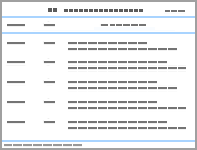
Table 1
Clinical and histological characteristics of the LCNEC cohort
| Item | LCNEC (n = 44) | pLCNEC (n = 34) | CoLCNEC (n = 10) | P value |
|---|---|---|---|---|
| Age (year,median) | 70.50 (66.25, 76.00) | 71.00 (66.75, 77.25) | 68.50 (61.25, 73.50) | 0.08 |
| Sex (n, %) | ||||
| Male | 41 (93.2) | 32 (94.1) | 9 (90.0) | 0.64 |
| Female | 3 (6.8) | 2 (5.9) | 1 (10.0) | |
| T (Tumor size) | ||||
| T1 | 11 (25.0) | 7 (20.6) | 4 (40.0) | 0.63 |
| T2 | 9 (20.4) | 7 (20.6) | 2 (20.0) | |
| T3 | 7 (15.9) | 6 (17.6) | 1 (10.0) | |
| T4 | 17 (38.6) | 14 (41.1) | 3 (30.0) | |
| N (Lymph node metastasis) | ||||
| N0 | 14 (31.8) | 13 (38.2) | 1 (10.0) | 0.09 |
| N1-N3 | 30 (68.2) | 21 (61.8) | 9 (90.0) | |
| M (Distant metastasis) | ||||
| M0 | 23 (52.3) | 19 (55.9) | 4 (40.0) | 0.37 |
| M1 | 21 (47.7) | 15 (44.1) | 6 (60.0) | |
| Clinical stage | ||||
| Ⅰ | 5 (11.4) | 5 (14.7) | 0 (0.0) | 0.07 |
| Ⅱ | 5 (11.4) | 3 (8.8) | 2 (20.0) | |
| Ⅲ | 13 (29.5) | 11 (32.3) | 2 (20.0) | |
| Ⅳ | 21 (47.7) | 15 (44.1) | 6 (60.0) | |
| PD-L1 | ||||
| <1% | 35 (79.5) | 27 (79.4) | 8 (80.0) | 0.85 |
| 1%-50%(exduding 50%) | 6 (13.6) | 5 (14.7) | 1 (10.0) | |
| ≥50% | 3 (6.8) | 2 (5.8) | 1 (10.0) | |
Table 2
LCNEC cases with targetable driver gene mutations
| Cases | Genetic mutation | Tumor type | Gender | Age (year) | TNM | Clinical stage | Metastasis | PFS (month) | Clinical outcome | OS (month) |
|---|---|---|---|---|---|---|---|---|---|---|
| 1 | EGFR 19Del | CoLCNEC | Female | 69 | pT2N2M0 rTxN0M1c | ⅢA ⅣB | Brain | First line (Osimertinib): 4; Second line (Gefitinib + Anlotinib): 3 | PR | 17 |
| 2 | ALK | LCNEC | Female | 59 | cT4N3M1c | ⅣB | Brain, liver | Alectinib: 11 | PR | 12 |
| 3 | MET ex14 | LCNEC | Male | 71 | cT3N1M0 | ⅢA | No | First line (Savolitinib): 2 Second line (EP): 6 | PD | 14 |
| 4 | KRAS G12C | LCNEC | Male | 73 | pT3N3M0 | ⅢC | No | EP + immunotherapy: 1 | PD | 6.5 |
| 5 | KRAS G12C | CoLCNEC | Male | 70 | pT2aN0M0 rT0N0M1b | ⅠB ⅣA | Abdominal wall | Fist line (EP chemotherapy): 2 Second line (Anlotinib + Toripalimab): 2 | PD | NA |

Figure 1
Pathological images of LCNEC carrying actionable driver gene mutations who received targeted therapy A: Patient with EGFR 19Del showing strong CD56 (+), diffuse SYN (+), and negative CgA; B: Patient with ALK rearrangement showing diffuse SYN (+), diffuse CgA (+), and strong ALK (+); C: Patient with MET ex14 showing strong CD56 (+), diffuse SYN (+), and diffuse CgA (+).


Figure 2
Dynamic changes of brain metastases on cranial MRI in an LCNEC with EGFR 19Del mutation following surgery Note:Brain metastases were detected two months postoperatively, which subsequently reduced in size after osimertinib treatment, followed by progression.


Figure 3
Treatment course and survival timeline of patients with actionable driver gene mutations A: Patient with EGFR 19Del mutation; B: Patient with ALK rearrangement; C: Patient with MET ex14.


Figure 4
Development of multiple brain metastases and liver metastases in an ALK-rearranged LCNEC patient Note: Brain metastases remained stable during targeted therapy;multiple brain lesions and liver metastases occurred 13 months after treatment. A: Multiple brain metastases (Upper row represents upper cerebral levels; lower row represents levels near the skull base). B: Liver metastases; Left and right panels show different scanning levels of contrast-enhanced liver MRI.


Figure 5
Lesions in the right lower lobe (A) and right middle lobe (B) of a MET ex14 LCNEC patient Note: Upper row, lung window; lower row, mediastinal window (pre-treatment, contrast-enhanced CT scan; post-treatment, non-contrast CT scan). The lesion in the right lower lobe showed slight enlargement, while the lesion in the right middle lobe showed slight reduction; overall assessment indicated poor response to targeted therapy.

| [1] |
FASANO M, DELLA CORTE C M, PAPACCIO F, et al. Pulmonary large-cell neuroendocrine carcinoma: From epidemiology to therapy[J]. J Thorac Oncol, 2015, 10(8):1133-1141.
doi: 10.1097/JTO.0000000000000589 pmid: 26039012 |
| [2] |
BATTAFARANO R J, FERNANDEZ F G, RITTER J, et al. Large cell neuroendocrine carcinoma: An aggressive form of non-small cell lung cancer[J]. J Thorac Cardiovasc Surg, 2005, 130(1):166-172.
doi: 10.1016/j.jtcvs.2005.02.064 URL |
| [3] |
TRAVIS W D, BRAMBILLA E, BURKE A P, et al. Introduction to the 2015 World Health Organization classification of tumors of the lung, pleura, thymus, and heart[J]. J Thorac Oncol, 2015, 10(9):1240-1242.
doi: S1556-0864(15)33570-X pmid: 26291007 |
| [4] |
NICHOLSON A G, TSAO M S, BEASLEY M B, et al. The 2021 WHO classification of lung tumors: Impact of advances since 2015[J]. J Thorac Oncol,2022, 17(3):362-387.
doi: 10.1016/j.jtho.2021.11.003 URL |
| [5] |
PELOSI G, LAFFI A, PAPOTTI M, et al. Clinical needs and pathology’s answers in neuroendocrine neoplasms of the lung[J]. Pathologica, 2025, 117(3):220-242.
doi: 10.32074/1591-951X-N1102 URL |
| [6] |
DERKS J L, LEBLAY N, THUNNISSEN E, et al. Molecular subtypes of pulmonary large-cell neuroendocrine carcinoma predict chemotherapy treatment outcome[J]. Clin Cancer Res, 2018, 24(1):33-42.
doi: 10.1158/1078-0432.CCR-17-1921 pmid: 29066508 |
| [7] |
MIYOSHI T, UMEMURA S, MATSUMURA Y, et al. Genomic profiling of large-cell neuroendocrine carcinoma of the lung[J]. Clin Cancer Res, 2017, 23(3):757-765.
doi: 10.1158/1078-0432.CCR-16-0355 pmid: 27507618 |
| [8] | GEORGE J, WALTER V, PEIFER M, et al. Integrative genomic profiling of large-cell neuroendocrine carcinomas reveals distinct subtypes of high-grade neuroendocrine lung tumors[J]. Nat Commun, 2018,9:1048. |
| [9] | ZHU S, WANG X, LI H, et al. Advances in genetic profile and therapeutic strategy of pulmonary large cell neuroendocrine carcinoma[J]. Front Med, 2024,11:1326426. |
| [10] | BURNS L, TUKACHINSKY H, RASKINA K, et al. Real-World comprehensive genomic profiling data for diagnostic clarity in pulmonary large-cell neuroendocrine carcinoma[J]. Lung Cancer, 2024,188:107454. |
| [11] | CHAE Y K, TAMRAGOURI K B, CHUNG J, et al. Large-cell neuroendocrine carcinoma of the lung: A focused analysis of BRAF Alterations and case report of a BRAF Non-V600-mutated tumor responding to targeted therapy[J]. JCO Precis Oncol, 2018(2):1-12. |
| [12] |
HAYASHI N, FUJITA A, SAIKAI T, et al. Large cell neuroendocrine carcinoma harboring an anaplastic lymphoma kinase (ALK) rearrangement with response to alectinib[J]. Intern Med, 2018, 57(5):713-716.
doi: 10.2169/internalmedicine.9368-17 URL |
| [13] |
MASUDA K, SAIKI M, SHIMAMURA S, et al. Dramatic response to alectinib in an ALK-positive LCNEC patient with a poor performance status: A case report[J]. Respirol Case Rep, 2021, 9(9):e0817.
doi: 10.1002/rcr2.v9.9 URL |
| [14] |
MUTO S, OZAKI Y, OKABE N, et al. Successful treatment of combined large cell neuroendocrine carcinoma harboring an EGFR mutation with EGFR-TKIs plus bevacizumab: A case report[J]. Case Rep Oncol, 2021, 13(3):1387-1392.
doi: 10.1159/000511112 URL |
| [15] | ZHENG Q, ZHENG M, JIN Y, et al. ALK-rearrangement neuroendocrine carcinoma of the lung: A comprehensive study of a rare case series and review of literature[J]. Onco Targets Ther, 2018,11:4991-4998. |
| [16] |
Travis W D, Brambilla E, Nicholson A G, et al. The 2015 World Health Organization classification of lung tumors: impact of genetic, clinical and radiologic advances since the 2004 classification[J]. J Thorac Oncol, 2015, 10(9):1243-1260.
doi: S1556-0864(15)33571-1 pmid: 26291008 |
| [17] |
LE TREUT J, SAULT M C, LENA H, et al. Multicentre phase Ⅱ study of cisplatin-etoposide chemotherapy for advanced large-cell neuroendocrine lung carcinoma: The GFPC 0302 study[J]. Ann Oncol, 2013, 24(6):1548-1552.
doi: 10.1093/annonc/mdt009 URL |
| [18] |
NIHO S, KENMOTSU H, SEKINE I, et al. Combination chemotherapy with irinotecan and cisplatin for large-cell neuroendocrine carcinoma of the lung: A multicenter phase Ⅱ study[J]. J Thorac Oncol, 2013, 8(7):980-984.
doi: 10.1097/JTO.0b013e31828f6989 URL |
| [19] | ATIEH T, HUANG C H. Treatment of advanced-stage large cell neuroendocrine cancer (LCNEC) of the lung: A tale of two diseases[J]. Front Oncol, 2021,11:667468. |
| [20] | DE PAS T M, GIOVANNINI M, MANZOTTI M, et al. Large-cell neuroendocrine carcinoma of the lung Harbo-ring EGFR Mutation and responding to gefitinib[J]. J Clin Oncol, 2011, 29(34):e819-e822. |
| [21] | SAKAI Y, YAMASAKI T, KUSAKABE Y, et al. Large-cell neuroendocrine carcinoma of lung with epidermal growth factor receptor (EGFR) gene mutation and co-expression of adenocarcinoma markers: A case report and review of the literature[J]. Multidiscip Respir Med, 2013,8:47. |
| [22] |
AROLDI F, BERTOCCHI P, MERIGGI F, et al. Tyrosine kinase inhibitors in EGFR-mutated large-cell neuroendocrine carcinoma of the lung a case report[J]. Case Rep Oncol, 2014, 7(2):478-483.
doi: 10.1159/000365413 URL |
| [23] | AKHOUNDOVA D, HABERECKER M, FRITSCH R, et al. Targeting ALK in neuroendocrine tumors of the lung[J]. Front Oncol, 2022,12:911294. |
| [24] |
SHIMIZU N, AKASHI Y, FUJII T, et al. Use of ALK immunohistochemistry for optimal therapeutic strategy of pulmonary large-cell neuroendocrine carcinoma and identification of a novel KIF5B-ALK fusion oncokinase[J]. Anticancer Res, 2019, 39(1):413-420.
doi: 10.21873/anticanres.13127 URL |
| [25] | CHEN Q, ZHANG J, WANG X, et al. Two case reports: EML4-ALK rearrangement large cell neuroendocrine carcinoma and literature review[J]. Front Oncol, 2023,13:1227980. |
| [26] | WIEDEMANN C, KAZDAL D, CVETKOVIC J, et al. Lorlatinib and compound mutations in ALK+ large-cell neuroendocrine lung carcinoma: A case report[J]. Cold Spring Harb Mol Case Stud, 2022:mcs.a006234. |
| [27] | LI Y, GAO L, MA D, et al. Identification of MET exon14 skipping by targeted DNA- and RNA-based next-generation sequencing in pulmonary sarcomatoid carcinomas[J]. Lung Cancer, 2018,122:113-119. |
| [28] |
ROSSI G, CAVAZZA A, MARCHIONI A, et al. Role of chemotherapy and the receptor tyrosine kinases KIT, PDGFRα, PDGFRβ, and met in large-cell neuroendocrine carcinoma of the lung[J]. J Clin Oncol, 2005, 23(34):8774-8785.
doi: 10.1200/JCO.2005.02.8233 URL |
| [1] | CAI Jiaodi, CHEN Guoqun, ZHANG Wenqin. Interpretation of the 2025 NCCN clinical practice guidelines for non-small cell lung cancer (V1-V3) [J]. Journal of Diagnostics Concepts & Practice, 2026, 25(01): 37-43. |
| [2] | LIN Liya, WU Xi, MAO Yinqi, CHEN Guangming, WU Wenman, DAI Jing, WANG Xuefeng, DING Qiulan. Three gene mutations in disintegrin-like domain encoded by ADAMTS13 causing functional defects in protein products and inducing thrombosis [J]. Journal of Diagnostics Concepts & Practice, 2025, 24(04): 431-440. |
| [3] | ZHOU Lihua, SHEN Ru, QU Kexuan, WANG Aihua, CHEN Youhui, YUAN Zhimin. Study on the Bw11 subtype caused by the 695 T>C mutation in exon 7 of the ABO blood group gene [J]. Journal of Diagnostics Concepts & Practice, 2024, 23(04): 392-397. |
| [4] | ZHU Weiwei, LI Qian, WU Fan, ZHAI Zhimin. Gene mutations and their relationship with clinical features in 100 patients with myelodysplastic syndrome [J]. Journal of Diagnostics Concepts & Practice, 2024, 23(03): 305-312. |
| [5] | LIU Hongjiang, XIE Qibing. Advances in study on diagnosis and treatment of immune-mediated necrotizing myopathy [J]. Journal of Diagnostics Concepts & Practice, 2024, 23(03): 270-277. |
| [6] | LI Yilin, CHEN Yang, LI Yanyan, FENG Xujiao, ZHANG Cheng, LI Jian, SHEN Lin. Clinical application of circulating tumor cells in gastric cancer: advances and prospects [J]. Journal of Diagnostics Concepts & Practice, 2023, 22(04): 332-340. |
| [7] | HAO Xu, WANG Weiming. Fabry disease presenting with renal disease as the main manifestation diagnosed by renal biopsy: a case report [J]. Journal of Diagnostics Concepts & Practice, 2022, 21(04): 527-529. |
| [8] | LEI Hang, FAN Liangfeng, CAI Xiaohong, WANG Yuqing, LIU Xi, JIN Sha, SHEN Wei, LU Qiong, XIANG Dong, WANG Xuefeng, ZOU Wei. The study on molecular basis of ABO blood subgroups in the Chinese population [J]. Journal of Diagnostics Concepts & Practice, 2020, 19(04): 364-369. |
| [9] | PENG Zhenping, XIANG Xixi, ZHANG Sujiang, LI Jiaming. Chronic neutrophilic leukemia with leukemia-like reaction as the first-onset manifestation: a report of 2 cases and literature review [J]. Journal of Diagnostics Concepts & Practice, 2020, 19(02): 122-128. |
| [10] | CAI Rong, MIN Xuewen, CHEN Meirong, SHEN Yating, SHI Qunli, ZHOU Xiaodie. Expression of BRAF V600E (VE1) in thyroid papillary carcinoma and its clinical significance [J]. Journal of Diagnostics Concepts & Practice, 2018, 17(05): 552-556. |
| [11] | WANG Dengfeng, CUI Wenyan, ZOU Wei, LI Fang, WANG Xuefeng, CAI Xiaohong. Molecular mechanism of Ax subtype caused by p.M142I mutation in alpha 1-3-N-acetylgalactosaminyltransferase [J]. Journal of Diagnostics Concepts & Practice, 2018, 17(03): 260-265. |
| [12] | LU Jing, XU Yufei, QING Yanrong, HAN Cong, LI Niu, YU Tingting, YAO Ruen, WANG Jian. Concurrent gene mutation analysis of a developmental delayed child with Rett syndrome and Noonan syndrome [J]. Journal of Diagnostics Concepts & Practice, 2018, 17(02): 147-150. |
| [13] | JIN Peipei, LIANG Qian, DAI Jing, DING Qiulan, SUN Shunchang, WANG Xuefeng. Phenotype and genotype analysis of a Chinese pedigree with 2N type von Willebrand disease [J]. Journal of Diagnostics Concepts & Practice, 2018, 17(02): 151-154. |
| [14] | WANG Shu, ZHANG Yunxiang, SUI Jingni, LU Jing, FAN Huiyong, WANG Chao, CHEN Bing.. Analysis of additional mutation pattern accompanied with CEBPA mutations in patients with the cytogenetically normal acute myeloid leukemia [J]. Journal of Diagnostics Concepts & Practice, 2017, 16(05): 498-503. |
| [15] | . [J]. Journal of Diagnostics Concepts & Practice, 2015, 14(03): 235-238. |
| Viewed | ||||||
|
Full text |
|
|||||
|
Abstract |
|
|||||
