

Journal of Diagnostics Concepts & Practice ›› 2026, Vol. 25 ›› Issue (01): 1-8.doi: 10.16150/j.1671-2870.2026.01.001
• Expert forum • Previous Articles Next Articles
GUO Tao( ), XIE Mengyu
Received:2025-11-28
Revised:2026-01-02
Accepted:2026-01-08
Online:2026-02-25
Published:2026-02-25
Contact:
GUO Tao
E-mail:guotao1968@163.com
CLC Number:
GUO Tao, XIE Mengyu. Diagnosis and treatment of secondary hemophagocytic lymphohistiocytosis[J]. Journal of Diagnostics Concepts & Practice, 2026, 25(01): 1-8.
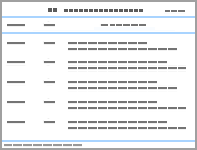
Table 1
The HScore
| 评估参数 | 评分标准(得分) |
|---|---|
| 已知潜在免疫抑制a | 否(0分);是(18分) |
| 体温(℃) | <38.4 ℃(0分);38.4 ℃~39.4 ℃(33分);>39.4℃(49分) |
| 器官肿大 | 无(0分);肝肿大或脾肿大(23分);肝脾均肿大(38分) |
| 血细胞减少系别数b | 1系(0分);2系(24分);3系(34分) |
| 血清铁蛋白 | <2 000 ng/mL(0分);2 000~6 000 ng/mL(35分);> 6 000 ng/mL(50分) |
| 甘油三酯 | <1.5 mmol/L(0分);1.5~4.0 mmol/L(44分);> 4.0 mmol/L(64分) |
| 纤维蛋白原 | >2.5 g/L(0分);≤2.5 g/L(30分) |
| 谷草转氨酶 | <30 U/L(0分);≥30 U/L(19分) |
| 骨髓穿刺见噬血现象 | 否(0分);是(35分) |
Table 2
Etiological classification and diagnostic key points of sHLH
| sHLH分类 类型 | 主要诱因/背景 | 特征性实验室/临床指标 | 诊断标准 / 工具 |
|---|---|---|---|
| 感染相关 | 病毒(以EBV最常见)最常见,其次为细菌、真菌、寄生虫等 | CD8+ T细胞中CD38+/HLA-DR+ >7%,CD4dimCD8⁺ T细胞高度活化 | HLH-2004标准 |
| 恶性肿瘤相关 | 淋巴瘤最常见 | OHI指数(sCD25>3 900 U/mL 且铁蛋白>1 000 ng/mL),sCD25/铁蛋白比值≥2.0 | HLH-2004标准;HScore;OHI指数 |
| 巨噬细胞活化综合征 | 风湿免疫性疾病(全身型幼年特发性关节炎、SLE、成人斯蒂尔病等) | 铁蛋白>10 000 ng/mL,血沉下降与CRP分离(假性正常化),IL-18>2 438 pg/mL[ | HLH-2004标准;PRINTO标准;MAS初步指南 |
| 免疫治疗相关 | CAR-T 治疗、免疫检查点抑制剂(ICI) | HGF、铁蛋白、CXCL9、IL-10、IL-18、IL-1RA等升高 | HLH-2004标准 |
| 移植相关 | 造血干细胞移植后感染或使用ICI抗排异治疗 | 常伴严重感染,缺乏特异性指标 | HLH-2004标准;HScore |
| [1] |
HENTER J I. Hemophagocytic lymphohistiocytosis[J]. N Engl J Med, 2025, 392(6):584-598.
doi: 10.1056/NEJMra2314005 URL |
| [2] |
BERGSTEN E, HORNE A, ARICÓ M, et al. Confirmed efficacy of etoposide and dexamethasone in HLH treatment: long-term results of the cooperative HLH-2004 study[J]. Blood, 2017, 130(25):2728-2738.
doi: 10.1182/blood-2017-06-788349 pmid: 28935695 |
| [3] |
LÖFSTEDT A, JÄDERSTEN M, MEETHS M, et al. Malignancy-associated hemophagocytic lymphohistiocytosis in Sweden: incidence, clinical characteristics, and survival[J]. Blood, 2024, 143(3): 233-242.
doi: 10.1182/blood.2023020715 URL |
| [4] |
WEST J, STILWELL P, LIU H, et al. Temporal trends in the incidence of hemophagocytic lymphohistiocytosis: A nationwide cohort study from England 2003-2018[J]. HemaSphere, 2022, 6(11):e797.
doi: 10.1097/HS9.0000000000000797 pmid: 36340911 |
| [5] |
BRISSE E, WOUTERS C H, MATTHYS P. Advances in the pathogenesis of primary and secondary haemophagocytic lymphohistiocytosis: Differences and similarities[J]. Br J Haematol, 2016, 174(2):203-217.
doi: 10.1111/bjh.2016.174.issue-2 URL |
| [6] |
BLOCH C, JAIS J P, GIL M, et al. Severe adult hemophagocytic lymphohistiocytosis (HLHa) correlates with HLH-related gene variants[J]. J Allergy Clin Immunol, 2024, 153(1):256-264.
doi: 10.1016/j.jaci.2023.07.023 URL |
| [7] | 中国医师协会血液科医师分会, 中华医学会儿科学分会血液学组, 噬血细胞综合征中国专家联盟. 中国噬血细胞综合征诊断与治疗指南(2022年版)[J]. 中华医学杂志, 2022, 102(20):1492-1499. |
| The Hematologist Branch of the Chinese Medical Association, the Hematology Group of the Scientific Branch of the Chinese Medical Association, and the Chinese Expert Alliance for Hemophagocytic Syndrome. Chinese guidelines for the diagnosis and treatment of hemophagocytic syndrome (2022 Edition)[J]. Natl Med J China, 2022, 102(20):1492-1499. | |
| [8] |
JORDAN M B, ALLEN C E, GREENBERG J, et al. Challenges in the diagnosis of hemophagocytic lymphohistiocytosis: Recommendations from the North American Consortium for Histiocytosis (NACHO)[J]. Pediatr Blood Cancer, 2019, 66(11):e27929.
doi: 10.1002/pbc.v66.11 URL |
| [9] |
HENTER J I, HORNE A, ARICÓ M, et al. HLH-2004: Diagnostic and therapeutic guidelines for hemophagocytic lymphohistiocytosis[J]. Pediatr Blood Cancer, 2007, 48(2):124-131.
doi: 10.1002/pbc.v48:2 URL |
| [10] |
LA ROSÉE P, HORNE A, HINES M, et al. Recommendations for the management of hemophagocytic lymphohistiocytosis in adults[J]. Blood, 2019, 133(23):2465-2477.
doi: 10.1182/blood.2018894618 pmid: 30992265 |
| [11] | FATMA A, RAIDA B S, MOURAD C, et al. Performances of the H-score and the HLH-2004 score in the positive diagnosis of secondary hemophagocytic lymphohistiocytosis[J]. Curr Res Transl Med, 2024, 72(2):103430. |
| [12] |
FARDET L, GALICIER L, LAMBOTTE O, et al. Development and validation of the HScore, a score for the diagnosis of reactive hemophagocytic syndrome[J]. Arthritis Rheumatol, 2014, 66(9):2613-2620.
doi: 10.1002/art.v66.9 URL |
| [13] |
DEBAUGNIES F, MAHADEB B, FERSTER A, et al. Performances of the H-score for diagnosis of hemophagocytic lymphohistiocytosis in adult and pediatric patients[J]. Am J Clin Pathol, 2016, 145(6):862-870.
doi: 10.1093/ajcp/aqw076 pmid: 27298397 |
| [14] |
BATU E D, ERDEN A, SEYHOĞLU E, et al. Assessment of the HScore for reactive haemophagocytic syndrome in patients with rheumatic diseases[J]. Scand J Rheumatol, 2017, 46(1):44-48.
doi: 10.3109/03009742.2016.1167951 pmid: 27359073 |
| [15] |
HORNE A, WICKSTRÖM R, JORDAN M B, et al. How to treat involvement of the central nervous system in hemophagocytic lymphohistiocytosis?[J]. Curr Treat Options Neurol, 2017, 19(1):3.
doi: 10.1007/s11940-017-0439-4 URL |
| [16] |
BLINCOE A, HEEG M, CAMPBELL P K, et al. Neuroinflammatory disease as an isolated manifestation of hemophagocytic lymphohistiocytosis[J]. J Clin Immunol, 2020, 40(6):901-916.
doi: 10.1007/s10875-020-00814-6 pmid: 32638196 |
| [17] |
YASIN S, FALL N, BROWN R A, et al. IL-18 as a biomarker linking systemic juvenile idiopathic arthritis and macrophage activation syndrome[J]. Rheumatology (Oxford, England), 2019, 59(2): 361-366.
doi: 10.1093/rheumatology/kez282 URL |
| [18] | HSU J I, NIKIFOROW S, BERLINER N. Hemophagocytic lymphohistiocytosis in adults[J]. Blood,2025:2025031100. |
| [19] |
CHATURVEDI V, MARSH R A, ZOREF-LORENZ A, et al. T-cell activation profiles distinguish hemophagocytic lymphohistiocytosis and early sepsis[J]. Blood, 2021, 137(17):2337-2346.
doi: 10.1182/blood.2020009499 pmid: 33512385 |
| [20] | 中国抗癌协会淋巴瘤专业委员会, 中国抗癌协会肿瘤血液病学专业委员会, 中国噬血细胞综合征专家联盟. 淋巴瘤相关噬血细胞综合征诊治专家共识(2025版)[J]. 中华医学杂志, 2025, 105(37):3284-3294. |
| Lymphoma Committee, China Anti-Cancer Association, Hematology Oncology Committee, China Anti-Cancer Association, Chinese Expert Alliance for Hemophagocytic Lymphohistiocytosis. Expert consensus on diagnosis and treatment of lymphoma-associated hemophagocytic lymphohistiocytosis (2025 edition)[J]. Natl Med J China, 2025, 105(37):3284-3294. | |
| [21] | 胡舒怡, 陈曦, 吴思睿, 等. 广泛期小细胞肺癌二线治疗选择[J]. 中国临床研究, 2025, 38(3):345-350. |
| HU S Y, CHEN X, WU S R, et al. Selection of secondline treatment for extensive-stage small cell lung cancer[J]. Chin J Clin Res, 2023, 38(3):345-350. | |
| [22] |
GURUNATHAN A, BOUCHER A A, MARK M, et al. Limitations of HLH-2004 criteria in distinguishing malignancy-associated hemophagocytic lymphohistiocytosis[J]. Pediatr Blood Cancer, 2018, 65(12):e27400.
doi: 10.1002/pbc.v65.12 URL |
| [23] |
ZOREF-LORENZ A, MURAKAMI J, HOFSTETTER L, et al. An improved index for diagnosis and mortality prediction in malignancy-associated hemophagocytic lymphohistiocytosis[J]. Blood, 2022, 139(7):1098-1110.
doi: 10.1182/blood.2021012764 URL |
| [24] |
LA ROSÉE P. Detecting HLH in hematologic malignancies[J]. Blood, 2022, 139(7):961-963.
doi: 10.1182/blood.2021014675 pmid: 35175327 |
| [25] |
TABATA C, TABATA R. Possible prediction of underlyi-ng lymphoma by high sIL-2R/ferritin ratio in hemophagocytic syndrome[J]. Ann Hematol, 2012, 91(1):63-71.
doi: 10.1007/s00277-011-1239-7 URL |
| [26] |
GANSNER J M, BERLINER N. The rheumatology/hematology interface: CAPS and MAS diagnosis and management[J]. Hematology, 2018, 2018(1):313-317.
doi: 10.1182/asheducation-2018.1.313 URL |
| [27] |
ANDERSSON U. Hyperinflammation: On the pathoge-nesis and treatment of macrophage activation syndrome[J]. Acta Paediatr, 2021, 110(10):2717-2722.
doi: 10.1111/apa.v110.10 URL |
| [28] |
LANDY E, CAROL H, RING A, et al. Biological and clinical roles of IL-18 in inflammatory diseases[J]. Nat Rev Rheumatol, 2024, 20(1):33-47.
doi: 10.1038/s41584-023-01053-w pmid: 38081945 |
| [29] |
RAVELLI A, MAGNI-MANZONI S, PISTORIO A, et al. Preliminary diagnostic guidelines for macrophage activation syndrome complicating systemic juvenile idiopathic arthritis[J]. J Pediatr, 2005, 146(5):598-604.
doi: 10.1016/j.jpeds.2004.12.016 URL |
| [30] | RAVELLI A, MINOIA F, DAVÌ S, et al. 2016 classification criteria for macrophage activation syndrome complicating systemic juvenile idiopathic arthritis: A European league against rheumatism/American college of rheumatology/paediatric rheumatology international trials organisation collaborative initiative[J]. Ann Rheum Dis,2016, 75(3):481-489. |
| [31] | 王迁, 王旖旎, 王嫱, 等. 风湿性疾病相关噬血细胞综合征诊疗规范[J]. 中华内科杂志, 2023, 62(1):23-30. |
| WANG Q, WANG Y N, WANG Q, et al. Recommendations for the diagnosis and treatment of rheumatic diseases-related hemophagocytic syndrome in China[J]. Chin J Intern Med, 2023, 62(1):23-30. | |
| [32] |
TEACHEY D T, BISHOP M R, MALONEY D G, et al. Toxicity management after chimeric antigen receptor T cell therapy: one size does not fit 'ALL'[J]. Nat Rev Clin Oncol. 2018; 15(4):218.
doi: 10.1038/nrclinonc.2018.20 pmid: 29434334 |
| [33] |
ZHUANG J, DU J, GUO X, et al. Clinical diagnosis and treatment recommendations for immune checkpoint inhibitor-related hematological adverse events[J]. Thorac Cancer, 2020, 11(3):799-804.
doi: 10.1111/1759-7714.13281 pmid: 32017466 |
| [34] | SANDLER R D, TATTERSALL R S, SCHOEMANS H, et al. Diagnosis and management of secondary HLH/MAS following HSCT and CAR-T cell therapy in adults; a review of the literature and a survey of practice within EBMT centres on behalf of the autoimmune diseases working party (ADWP) and transplant complications working party (TCWP)[J]. Front Immunol, 2020,11:524. |
| [35] |
HENTER J I, ARICÒ M, EGELER R M, et al. HLH-94: A treatment protocol for hemophagocytic lymphohistiocytosis[J]. Med Pediatr Oncol, 1997, 28(5):342-347.
doi: 10.1002/(ISSN)1096-911X URL |
| [36] |
WANG Y, HUANG W, HU L, et al. Multicenter study of combination DEP regimen as a salvage therapy for adult refractory hemophagocytic lymphohistiocytosis[J]. Blood, 2015, 126(19):2186-2192.
doi: 10.1182/blood-2015-05-644914 pmid: 26289641 |
| [37] |
WANG J, WANG Y, WU L, et al. PEG-aspargase and DEP regimen combination therapy for refractory Epstein-Barr virus-associated hemophagocytic lymphohistiocytosis[J]. J Hematol Oncol, 2016, 9(1):84.
doi: 10.1186/s13045-016-0317-7 URL |
| [38] | 甘锦鹏, 谢龙龙, 卢秀兰. EB病毒感染相关噬血细胞综合征的临床预警及治疗[J]. 中国小儿急救医学, 2024, 31(11):818-824. |
| GAN J P, XIE L L, LU X L. Clinical early warning and therapeutic interventions of hemophagocytic syndrome associated with Epstein-Barr virus infection[J]. Chin Pediatr Emerg Med, 2024, 31(11):818-824. | |
| [39] |
YAO S, HE L, SUOLITIKEN D, et al. Transplantation in adult patients with Epstein-Barr virus-associated hemophagocytic lymphohistiocytosis: Yes or no?[J]. Blood, 2024, 144(20):2107-2120.
doi: 10.1182/blood.2023023287 pmid: 39093986 |
| [40] | MENG G Q, WANG J S, WANG Y N, et al. Rituximab-containing immuno-chemotherapy regimens are effective for the elimination of EBV for EBV-HLH with only and mainly B lymphocytes of EBV infection[J]. Int Immunopharmacol, 2021,96:107606. |
| [41] |
LIU P, PAN X, CHEN C, et al. Nivolumab treatment of relapsed/refractory Epstein-Barr virus-associated hemophagocytic lymphohistiocytosis in adults[J]. Blood, 2020, 135(11):826-833.
doi: 10.1182/blood.2019003886 pmid: 31914172 |
| [42] |
ZHANG Q, ZHAO Y Z, MA H H, et al. A study of ruxolitinib response-based stratified treatment for pediatric hemophagocytic lymphohistiocytosis[J]. Blood, 2022, 139(24):3493-3504.
doi: 10.1182/blood.2021014860 URL |
| [43] |
XU Y, LI W, GAN J, et al. An analysis of sintilimab combined with ruxolitinib as compassionate therapy for 12 adults with EBV-associated hemophagocytic lymphohistiocytosis[J]. Ann Hematol, 2023, 102(12):3325-3333.
doi: 10.1007/s00277-023-05476-z pmid: 37787838 |
| [44] |
CHEN R, LIN Q, ZHU Y, et al. Sintilimab treatment for chronic active Epstein-Barr virus infection and Epstein-Barr virus-associated hemophagocytic lymphohistiocytosis in children[J]. Orphanet J Rare Dis, 2023, 18(1):297.
doi: 10.1186/s13023-023-02861-9 pmid: 37736751 |
| [45] | ZHAO A, YANG J, LI M, et al. Epstein-Barr virus-positive lymphoma-associated hemophagocytic syndrome: A retrospective, single-center study of 51 patients[J]. Front Immunol, 2022,13:882589. |
| [46] |
LOCATELLI F, JORDAN MB, ALLEN C, et al. Emapalumab in children with primary hemophagocytic lymphohistiocytosis[J]. N Engl J Med, 2020, 382(19):1811-1822.
doi: 10.1056/NEJMoa1911326 URL |
| [47] |
MARSH R A, ALLEN C E, MCCLAIN K L, et al. Salvage therapy of refractory hemophagocytic lymphohistiocytosis with alemtuzumab[J]. Pediatr Blood Cancer, 2013, 60(1):101-109.
doi: 10.1002/pbc.24188 pmid: 22522603 |
| [48] |
LEE B J, CAO Y, VITTAYAWACHARIN P, et al. Anakinra versus etoposide-based therapy added to high-dose steroids for the treatment of secondary hemophagocytic lymphohistiocytosis[J]. Eur J Haematol, 2023, 111(3):477-484.
doi: 10.1111/ejh.v111.3 URL |
| [49] | SONG Y, YIN Q, WANG J, et al. Autologous hematopoie-tic stem cell transplantation for patients with lymphoma--associated hemophagocytic lymphohistiocytosis[J]. Cell Transplant, 2021,30:9636897211057077. |
| [50] | FULATI W, MA J, WU M, et al. Consolidation therapy with autologous stem cell transplantation after remission of induction chemotherapy prolongs the survival of patients with peripheral T-cell lymphoma[J]. Front Immunol, 2024,15:1382189. |
| [51] |
BALDO F, ERKENS R G A, MIZUTA M, et al. Current treatment in macrophage activation syndrome worldwide: a systematic literature review to inform the METAPHOR project[J]. Rheumatology (Oxford), 2025, 64(1):32-44.
doi: 10.1093/rheumatology/keae391 URL |
| [52] |
DE BENEDETTI F, GROM A A, BROGAN P A, et al. Efficacy and safety of emapalumab in macrophage activation syndrome[J]. Ann Rheum Dis, 2023, 82(6):857-865.
doi: 10.1136/ard-2022-223739 pmid: 37001971 |
| [53] | SONG Y, LI X, HE X, et al. Dose-escalating ruxolitinib for refractory hemophagocytic lymphohistiocytosis[J]. Front Immunol, 2023,14:1211655. |
| [54] |
SUZUKI S, KATAOKA Y, OTANI T, et al. Optimal time of starting tocilizumab in acute phase of adult-onset still’s disease and comparison of its efficacy with that of methotrexate: A case series and a review of the literature[J]. Clin Rheumatol, 2024, 43(3):1245-1251.
doi: 10.1007/s10067-024-06905-8 |
| [55] |
MA Y, CHEN X, WANG M, et al. Ruxolitinib targets JAK-STAT signaling to modulate neutrophil activation in refractory macrophage activation syndrome[J]. Blood, 2025, 146(5):612-627.
doi: 10.1182/blood.2024024362 pmid: 40388634 |
| [56] | HINES M R, KNIGHT T E, MCNERNEY K O, et al. Immune effector cell-associated hemophagocytic lymphohistiocytosis-like syndrome[J]. Transplant Cell Ther, 2023, 29(7):438,e1-e438. |
| [1] | WANG Jiaojiao, CAI Dachuan. Current research and challenges of low-level viremia in patients with chronic hepatitis B [J]. Journal of Diagnostics Concepts & Practice, 2024, 23(01): 23-29. |
| [2] | LIU Yifei. DNA methylation detection assists early screening and diagnosis of tumors [J]. Journal of Diagnostics Concepts & Practice, 2023, 22(04): 393-401. |
| [3] | LIN Han, ZUBAIREGULI Maimaitiabula, SU Tongxuan. Value of heparin-binding protein in diagnosis of bloodstream infection [J]. Journal of Diagnostics Concepts & Practice, 2023, 22(02): 147-153. |
| [4] | CHEN Hong, SHEN Yinzhong. Progress in diagnosis and treatment of human immunodeficiency virus infection/acquired immune deficiency syndrome complicated with tuberculosis [J]. Journal of Diagnostics Concepts & Practice, 2022, 21(04): 530-534. |
| [5] | HE Xin, CHEN Hui, FENG Weiwei. Research progress on the application of machine learning in assisted ultrasound diagnosis of adnexal masses [J]. Journal of Diagnostics Concepts & Practice, 2022, 21(04): 541-546. |
| [6] | ZHANG Yibo, WU Wenjuan, BI Yufang, JING Feng, GU Zhidong, YANG Zhitao, SHANG Hanbing, LIN Jingsheng, CHEN Erzhen. Construction and practice of infection prevention and control system in large Fangcang shelter hospitals [J]. Journal of Diagnostics Concepts & Practice, 2022, 21(02): 165-168. |
| [7] | SHI Yingying, ZHONG Xu, LIU Jialin, HE Le, XIONG Shaoji, WENG Y, DING Chengwei, YANG Y, CHEN Weihon, QIU Liping, XIN Haiguang. Hospital infection prevention and control practices in anti-epidemic medical staff and workers during COVID-19 epidemic: investigation and countermeasures [J]. Journal of Diagnostics Concepts & Practice, 2022, 21(02): 178-183. |
| [8] | KONG Nana, ZHANG Peiyan, YANG Deping, JIN Huimin, ZHENG Jianghua. Distribution and drug resistance of pathogens in urinary tract infections in Zhoupu area, Shanghai during 2016 to 2020 [J]. Journal of Diagnostics Concepts & Practice, 2021, 20(01): 93-97. |
| [9] | HU Ying, BAO Yujie, BAI Yupan, LU Guanzhu, CHENG Yajiao, GUO Zhuying, XU Jie. Analysis of clinical and laboratory characteristics of EB virus infection in 67 adult patients [J]. Journal of Diagnostics Concepts & Practice, 2020, 19(1): 74-79. |
| [10] | CHEN Chen, ZHANG Yue, HU Xiaobo. The clinical evaluation and optimization of alarm Threshold setting for Sysmex UF5000 UTI [J]. Journal of Diagnostics Concepts & Practice, 2020, 19(02): 168-171. |
| [11] | GU Qin, WANG Tairong, CHEN Liping, WU Shuyao, SHEN Yi. Investigation on common pathogens and related risk factors of urinary tract infection in elderly female diabetic patients in community [J]. Journal of Diagnostics Concepts & Practice, 2019, 18(05): 538-542. |
| [12] | WANG HONG, HUANG Luyao, YANG Yixiang. Study on human papillomavirus infection in gynecological outpatients in Songjiang District during 2016 to 2017 [J]. Journal of Diagnostics Concepts & Practice, 2019, 18(04): 460-465. |
| [13] | LIU Xiaoyi, CHEN Zhuo, WU Jing, JIN Yingying, CHEN Tongxin, CHEN Ji. Infection and skin manifestations of four common primary immunodeficiency diseases in children [J]. Journal of Diagnostics Concepts & Practice, 2019, 18(04): 442-447. |
| [14] | WANG Yuanyuan, FAN Qiuling. Clinical value of serum procalcitonin in patients of chronic kidney disease with bacterial infection [J]. Journal of Diagnostics Concepts & Practice, 2019, 18(03): 353-359. |
| [15] | DU Kun, YANG Xi, BIAN Binxian, REN Yiqian, ZHANG Guanghui. Comparison of diagnostic value of new infection biomarker presepsin with procalcitonin, C-reactive protein and interleukin-6 in diagnosis of bacterial infection [J]. Journal of Diagnostics Concepts & Practice, 2018, 17(05): 581-585. |
| Viewed | ||||||
|
Full text |
|
|||||
|
Abstract |
|
|||||
