

Journal of Internal Medicine Concepts & Practice ›› 2025, Vol. 20 ›› Issue (06): 435-439.doi: 10.16138/j.1673-6087.2025.06.02
Previous Articles Next Articles
CHEN Liangguo1( ), DENG Kewu1, LIU Yue2, ZHONG Peng3, BAI Ying1,*()
Received:2024-08-21
Online:2025-12-30
Published:2026-01-30
CLC Number:
CHEN Liangguo, DENG Kewu, LIU Yue, ZHONG Peng, BAI Ying. Relationship between triglyceride-glucose index and risk of acute myocardial infarction in patients with atrial fibrillation[J]. Journal of Internal Medicine Concepts & Practice, 2025, 20(06): 435-439.
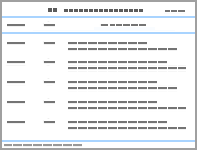
Table 1
Comparison of baseline characteristics between AF patients with and without AMI [$\bar{x}±s$/n (%)]
| 项目 | AMI(−)组(n=3 725) | AMI(+)组(n=552) | t/χ2 | P |
| 年龄(岁) | 71.44±12.22 | 74.48±11.66 | −5.489 | < 0.001 |
| 男性[n (%)] | 2 054(55.1) | 344(62.3) | 10.056 | 0.002 |
| BMI(kg/m2) | 25.42±4.01 | 25.06±3.94 | 1.268 | 0.205 |
| 曾经或当前吸烟[n (%)] | 979(26.3) | 207(37.5) | 59.633 | < 0.001 |
| 合并症[n (%)] | ||||
| 高血压 | 2 486(66.7) | 415(75.2) | 15.704 | < 0.001 |
| 糖尿病 | 1 138(30.6) | 244(44.2) | 40.971 | < 0.001 |
| 心力衰竭 | 1 408(37.8) | 197(35.7) | 0.913 | 0.339 |
| 陈旧性心肌梗死 | 249(6.7) | 95(17.2) | 72.014 | < 0.001 |
| 既往PCI或CABG | 313(8.4) | 81(14.7) | 22.607 | < 0.001 |
| 外周血管疾病 | 205(5.5) | 57(10.3) | 19.445 | < 0.001 |
| TyG指数 | 8.56±0.66 | 8.83±0.73 | −8.444 | < 0.001 |
| 辅助检查 | ||||
| LVEF(%) | 61.33±10.37 | 53.86±12.69 | 11.144 | < 0.001 |
| TC(mmol/L) | 4.01±1.79 | 4.08±1.10 | −0.952 | 0.341 |
| LDL-C(mmol/L) | 2.42±0.87 | 2.42±0.90 | 0.047 | 0.963 |
| HDL-C(mmol/L) | 1.08±0.37 | 1.08±0.39 | −0.405 | 0.686 |
| TG(mmol/L) | 1.30±1.08 | 1.35±1.07 | −0.967 | 0.334 |
| 血糖(mmol/L) | 6.28±2.48 | 8.44±4.33 | −11.44 | < 0.001 |
Table 2
Univariate Logistic regression analysis
| 变量 | OR | 95%CI | P |
| TyG指数 | 1.795 | 1.578~2.042 | < 0.001 |
| 年龄 | 1.022 | 1.014~1.030 | < 0.001 |
| 性别(男性) | 0.743 | 0.618~0.893 | 0.002 |
| BMI | 0.977 | 0.944~1.012 | 0.205 |
| 曾经或当前吸烟 | 2.305 | 1.857~2.861 | < 0.001 |
| 高血压 | 1.510 | 1.230~1.853 | < 0.001 |
| 糖尿病 | 1.801 | 1.501~2.160 | < 0.001 |
| 心力衰竭 | 0.913 | 0.758~1.100 | 0.339 |
| 陈旧性心肌梗死 | 2.902 | 2.247~3.747 | < 0.001 |
| 既往PCI或CABG | 1.875 | 1.442~2.438 | < 0.001 |
| 外周血管疾病 | 1.977 | 1.453~2.691 | < 0.001 |
Table 3
Multivariate Logistic regression analysis
| 变量 | OR | 95%CI | P |
| OR:优势比(odds ratio)。 | |||
| TyG指数 | 1.824 | 1.540~2.161 | < 0.001 |
| 年龄 | 1.028 | 1.017~1.039 | < 0.001 |
| 性别(男性) | 0.803 | 0.611~1.056 | 0.117 |
| 曾经或当前吸烟 | 2.226 | 1.716~2.886 | < 0.001 |
| 高血压 | 1.089 | 0.843~1.406 | 0.513 |
| 糖尿病 | 1.266 | 0.994~1.613 | 0.056 |
| 陈旧性心肌梗死 | 2.272 | 1.601~3.226 | < 0.001 |
| 既往PCI或CABG | 1.190 | 0.839~1.688 | 0.328 |
| 外周血管疾病 | 0.893 | 0.442~1.803 | 0.752 |

Fig. 1
Receiver operating characteristic curve

Table 4
Subgroup analysis between AF patients with and without diabetes
| 变量 | B | SE | Wald X2 | OR | 95%CI | P |
| 糖尿病 | ||||||
| TyG指数 | 0.540 | 0.189 | 8.128 | 1.716 | 1.184~2.488 | 0.004 |
| 曾经或当前吸烟 | 0.703 | 0.327 | 4.616 | 2.021 | 1.064~3.838 | 0.032 |
| 心力衰竭 | −0.784 | 0.314 | 6.225 | 0.457 | 0.247~0.845 | 0.013 |
| 陈旧性心肌梗死 | 0.967 | 0.467 | 4.296 | 2.631 | 1.054~6.567 | 0.038 |
| 非糖尿病 | ||||||
| TyG指数 | 0.596 | 0.185 | 10.331 | 1.814 | 1.262~2.609 | 0.001 |
| 年龄 | 0.028 | 0.010 | 7.200 | 1.028 | 1.007~1.049 | 0.007 |
| 性别(男性) | −0.860 | 0.303 | 8.058 | 0.423 | 0.234~0.766 | 0.005 |
| 曾经或当前吸烟 | 0.768 | 0.255 | 9.065 | 2.156 | 1.308~3.556 | 0.003 |
| 陈旧性心肌梗死 | 1.353 | 0.355 | 14.556 | 3.871 | 1.931~7.758 | < 0.001 |
| 既往PCI或CABG | 0.935 | 0.368 | 6.468 | 2.548 | 1.239~5.238 | 0.011 |
| [1] | January CT, Wann LS, Calkins H, et al. 2019 AHA/ACC/HRS focused update of the 2014 AHA/ACC/HRS guideline for the management of patients with atrial fibrillation: a report of the American College of Cardiology/American Heart Association Task Force on Clinical Practice Guidelines and the Heart Rhythm Society in collaboration with the Society of Thoracic Surgeons[J]. Circulation, 2019, 140(2):e125-e151. |
| [2] |
Baman JR, Passman RS. Atrial fibrillation[J]. JAMA, 2021, 325(21):2218.
doi: 10.1001/jama.2020.23700 |
| [3] |
Fontes JD, Lyass A, Massaro JM, et al. Insulin resistance and atrial fibrillation (from the Framingham Heart study)[J]. Am J Cardiol, 2012, 109(1):87-90.
doi: 10.1016/j.amjcard.2011.08.008 |
| [4] |
Park GM, Cho YR, Won KB, et al. Triglyceride glucose index is a useful marker for predicting subclinical coronary artery disease in the absence of traditional risk factors[J]. Lipids Health Dis, 2020, 19(1):7.
doi: 10.1186/s12944-020-1187-0 |
| [5] |
Tao LC, Xu JN, Wang TT, et al. Triglyceride-glucose index as a marker in cardiovascular diseases: landscape and limitations[J]. Cardiovasc Diabetol, 2022, 21(1):68.
doi: 10.1186/s12933-022-01511-x |
| [6] |
Choe WS, Choi EK, Han KD, et al. Association of metabolic syndrome and chronic kidney disease with atrial fibrillation: a nationwide population-based study in Korea[J]. Diabetes Res Clin Pract, 2019, 148: 14-22.
doi: 10.1016/j.diabres.2018.12.004 |
| [7] |
Zheng D, Cao L. Association between myocardial infarction and triglyceride-glucose index: a study based on NHANES database[J]. Glob Heart, 2024, 19(1):23.
doi: 10.5334/gh.1303 |
| [8] |
Bai Y, Liu XY, Liu Y, et al. Prevalence of recommended anticoagulation by guidelines preadmission and its impact on the incidence of acute myocardial infarction (AMI) and in-hospital outcomes after AMI in atrial fibrillation patients[J]. J Thromb Thrombolysis, 2022, 54(1):91-96.
doi: 10.1007/s11239-021-02622-0 |
| [9] |
Levine GN, Bates ER, Bittl JA, et al. 2016 ACC/AHA guideline focused update on duration of dual antiplatelet therapy in patients with coronary artery disease: a report of the American College of Cardiology/American Heart Association Task Force on Clinical Practice Guidelines[J]. J Thorac Cardiovasc Surg, 2016, 152(5):1243-1275.
doi: 10.1016/j.jtcvs.2016.07.044 |
| [10] |
Chen S, Mei Q, Guo L, et al. Association between triglyceride-glucose index and atrial fibrillation: a retrospective observational study[J]. Front Endocrinol (Lausanne), 2022, 13: 1047927.
doi: 10.3389/fendo.2022.1047927 |
| [11] |
Lee Y, Cha SJ, Park JH, et al. Association between insulin resistance and risk of atrial fibrillation in non-diabetics[J]. Eur J Prev Cardiol, 2020, 27(18):1934-1941.
doi: 10.1177/2047487320908706 |
| [12] |
Harati H, Zanetti D, Rao A, et al. No evidence of a causal association of type 2 diabetes and glucose metabolism with atrial fibrillation[J]. Diabetologia, 2019, 62(5):800-804.
doi: 10.1007/s00125-019-4836-y |
| [13] |
Zhang Y, Ding X, Hua B, et al. High triglyceride-glucose index is associated with poor cardiovascular outcomes in nondiabetic patients with ACS with LDL-C below 1.8 mmol/L[J]. J Atheroscler Thromb, 2022, 29(2):268-281.
doi: 10.5551/jat.61119 |
| [14] |
Wang L, Cong HL, Zhang JX, et al. Triglyceride-glucose index predicts adverse cardiovascular events in patients with diabetes and acute coronary syndrome[J]. Cardiovasc Diabetol, 2020, 19(1):80.
doi: 10.1186/s12933-020-01054-z |
| [15] |
Guo W, Zhao L, Mo F, et al. The prognostic value of the triglyceride glucose index in patients with chronic heart failure and type 2 diabetes: a retrospective cohort study[J]. Diabetes Res Clin Pract, 2021, 177: 108786.
doi: 10.1016/j.diabres.2021.108786 |
| [16] |
Zhu Y, Liu K, Chen M, et al. Triglyceride-glucose index is associated with in-stent restenosis in patients with acute coronary syndrome after percutaneous coronary intervention with drug-eluting stents[J]. Cardiovasc Diabetol, 2021, 20(1):137.
doi: 10.1186/s12933-021-01332-4 |
| [1] | YAN Mingxuan1 (颜铭萱), MIAO Yutong2,3 (苗雨桐), SHENG Shuqian1 (盛淑茜), GAN Xiaoying1 (甘小莺), HE Ben2 (何 奔), SHEN Lan2,3* (沈 兰). Ensemble Learning-Based Mortality Prediction After Acute Myocardial Infarction [J]. J Shanghai Jiaotong Univ Sci, 2025, 30(1): 153-165. |
| [2] | JIN Zhengyi, LIU Qilong, HU Jiaqi, XU Xia, GAO Jie. Advances in understanding the association between hyperuricemia and cardiovascular diseases [J]. Journal of Internal Medicine Concepts & Practice, 2025, 20(04): 334-339. |
| [3] | LUO Xiaoying, DONG Fengwei, XU Yan, WU Liqun, QI Wenhang. Correlation between severe coronary stenosis and recurrence after atrial fibrillation cryoablation [J]. Journal of Diagnostics Concepts & Practice, 2025, 24(03): 328-332. |
| [4] | FANG Chunmei, LI Feng, SHEN Tongtong, ZHOU Yang. Clinical effect of Shexiang Baoxin pill combined with sacubitril/valsartan in the treatment of acute myocardial infarction after percutaneous coronary intervention [J]. Journal of Internal Medicine Concepts & Practice, 2024, 19(05): 310-313. |
| [5] | LUO Xiaoying, ZHANG Andi, XU Yan, WU Liqun, QI Wenhang. Association between NT-proBNP and new-onset atrial fibrillation in patients with ischemic heart failure [J]. Journal of Diagnostics Concepts & Practice, 2024, 23(03): 313-317. |
| [6] | SUN Yiya, LUO Qingzhi, JIN Qi, WU Liqun. Clinical progress of catheter ablation in patients with atrial fibrillation and heart failure with preserved ejection fraction [J]. Journal of Internal Medicine Concepts & Practice, 2024, 19(03): 188-192. |
| [7] | LI Qing, ZHENG Zhaoxia, LUO Jinghui, LI Li, NIU Fuying. Value of remnant lipoprotein cholesterol and homocysteine in predicting new-onset atrial fibrillation in elderly patients with acute myocardial infarction [J]. Journal of Internal Medicine Concepts & Practice, 2024, 19(01): 68-71. |
| [8] | XU Doudou, CHEN Ying, LÜ Ankang, WU Beiwen. A retrospective cohort study on the correlation between triglyceride-glucose index and new-onset fatty liver disease [J]. Journal of Internal Medicine Concepts & Practice, 2022, 17(04): 301-306. |
| [9] | XI Rui, FAN Qin, WANG Fang, TAO Rong, GU Gang. Value of D-dimer combined with cystatin C in predicting the occurrence of major adverse cardiovascular events in patients with acute myocardial infarction undergoing percutaneous coronary intervention [J]. Journal of Internal Medicine Concepts & Practice, 2022, 17(03): 227-232. |
| [10] | BAI Ying, LIU Xinyao, ZHANG Xilin, GAO Zhaofang, SHI Xubo, DENG Kewu. Impact of preadmission anticoagulation adherent to guidelines on prognosis of the patients with atrial fibrillation [J]. Journal of Internal Medicine Concepts & Practice, 2021, 16(06): 409-412. |
| [11] | LUO Xiaoying, XU Yan, ZHANG Fengru, WU Liqun, QI Wenhang. Value of P-wave dispersion, NT-proBNP for prediction of recurrence of atrial fibrillation following cryoballoon ablation [J]. Journal of Diagnostics Concepts & Practice, 2020, 19(1): 32-36. |
| [12] | LUO Xiaoying, XU Yan, ZHANG Jiansheng, WU Liqun, QI Wenhang. Predictive value of NT-proBNP for new-onset atrial fibrillation following acute myocardial infarction [J]. Journal of Diagnostics Concepts & Practice, 2020, 19(03): 303-307. |
| [13] | WANG Chenchen, YANG Wenbo, HUA Wei, CHEN Yefen, SU Xiuxiu, GONG Junshi, FANG Yuehua. The morphology and function of left atrial appendage in the risk assessment of stroke in patients with non-valvular atrial fibrillation [J]. Journal of Diagnostics Concepts & Practice, 2020, 19(02): 151-156. |
| [14] | . [J]. Journal of Internal Medicine Concepts & Practice, 2019, 14(05): 289-293. |
| [15] | CHEN Yafen, CHEN Yuanyuan, WU Liping, XUE Qiqi, YANG Ke, LU Lin, CAO Jiumei. Effect of silencing information regulator factor 1 on mice with acute myocardial infarction [J]. Journal of Diagnostics Concepts & Practice, 2018, 17(06): 670-675. |
| Viewed | ||||||
|
Full text |
|
|||||
|
Abstract |
|
|||||
