

内科理论与实践 ›› 2025, Vol. 20 ›› Issue (05): 359-364.doi: 10.16138/j.1673-6087.2025.05.02
谢冲( ), 万文斌, 姚小英, 张瑛, 王刚()
收稿日期:2025-08-25
接受日期:2025-10-15
出版日期:2025-12-10
发布日期:2025-12-26
通讯作者:
王刚
E-mail:xiechong06@163.com;wanggang@renji.com
XIE Chong(), WAN Wenbin, YAO Xiaoying, ZHANG Ying, WANG Gang()
Received:2025-08-25
Accepted:2025-10-15
Online:2025-12-10
Published:2025-12-26
Contact:
WANG Gang
E-mail:xiechong06@163.com;wanggang@renji.com
摘要:
近年来,免疫检查点抑制剂(immune checkpoint inhibitor, ICI)在肿瘤治疗中成效显著,但其引发的免疫相关不良事件(immune-related adverse event,irAE)也日益引起关注,其中神经系统irAE(neurologic immune-related adverse event,n-irAE)发生率虽较低,但常引起严重后果。n-irAE可累及包括周围神经、神经肌肉接头及中枢神经系统(central nervous system, CNS)等多个部位,表现为肌炎、重症肌无力、脑炎、脊髓炎等。n-irAE的诊断需结合症状与ICI用药的时间关联性、神经系统定位评估(影像学、脑脊液、电生理检测)及排除转移瘤、感染等其他病因。根据临床严重程度对n-irAE进行分级处置,常用治疗方法包括糖皮质激素、免疫球蛋白冲击及血浆置换等。多学科协作与早期干预是改善患者预后的关键,未来需优化风险预测模型以实现个体化管理。
中图分类号:
谢冲, 万文斌, 姚小英, 张瑛, 王刚. 免疫检查点抑制剂相关神经系统不良事件的临床特征与诊疗进展[J]. 内科理论与实践, 2025, 20(05): 359-364.
XIE Chong, WAN Wenbin, YAO Xiaoying, ZHANG Ying, WANG Gang. Clinical characteristic and treatment progress of neurologic immune-related adverse events associated with immune checkpoint inhibitors[J]. Journal of Internal Medicine Concepts & Practice, 2025, 20(05): 359-364.
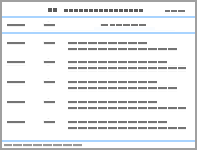
表1
已获批的免疫检查点抑制剂
| 检查点靶标 | 药物 |
| PD-1 | 纳武利尤单抗(nivolumab) |
| 帕博利珠单抗(pembrolizumab) | |
| 西普利单抗(cemiplimab) | |
| 信迪利单抗(sintilimab) | |
| 卡瑞利珠单抗(camrelizumab) | |
| 多塔利单抗(dostarlimab) | |
| 替雷利珠单抗(tislelizumab) | |
| 派安普利单抗(penpulimab) | |
| 特瑞普利单抗(toripalimab) | |
| 赛帕利单抗(zimberelimab) | |
| 斯鲁利单抗(serplulimab) | |
| PD-L1 | 普特利单抗(pucotenlimab) |
| 度伐利尤单抗(durvalumab) | |
| 阿替利珠单抗(atezolizumab) | |
| 阿维鲁单抗(avelumab) | |
| 恩沃利单抗(envafolimab) | |
| 舒格利单抗(sugemalimab) | |
| CTLA-4 | 伊匹木单抗(ipilimumab) |
| 曲美木单抗(tremelimumab) |
表2
ICI相关n-irAE的临床特征
| 分类 | 并发症 | 主要临床表现 | 辅助检查表现 |
| 神经肌肉接头 | 眼睑下垂、复视、吞咽及呼吸困难 | AChR抗体阳性,重复神经电刺激递减 | |
| 肌肉 | 肌炎(心肌炎) | 肌无力、肌痛,如有心肌炎可表现为心脏症状 | 肌酸激酶显著升高,肌活检提示肌肉炎性浸润(伴或不伴坏死) 心电图、心脏彩色超声及心肌酶谱可提示心肌炎 |
| PNS | GBS | 进行性四肢瘫、呼吸肌麻痹、感觉障碍 | 脑脊液蛋白-细胞分离,神经传导速度减慢 |
| 颅神经病变 | 面瘫、听力受损等 | / | |
| CNS | 边缘叶脑炎 | 认知障碍、癫痫发作、精神行为异常 | 脑脊液淋巴细胞增多,抗神经元抗体阳性;MRI等提示海马、颞叶等异常信号 |
| 小脑炎 | 步态不稳、构音障碍、眼震 | 抗Yo抗体等阳性,MRI可见小脑异常信号 | |
| 无菌性脑膜炎 | 头痛、颈强直 | 脑脊液以淋巴细胞为主的细胞增多,蛋白轻中度升高 | |
| 脊髓炎 | 肢体麻木、乏力、括约肌功能障碍 | 脊髓MRI可见异常信号,脑脊液蛋白升高,细胞数增多 |
表3
ICI相关n-irAE的分级治疗策略
| 毒性分级 | 治疗原则 | 具体方案 | ICI管理 |
| IVIG:静脉注射免疫球蛋白(intravenous immunoglobulin)。 | |||
| 1级 | 对症支持 | 观察症状变化,无需免疫抑制 | 继续治疗 |
| 2级 | 一线免疫抑制 | 泼尼松0.5~1 mg/(kg·d),减量≥4周 | 暂停,恢复至≤1级后可重启 |
| 3级 | 强化免疫抑制 | 甲泼尼龙1 g/d,3~5 d后泼尼松1~2 mg/(kg·d) | 永久停用 |
| 二线治疗(激素无效) | IVIG 0.4 g/(kg·d),共5 d或血浆置换隔日1次,共5次 | ||
| 4级 | 多模式强化治疗+重症监护 | 甲泼尼龙冲击+IVIG/血浆置换±利妥昔单抗/环磷酰胺 | 永久停用 |
| 难治性病例 | 生物制剂(如托珠单抗、依库珠单抗) | ||
| [1] |
Chambers CA, Kuhns MS, Egen JG, et al. CTLA-4-mediated inhibition in regulation of T cell responses: mechanisms and manipulation in tumor immunotherapy[J]. Annu Rev Immunol, 2001, 19: 565-94.
doi: 10.1146/annurev.immunol.19.1.565 |
| [2] |
Ishida Y, Agata Y, Shibahara K, et al. Induced expression of PD-1, a novel member of the immunoglobulin gene superfamily, upon programmed cell death[J]. EMBO J, 1992, 11(11): 3887-95.
doi: 10.1002/j.1460-2075.1992.tb05481.x |
| [3] |
Ribas A, Wolchok JD. Cancer immunotherapy using checkpoint blockade[J]. Science, 2018, 359(6382): 1350-1355.
doi: 10.1126/science.aar4060 |
| [4] | Arafat Hossain M. A comprehensive review of immune checkpoint inhibitors for cancer treatment [J]. Int Immunopharmacol, 2024, 143 Pt 2:113365. |
| [5] |
Wang SJ, Dougan SK, Dougan M. Immune mechanisms of toxicity from checkpoint inhibitors[J]. Trends Cancer, 2023, 9(7): 543-553.
doi: 10.1016/j.trecan.2023.04.002 |
| [6] |
Haugh AM, Probasco JC, Johnson DB. Neurologic complications of immune checkpoint inhibitors[J]. Expert Opin Drug Saf, 2020, 19(4): 479-488.
doi: 10.1080/14740338.2020.1738382 |
| [7] |
Ghisoni E, Wicky A, Bouchaab H, et al. Late-onset and long-lasting immune-related adverse events from immune checkpoint-inhibitors: an overlooked aspect in immunotherapy[J]. Eur J Cancer, 2021, 149: 153-164.
doi: 10.1016/j.ejca.2021.03.010 |
| [8] |
Casagrande S, Sopetto GB, Bertalot G, et al. Immune-related adverse events due to cancer immunotherapy: immune mechanisms and clinical manifestations[J]. Cancers (Basel), 2024, 16(7): 1440.
doi: 10.3390/cancers16071440 |
| [9] |
Carr AS, Vonberg FW, Koay S, et al. Neurological complications of immune checkpoint inhibitors: a practical guide[J]. Pract Neurol, 2025, 25(2): 116-126.
doi: 10.1136/pn-2024-004327 |
| [10] |
Diamanti L, Picca A, Bini P, et al. Characterization and management of neurological adverse events during immune-checkpoint inhibitors treatment: an Italian multicentric experience[J]. Neurol Sci, 2022, 43(3): 2031-2041.
doi: 10.1007/s10072-021-05561-z |
| [11] |
Cuzzubbo S, Javeri F, Tissier M, et al. Neurological adverse events associated with immune checkpoint inhibitors: review of the literature[J]. Eur J Cancer, 2017, 73: 1-8.
doi: 10.1016/j.ejca.2016.12.001 |
| [12] |
Cuzzubbo S, Carpentier AF. Neurological adverse events of immune checkpoint blockade: from pathophysiology to treatment[J]. Curr Opin Neurol, 2022, 35(6): 814-822.
doi: 10.1097/WCO.0000000000001113 |
| [13] |
Kao JC, Liao B, Markovic SN, et al. Neurological complications associated with anti-programmed death 1 (PD-1) antibodies[J]. JAMA Neurol, 2017, 74(10): 1216-1222.
doi: 10.1001/jamaneurol.2017.1912 |
| [14] |
Willis MD, Schroeder B, Marandino L, et al. Neurological immune-related adverse events with checkpoint inhibitor therapy: challenges for the neurologist[J]. J Neurol Neurosurg Psychiatry, 2025, 96(11): 1024-1037.
doi: 10.1136/jnnp-2025-335998 |
| [15] |
Jayan A, Mammen AL, Suarez-Almazor ME. Immune checkpoint inhibitor-induced myositis[J]. Rheum Dis Clin North Am, 2024, 50(2): 281-290.
doi: 10.1016/j.rdc.2024.02.003 |
| [16] |
Marini A, Bernardini A, Gigli GL, et al. Neurologic adverse events of immune checkpoint inhibitors: a systematic review[J]. Neurology, 2021, 96(16): 754-766.
doi: 10.1212/WNL.0000000000011795 |
| [17] |
Shi J, Tan Y, Huang Y, et al. Association between clinical factors and result of immune checkpoint inhibitor related myasthenia gravis: a single center experience and systematic review[J]. Front Neurol, 2022, 13: 858628.
doi: 10.3389/fneur.2022.858628 |
| [18] |
Niimura T, Zamami Y, Miyata K, et al. Characterization of immune checkpoint inhibitor-induced myasthenia gravis using the US Food and Drug Administration Adverse Event Reporting System[J]. J Clin Pharmacol, 2023, 63(4): 473-479.
doi: 10.1002/jcph.2187 |
| [19] |
Fonseca E, Cabrera-Maqueda JM, Ruiz-García R, et al. Neurological adverse events related to immune-checkpoint inhibitors in Spain: a retrospective cohort study[J]. Lancet Neurol, 2023, 22(12): 1150-1159.
doi: 10.1016/S1474-4422(23)00335-6 |
| [20] |
Wai Siu DH, O'Neill RS, Harris CA, et al. Immune checkpoint inhibitor-induced myocarditis, myositis, myasthenia gravis and transaminitis: a case series and review[J]. Immunotherapy, 2022, 14(7): 511-520.
doi: 10.2217/imt-2021-0225 |
| [21] |
ANON. Immune checkpoint inhibitor-related myositis and myocarditis in patients with cancer[J]. Neurology, 2019, 93(6): 280.
doi: 10.1212/WNL.0000000000007380 |
| [22] |
Saygin D, Ghosh N, Reid P. Immune checkpoint inhibitor-associated myositis: a distinct form of inflammatory myopathy[J]. J Clin Rheumatol, 2022, 28(7): 367-373.
doi: 10.1097/RHU.0000000000001874 |
| [23] | 陈华春, 吴晓虞, 陈桂园, 等. 免疫检查点抑制剂相关神经毒性的诊治现状及研究进展[J]. 医学信息, 2023, 36(8): 175-179. |
| Chen HC, Wu XY, Chen GY, et al. Current status and research progress in the diagnosis and management of immune checkpoint inhibitor-related neurotoxicity[J]. Journal of Medical Information, 2023, 36(8): 175-179. | |
| [24] |
Ruggiero R, Stelitano B, Fraenza F, et al. Neurological manifestations related to immune checkpoint inhibitors: reverse translational research by using the European real-world safety data[J]. Front Oncol, 2022, 12: 824511.
doi: 10.3389/fonc.2022.824511 |
| [25] | Dubey D, David WS, Amato AA, et al. Varied phenotypes and management of immune checkpoint inhibitor-associated neuropathies[J]. Neurology, 2019, 93(11): e1093-e1103. |
| [26] | Vogrig A, Muñiz-Castrillo S, Joubert B, et al. Cranial nerve disorders associated with immune checkpoint inhibitors[J]. Neurology, 2021, 96(6): e866-e875. |
| [27] |
Farina A, Birzu C, Elsensohn MH, et al. Neurological outcomes in immune checkpoint inhibitor-related neurotoxicity[J]. Brain Commun, 2023, 5(3): fcad169.
doi: 10.1093/braincomms/fcad169 |
| [28] |
Farina A, Villagrán-García M, Honnorat J. Neurological adverse events of immune checkpoint inhibitors: an update of clinical presentations, diagnosis, and management[J]. Rev Neurol (Paris), 2023, 179(5): 506-515.
doi: 10.1016/j.neurol.2023.03.003 |
| [29] |
Vogrig A, Muñiz-Castrillo S, Joubert B, et al. Central nervous system complications associated with immune checkpoint inhibitors[J]. J Neurol Neurosurg Psychiatry, 2020, 91(7): 772-778.
doi: 10.1136/jnnp-2020-323055 |
| [30] |
Velasco R, Villagrán M, Jové M, et al. Encephalitis induced by immune checkpoint inhibitors: a systematic review[J]. JAMA Neurol, 2021, 78(7): 864-873.
doi: 10.1001/jamaneurol.2021.0249 |
| [31] |
Farina A, Villagrán-García M, Vogrig A, et al. Central nervous system adverse events of immune checkpoint inhibitors[J]. Curr Opin Neurol, 2024, 37(3): 345-352.
doi: 10.1097/WCO.0000000000001259 |
| [32] |
Dinoto A, Mantovani E, Ferrari S, et al. Cerebellar involvement associated with immune checkpoint inhibitors: a systematic review[J]. Eur J Neurol, 2023, 30(3): 774-781.
doi: 10.1111/ene.15624 |
| [33] |
Albarrán V, Chamorro J, Rosero DI, et al. Neurologic toxicity of immune checkpoint inhibitors: a review of literature[J]. Front Pharmacol, 2022, 13: 774170.
doi: 10.3389/fphar.2022.774170 |
| [34] |
Chatterton S, Xi S, Jia JX, et al. Case series: Immune checkpoint inhibitor-induced transverse myelitis[J]. Front Neurol, 2023, 14: 1130313.
doi: 10.3389/fneur.2023.1130313 |
| [35] |
Oliveira MCB, de Brito MH, Simabukuro MM. Central nervous system demyelination associated with immune checkpoint inhibitors: review of the literature[J]. Front Neurol, 2020, 11: 538695.
doi: 10.3389/fneur.2020.538695 |
| [36] | 史佳宇, 牛婧雯, 沈东超, 等. 免疫检查点抑制剂相关神经系统不良反应的临床诊治建议[J]. 中国肺癌杂志, 2019, 22(10): 633-638. |
| Shi JY, Niu JW, Shen DC, et al. Clinical diagnosis and treatment recommendations for adverse reaction in the nervous system related to immunocheckpoint inhibitor[J]. Chin J Lung Cancer, 2019, 22(10): 633-638. | |
| [37] | 王松, 陈霞. 免疫检查点抑制剂相关神经系统不良事件: 从机制到治疗[J]. 中国神经免疫学和神经病学杂志, 2021, 28(1): 61-66. |
| Wang S, Chen X. Neurological adverse events associated with immune checkpoint inhibitors: from mechanism to treatment[J]. Chin J Neuroimmunol & Neuro, 2021, 28(1): 61-66. |
| [1] | 赖柏翰, 魏伯轩, 金佳敏, 等. 中国先天性巨大黑痣的流行病学以及危险因素调查研究[J]. 组织工程与重建外科杂志, 2025, 21(3): 250-. |
| [2] | 张小艳, 李慧凛. 风湿免疫性疾病肾脏受累的临床表现[J]. 内科理论与实践, 2025, 20(05): 410-414. |
| [3] | 张姚, 韩婷, 王宇, 王春艳, 肖秀英. 肿瘤免疫治疗相关外周神经病变的研究进展[J]. 内科理论与实践, 2025, 20(05): 388-392. |
| [4] | 王怡, 黄辉. 慢性阻塞性肺疾病合并肌少症的研究新进展[J]. 内科理论与实践, 2025, 20(05): 415-419. |
| [5] | 姚小英, 支楠, 曹雯炜, 潘元美, 戴若莲, 卢钟娇, 王刚. 医学人文精神融入神经系统罕见病教学中的策略和方法[J]. 内科理论与实践, 2025, 20(05): 426-430. |
| [6] | 刘美兰, 王领, 杨蓉, 王嘉乐, 涂慧敏, 李慧凛. 以假性肠梗阻为首发表现的干燥综合征1例[J]. 内科理论与实践, 2025, 20(04): 319-321. |
| [7] | 吴春晓, 庞怡, 陈蕾, 施燕, 顾凯. 2002—2020年上海市胆道癌发病和死亡情况分析:基于人群基础的研究[J]. 外科理论与实践, 2025, 30(03): 214-222. |
| [8] | 康敏, 施静. 1990—2019年中国烟草相关哮喘疾病负担的年龄-时期-队列分析及预测[J]. 内科理论与实践, 2025, 20(03): 242-247. |
| [9] | 张计委, 吴小琼, 崔金煌, 俞春明, 黎衍云. 中老年人群糖代谢状态与全因死亡及心脑血管疾病死亡风险的关联研究[J]. 内科理论与实践, 2025, 20(02): 120-125. |
| [10] | 刘坤, 郭伟. 胆道恶性肿瘤免疫相关不良事件的预防与处理[J]. 外科理论与实践, 2025, 30(02): 112-119. |
| [11] | 吕海英, 陆勇, 贺娜英. 光子计数CT在神经系统成像中的临床价值[J]. 诊断学理论与实践, 2025, 24(02): 212-219. |
| [12] | 沈世仲, 隋亮, 陈康, 史晓, 施丹. “肾藏精,主骨”理论与男性骨质疏松症[J]. 内科理论与实践, 2025, 20(01): 94-100. |
| [13] | 彭涵蔚, 沈玺. 阿尔茨海默病视网膜变化的临床研究进展[J]. 诊断学理论与实践, 2025, 24(01): 89-94. |
| [14] | 李奇衡, 谢玉才. 血管迷走性晕厥的神经体液机制及临床意义研究进展[J]. 诊断学理论与实践, 2024, 23(06): 628-633. |
| [15] | 陈微微, 孙良丹. 中国人群银屑病遗传流行病学研究进展[J]. 诊断学理论与实践, 2024, 23(06): 561-567. |
| 阅读次数 | ||||||
|
全文 |
|
|||||
|
摘要 |
|
|||||
