

Contemporary Foreign Languages Studies ›› 2026, Vol. 26 ›› Issue (3): 161-173.doi: 10.3969/j.issn.1674-8921.2026.03.015
Previous Articles Next Articles
REN Ruiqi( )
Online:2026-06-28
Published:2026-07-28
CLC Number:
REN Ruiqi. From Zhu ren mu to Zhu jue: Markedness Shifts in Chinese Gendered Address Terms and Social Change[J]. Contemporary Foreign Languages Studies, 2026, 26(3): 161-173.
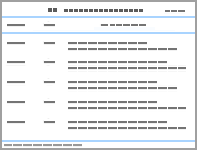
| 称谓语 | 主人公 | 主人翁 | 主人母 | 主人婆 | 主人妪 |
|---|---|---|---|---|---|
| 古汉语(频率ppb) | 786 | 641 | 13 | 7 | 14 |
| 现代汉语(频率ppb) | 3950 | 2228 | 0 | 6 | 0 |
| 称谓语 | 释义(《汉语称谓大词典》) | BCC语料示例(古汉语子库) |
|---|---|---|
| 主人公 | (1)对主人的尊称。相对“客人”而言 | 客人问他是什么。到头来不认识主人公。 |
| (2)奴婢尊称其主人 | 还不捉拿三太小儿,与你家大主人公报仇雪恨。 | |
| (3)财产和主权的拥有者 | 主人公得了宝贝,诚是天下之奇珍。 | |
| (4)精神上的自我 | 更糟糕的是。认为能知为主人公。 | |
| 主人翁 | (1)主人家的男性长辈主人 | 愿郎千万寿,长作主人翁。 |
| (2)奴仆称主人 | 在此少住,俟主人翁来,筹送汝归。 | |
| (3)财产或主权的拥有者 | 坐未定,上曰:“愿谒主人翁。 | |
| (4)精神上的自我(根据索引行总结添加) | 于是乎“本来面目”、“主人翁”、“无位真人”,一切邪说,得以乘闲惑人。 | |
| 主人母 | 女主人 | 主人母见一鬼持赤索欲缚之。 |
| 主人婆 | (1)女主人;主母 | 可奈又把一个结发妻来死了,家中没了主人婆。 |
| (2)财物或主权的女性拥有者 | 瞧你不到,倒是个未来中国的主人婆哩! | |
| 主人妪 | 女主人 | 主人妪睹上状貌而异之,止其翁曰。 |
| 称谓语 | 释义(《汉语称谓大词典》) | BCC语料示例(现代汉语子库) |
|---|---|---|
| 主人公 | 文艺作品中塑造的主要人物 | 书中记载了主人公50多年的风雨人生、酸甜苦辣。 |
| 主人翁 | (1)财产或主权的拥有者 | 学生培养了“主人翁”的意识、“主人翁”的精神,以“主人翁”的姿态进入学习和管理的角色。 |
| (2)文学作品中的主要人物 | 这些作品的主人翁,都是一些智障的神奇人物。 | |
| 主人婆 | 女主人;主母 | 这就是后来居上。妹仔大过主人婆,这种事多了。 |
| 称谓语 | 左侧搭配(频率ppb) | 释义 | 右侧搭配(频率ppb) |
|---|---|---|---|
| 主人公 | / | 主人 | / |
| 男女(194) 小说(72) 作品(28) 影片(27) 书(20) | 主要人物 | 形象(19) 内心(17) 命运(9) 精神(7) | |
| 主人翁 | 国家(94) 职工(77) 工人阶级(48) 增强(46) | 主人 | 地位(340) 精神(283) 意识(250) 责任感(234) |
| / | 主要人物 | / |


| 左侧搭配(频率ppb) | 主角释义 | 右侧搭配(频率ppb) |
|---|---|---|
| 男女(794) 故事(23) 小说(15) 影片(14) | 主要人物 | 配角(22) |
| 担任(57) 演(49) 扮演(46) 担当(24) | 饰演主要人物的演员 | 光环(25) 演(22) 演员(21) 地位(21) |


| [1] | Baker P. 2014. Using Corpora to Analyze Gender[M]. London: Bloomsbury. |
| [2] | Braun F. 1988. Terms of Address: Problems of Patterns and Usage in Various Languages and Cultures[M]. Berlin: Mouton de Gruyter. |
| [3] |
Lakoff R. T. 1973. Language and woman’s place[J]. Language in Society 2(1):45-80.
doi: 10.1017/S0047404500000051 URL |
| [4] | Zhao Y. R. 1956. Chinese terms of address[J]. Language 31(1):217-241. |
| [5] | 吉常宏. 2000. 汉语称谓大词典[M]. 河北: 河北教育出版社. |
| [6] | 吕叔湘. 1992. 吕叔湘文集(第四卷)[M]. 北京: 商务印书馆. |
| [7] | 吕为光. 2015. 称谓语“师丈”潜显制约因素分析[J]. 语言文字应用(2):98-106. |
| [8] | 么孝颖. 2008. 称谓语=称呼语吗?——对称谓语和称呼语的概念阐释[J]. 外语教学 (4):20-24. |
| [9] | 沈家煊. 2015. 不对称和标记论[M]. 南昌: 江西教育出版社. |
| [10] | 王力. 2013. 汉语史稿[M]. 北京: 中华书局. |
| [11] | 荀恩东、 饶高琦、 肖晓悦、 臧娇娇. 2016. 大数据背景下BCC语料库的研制[J]. 语料库语言学 3(1):93-109,118. |
| [12] | 杨永林. 2004. 社会语言学研究 = A study of sociolinguistic issues: 功能·称谓·性别篇[M]. 上海: 上海外语教育出版社. |
| [13] | 姚亚平. 1995. 现代汉语称谓系统变化的两大基本趋势[J]. 语言文字应用 15(3):94-99. |
| [14] | 逸典. 1992. 关于“老师的丈夫”称谓问题的讨论[J]. 语文建设(5):38-39. |
| [15] | 于丽. 2006. 中国电影专业史研究——电影制片、发行、放映卷[M]. 北京: 中国电影出版社. |
| [16] | 张莉萍. 2007. 称谓语性别差异的社会语言学研究[D]. 北京: 中央民族大学. |
| [17] | 朱述承、 苏祺、 刘鹏远. 2021. 基于语料库的我国职业性别无意识偏见共时历时研究[J]. 中文信息学报 35(5):130-140. |
| [1] | LIN Ling, LIU Ming. Towards a Part-of-Speech (PoS) Gram Approach to Corpus-based Phraseology [J]. Contemporary Foreign Languages Studies, 2025, 25(4): 15-27. |
| [2] | ZHAO Tao, DONG Xiaobo. Research on the Application of Parallel Corpus in the Translation of Civil Code Terminology from the Perspective of Transknowletology [J]. Contemporary Foreign Languages Studies, 2025, 25(4): 157-172. |
| [3] | CHENG Shuang, ZHANG Yushuang. Post-Editing Teaching and Post-Editing Competence Development: Practices, Findings and Implications [J]. Contemporary Foreign Languages Studies, 2025, 25(4): 182-195. |
| [4] | ZHEN Fengchao. Exploring New Paths in Corpus Stylistics: How does Kazuo Ishiguro Construct the Meaning of Hailsham in Never Let Me Go? [J]. Contemporary Foreign Languages Studies, 2025, 25(4): 3-14. |
| [5] | FAN Lin, ZHENG Shiyang. Gender Differences in Color and Color Word Processing: Evidence from Mixed-effects Modeling [J]. Contemporary Foreign Languages Studies, 2024, 24(5): 163-178. |
| [6] | SONG Xuedong. An Analysis of Metaphorical Devices in Robert Frost’s “The Road Not Taken” [J]. Contemporary Foreign Languages Studies, 2024, 24(5): 179-187. |
| [7] | SHAN Yu, BAI Yun, LIAO Rui. A Comparative Study of Authorship Construction in Multi-sound Sites of Knowledge [J]. Contemporary Foreign Languages Studies, 2024, 24(1): 102-112. |
| [8] | WU Jianguo, XIE Sisi, LI Jing. Investigating Legitimization in Political Discourse from the Perspective of CMA:An Analysis of the US Governmental Discourse on China-US Trade Talks [J]. Contemporary Foreign Languages Studies, 2022, 22(4): 111-122. |
| [9] | CHEN Xiaowei. Audience in Translation: Reflections from the Rhetorical Perspective [J]. Contemporary Foreign Languages Studies, 2021, 21(6): 27-36. |
| [10] | LIU Manyun. Science and World Order: A Case Study of “COVID-19” [J]. Contemporary Foreign Languages Studies, 2021, 21(6): 98-105. |
| [11] | SHAN Yu, HE Miao. Evaluation Model Construction and Difficulty Quantitative Analysis of Science and Technology Translation Textbooks [J]. Contemporary Foreign Languages Studies, 2021, 21(5): 80-90. |
| [12] | . [J]. Contemporary Foreign Languages Studies, 2021, 21(4): 13-20. |
| [13] | . [J]. Contemporary Foreign Languages Studies, 2021, 21(2): 53-63. |
| [14] | ZHANG Le, LIU Qin. Phraseological Features of Cover Letters written by Chinese science and engineering majors [J]. Contemporary Foreign Languages Studies, 2020, 20(6): 111-120. |
| [15] | GAO Yanjie, DING Yi, JIANG Yue. Interpersonal Meanings of the Values of Modal Operators in English Political Interviews [J]. Contemporary Foreign Languages Studies, 2020, 20(6): 50-58. |
| Viewed | ||||||
|
Full text |
|
|||||
|
Abstract |
|
|||||
